
Assumable Mortgages in 2026: How Home Buyers Can Keep a Low Rate in Charlotte, St. Louis & Naples
Here is the most underused number in today's housing market: roughly 6 million American homes still carry an assumable mortgage with an interest rate below 5 percent, and most of those loans have rates closer to 3 percent. In late October 2026, with the 30-year fixed sitting near 7.3 percent, taking over one of those loans can save a buyer $700 to $1,000 a month. That is not a gimmick. It is a real financing tool that mostly FHA and VA home loans make possible, and it works differently in Charlotte, St. Louis, and Naples.
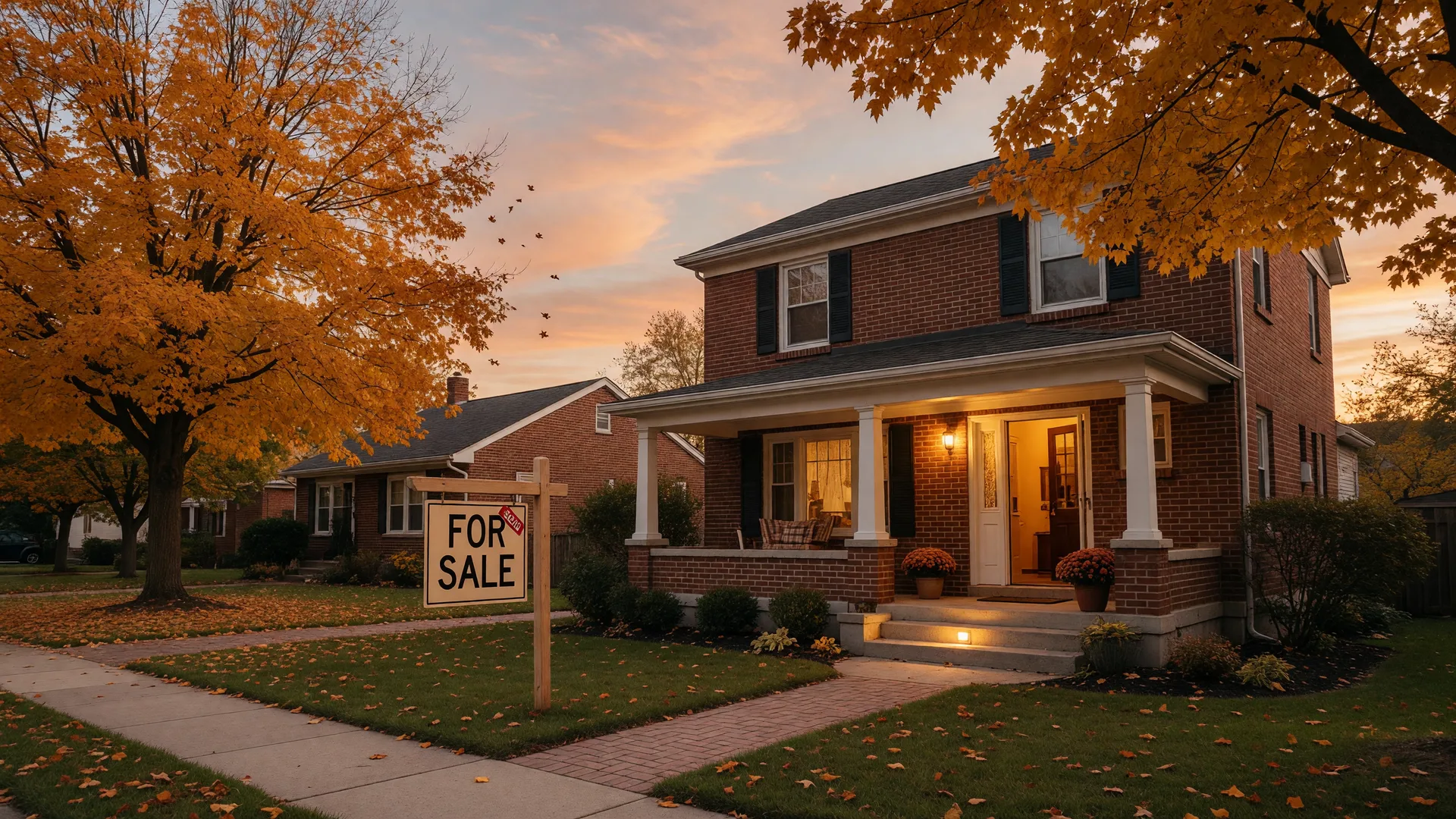
People keep asking me why the market feels stuck. Sellers do not want to give up their 3 percent loans, buyers do not want to take on a 7.3 percent one, and for months the two sides have been circling each other like magnets facing the wrong way. Assumption is the tool that breaks that standoff, quietly, on a small but growing share of transactions. Since I moved my practice from St. Louis to Charlotte this spring, I have walked through assumptions with relocating veterans, first-time buyers, and sellers who did not realize their loan was portable. Let me show you how the tool works, who it genuinely helps, and what the catch is, because there is always a catch.
Here is the short version up front. An assumable mortgage lets a new buyer take over the seller's existing loan, keeping the original interest rate, the remaining balance, and the original term. Only government-backed loans, FHA, VA, and USDA, can be assumed in this market, which means roughly one in four mortgages nationally is potentially assumable. In a 7.3 percent world, grabbing a 3.5 percent loan through an assumption is like finding a coupon that pays you every single month for thirty years.
01 -- The Rate Lock That Is Quietly Freezing America's Moves
Start with the number that explains the entire 2026 market. According to a Realtor.com analysis of federal mortgage data from the second quarter of 2026, 65.6 percent of all outstanding mortgages in the United States carry an interest rate below 5 percent. Nearly half, 49.1 percent, are below 4 percent, and 19.2 percent, about one in five, are below 3 percent. Redfin reported that the share of homeowners with a rate under 5 percent peaked at 85.6 percent in early 2022 and has only slowly slipped since.
Now add the other half of the picture. Freddie Mac's weekly survey put the 30-year fixed at 7.32 percent for the week ending October 22, 2026, down just a tick from 7.40 percent the week before, and up from 6.19 percent a year earlier. Bankrate's national average was around 7.31 percent the same week. In other words, someone who bought or refinanced at the bottom of the rate cycle in 2021 is sitting on a payment that is roughly half of what the same loan costs today.
That gap is why so many family homes never reach the market. Economists call it the rate lock-in effect. A seller looks at the numbers, realizes their next mortgage would cost hundreds more a month, and decides to stay put, add on, or wait. Buyers look at the same numbers and feel priced out. The result is a market with plenty of serious people and very little movement. The assumable mortgage does not fix every part of that problem, but it is the one tool that lets the person on one side of the table keep their low rate and the person on the other side actually benefit from it.
02 -- What "Assumable" Actually Means (and Who Is Allowed)
An assumption is simple in concept: instead of originating a brand-new mortgage at today's rate, the buyer steps into the seller's existing loan. The buyer takes over the original interest rate, the remaining principal balance, and the number of years left on the original term. The lender does not rewrite the loan. The servicer simply approves the new borrower and lets the loan keep running on its old schedule.
The key word is government-backed. Conventional loans sold to Fannie Mae or Freddie Mac generally cannot be assumed, which is why this tool flies under the radar. FHA loans, VA loans, and USDA loans all carry assumption provisions, and together those government programs back roughly 20 to 25 percent of all active mortgages in the country. Industry trackers estimate there are more than 12 million actively assumable loans out there, spread across 16 to 20 million homes, and roughly 6 million of those are low-rate loans under 5 percent.
Because they are government loans, assumptions carry government rules, and the rules are different for FHA and VA. That is the part most people never learn, because almost nobody tells them. Let me break both down in plain English.
03 -- Why This Is Suddenly a 2026 Story
Assumptions have been legal for decades, so why the buzz now? Because the rate gap has never been this wide. In February 2026, NPR ran a feature with a headline that said it all: a way to get a mortgage under 3 percent in 2026 exists, and it is the assumable mortgage. The government data backs up the hype in small but meaningful numbers. FHA and VA combined processed more than 6,400 assumptions in 2023, more than double the year before, and the volume has kept climbing since.
The market has noticed. A small industry of startups and databases now helps buyers hunt for assumable listings, and media outlets keep calling assumption the workaround for the rate gridlock. Yet the surprising part is how few sellers and agents use it. Realtor.com found that through the first two months of 2024, only about 0.4 percent of American for-sale listings advertised an assumable loan. One independent study of nearly 19,000 listings found a similar 0.8 percent.
That mismatch is the opportunity. Roughly one in four loans could be assumed, but far less than one in a hundred sellers knows it or markets it. A prepared buyer with a capable agent can find deals the crowd is walking right past, and a seller who understands their loan can stand out in a crowded market without dropping their price.
04 -- How an FHA Assumption Works (the First-Time Buyer's Tool)
FHA loans are the more accessible path, and the rules fit first-time buyers well. For loans originated after December 15, 1989, an FHA mortgage can be assumed by a qualified buyer with the lender's approval. The buyer must pass full credit underwriting, which in practice usually means a credit score around 580 or higher and a debt-to-income ratio near 43 percent or below, depending on the lender's standards. The buyer must also plan to live in the home as their primary residence. An investor cannot walk in and assume an FHA loan on a home they will not occupy.
What the buyer inherits is everything good about the loan: the original rate, the remaining balance, and the remaining term, right down to the original maturity date. The mortgage insurance that came with the FHA loan continues, but the assumer is not charged a new 1.75 percent upfront mortgage insurance premium, which on a $300,000 loan is a $5,250 saving before you even move in.
The costs are modest. FHA raised the maximum assumption processing fee to $1,800 in August 2024, though most servicers charge far less, commonly between $500 and $900, plus closing costs and the buyer's own appraisal if they want one. The catch, and we will spend a full section on it, is the equity gap: the buyer must cover the difference between the purchase price and the loan balance with cash or their own funds. That is where assumptions live or die.
05 -- How a VA Assumption Works (the Veteran's Superpower)
VA loans are assumable by anyone, veteran or not, but they carry extra rules and extra benefits. For loans committed on or after March 1, 1988, a buyer can assume a VA loan with VA and lender approval, and the buyer does not need to be a veteran. The non-veteran assumer pays a 0.5 percent VA funding fee on the remaining balance. On a $200,000 balance that is $1,000; on a $300,000 balance it is $1,500. Some disabled veterans are exempt from the fee entirely. Processing fees are capped: no more than $300 where the servicer has automatic authority, and $250 where VA prior approval is required, plus a small locality variance.
The VA nuance that matters most to sellers is entitlement. A veteran's VA entitlement is the guarantee behind the loan, and it is restored when the loan is paid off. If a non-veteran assumes the loan, the selling veteran's entitlement stays tied to that mortgage until it is paid in full, even though the seller may be released from liability. The entitlement is restored only if another eligible veteran assumes the loan and substitutes their own entitlement with VA approval. So a veteran seller who might need their VA benefit again should think twice before handing the loan to a non-veteran, or should push for a veteran buyer who can substitute entitlement.
This is the part I love telling military families and relocating veterans about, because it is their benefit and almost nobody uses it. The Charlotte region and the St. Louis region both have deep veteran populations, and the housing markets there are full of VA loans waiting to be assumed by the next qualified family.
06 -- The Math That Makes Your Eyes Pop
Numbers are the only way to really understand this, so let me show you mine. Take a $300,000 loan balance. At today's 30-year fixed of 7.32 percent, the principal and interest payment is about $2,060 a month. Now assume that same $300,000 balance on a loan written in 2021 at 3.5 percent. The monthly payment is about $1,347. The difference is roughly $715 a month, about $8,600 a year, and close to $257,000 across the life of the loan.
Scale it up to a buyer's dream home in the Charlotte range, say a $475,000 purchase with a $400,000 assumed balance. At 7.32 percent the monthly payment is about $2,748; at 3.5 percent it falls to about $1,796. That is roughly $950 a month, more than $11,000 a year, of pure monthly breathing room. That kind of gap is the difference between stretching for a home and living comfortably in it.
One honest caveat before you dream: the math only works when the price stays close to the loan balance. Because the buyer inherits the remaining principal, not the full value of the house, assumptions shine brightest on homes where the seller owes a large share of the value, meaning owners who put down little, bought recently, or have not owned long. On a home that is paid down heavily, the buyer has to bring an enormous pile of cash to cover the difference, which brings me to the catch.
07 -- The Catch: The Equity Gap, and Who It Suits
Here is the honest truth about assumptions: the buyer pays the seller for the home, and the price still has to be negotiated and agreed. The loan balance gets assumed, but the difference between the sale price and that balance has to come from somewhere. It usually comes as cash from the buyer, or from a small second loan, and sellers often expect the price to reflect the value of their low rate.
That is why assumptions are not magic. They suit buyers who have solid cash reserves, strong credit, and an eye for the long game: relocating veterans with VA benefits and savings, first-time buyers using gifted or saved down payment money who want a payment they can actually sustain, and buyers who plan to stay in the home for many years. They suit sellers who financed with little down, who are relocating and need to sell now, and who want to hand their buyer a reason the home is worth full price.
The appraisal matters too. The lender will want the home to appraise at the contract price, and negotiations over the equity gap can get creative: seller carry-back notes, a modest second position, or the buyer simply bringing more money to the table. My job in these deals is to make sure the equity conversation stays honest, so nobody walks into closing believing they are getting a $400,000 loan for nothing.
08 -- Sellers: Your Low Rate Is a Marketing Advantage
If you are selling this fall, especially in a balanced market like Charlotte's, your assumable loan might be the single most powerful line in your listing. Buyers are comparing every home in your price range, and most of them are facing a 7.3 percent rate. The home that lets them keep a 3 or 4 percent rate is not a house, it is a monthly payment they can afford. That is the difference between a listing that sits and a listing that gets serious attention.
The practical steps are simple. Find out whether your loan is FHA, VA, or USDA, and ask your servicer whether it is assumable and what the current balance is. If it is, market it plainly: "Assumable loan at 3.5 percent, current balance approximately $X," in the listing, in the showing notes, and in our conversations with every buyer's agent. Have the loan documents ready before the first offer arrives. Understand the fee caps so a buyer is not surprised, and know your servicer's assumption timeline, because it can take a few weeks.
The strategy works best when you and the buyer both win. A seller with a low assumable rate can often hold closer to list price, because the buyer is pocketing hundreds a month in saved interest. In my experience across all three of my markets, sellers who price honestly and market the assumable loan get showings other homes do not, and they attract the most qualified buyers, the ones with cash and good credit, which means fewer surprises at closing. Veterans, remember the entitlement rule: if you may need your VA benefit again, prefer an assumer who can substitute entitlement, or ask us to plan around it.
09 -- Charlotte, St. Louis & Naples: Where Assumptions Help the Most
Charlotte, NC: the relocator's market. Charlotte's median sale price is running around $415,000 to $420,000 with roughly four months of supply, the most balanced my markets have been in years. That balance is exactly what makes assumptions valuable: buyers have choices, and the home with the low assumable rate stands out in a crowd. Charlotte is also a magnet for military families, federal workers, and corporate relocations, the exact audiences with VA eligibility and relocation cash, and employer news keeps feeding the pool. This week alone, The Clearing House Payments Company announced a new client operations center in Charlotte with 200 jobs and an average salary near $162,000, on top of the WTA headquarters and JPMorganChase's downtown expansion. Every relocated family brings the same question: how do we buy without signing up for a 7 percent loan? For a growing share of them, the answer is assumption.
St. Louis, MO: the value market where assumptions make sense first. Greater St. Louis is my most affordable market, with the residential median around $340,000 to $350,000 and inventory up about 15 percent year over year. Lower prices mean smaller equity gaps, which is the single biggest practical hurdle in any assumption, so this is the market where the tool works most often and most easily. St. Louis also has deep roots with the veteran community and a huge stock of older FHA and VA loans written in the low-rate years. On the jobs side, C2N Diagnostics announced October 22 that it will triple its footprint as the anchor tenant of Washington University's $100 million Catalyst redevelopment in Cortex, and the region keeps building its geospatial cluster around GeoSTL. A buyer who assumes a 3 percent loan in a $350,000 market is buying a payment that looks more like 2019 than 2026.
Naples, FL: the season to look for the right loan. Naples is the most complicated of my three markets, because so much of its inventory is second homes and cash purchases, where assumptions barely matter. But please do not write the tool off here. Veteran relocators moving to Collier County, first-time buyers, and workforce buyers all use FHA and VA loans, and the overall median in Collier County has settled around $575,000 after the condo correction. Arthrex keeps adding jobs, 560 announced for North Naples, and on October 28 Collier commissioners approved a mixed-use project in East Naples with workforce housing, so the year-round buyer pool keeps growing. Two Naples-specific notes: if the home you want is a condo, the association's rules and the building's FHA approval status come into play, and under Florida's new condominium reserve rules you must read the building's financials before you assume anything. And the winter season arriving means more sellers listing for the holidays, so this is a fine moment to ask the question: is this loan assumable?
The Assumption Checklist
10 -- Your Low-Rate Playbook for the Rest of 2026
Here is how I would use this information this quarter, whether you are buying, selling, or relocating.
If You Are Buying
Add the assumption question to every showing, and ask us to screen listings for FHA, VA, and USDA loans before you tour. Know your cash position first, because the equity gap decides whether an assumption is even possible on a given home. And get your full pre-approval and credit file in order, because the servicer's underwriting window can be tighter than a normal mortgage. The buyers closing these deals are the ones who arrive with cash, credit, and a team that has done it before.
If You Are Selling
Find out what you owe and at what rate. If your loan is assumable and low, that is your competitive edge in a balanced market, so say it plainly in the marketing. Price honestly, documents ready, and let the buyers line up. Veterans should map the entitlement question before agreeing to any assumption, so the decision protects your next chapter, not just this sale.
If You Are Relocating
You have an advantage most locals do not: you are mobile, you are often selling a home with equity in another market, and you may hold VA eligibility. In Charlotte and St. Louis especially, low-rate assumptions let relocating families buy a bigger home than their payment would otherwise allow. Start the conversation before you land, because the best assumable listings still move fast, and the relocation news keeps your side strong: 200 new finance jobs in Charlotte, life sciences growth in St. Louis, and a steady year-round pipeline in Naples.
- Rates today: the 30-year fixed sits near 7.32 percent, with 65.6 percent of existing mortgages still below 5 percent.
- The asset: roughly 6 million US homes carry assumable low-rate loans, and under 1 percent of listings advertise them.
- The tool: FHA and VA assumptions let a buyer keep the seller's original rate, balance, and term.
- The catch: the buyer covers the equity gap in cash, so assumption favors buyers with funds and sellers with recent loans.
- The timing: winter is coming, Naples season is starting, and the next Fed meeting is weeks away. The prepared move first.
A low-rate mortgage is one of the most valuable assets many families own, and for twenty years I have watched almost nobody use it. In a market where everyone is complaining about rates, the families quietly assuming 3.5 percent loans are the ones telling the better story. I would love to help you be one of them.
Want to Know If Your Loan (or the Home You Love) Is Assumable?
Bring us the loan documents or the listing address, and we will run the assumption math together. A free 30-minute consultation, no pressure, just honest numbers and a clear path forward, whether you are buying, selling, or relocating across state lines.
Book Your Free ConsultationSources
Market data and forecasts sourced from publicly available reports as of October 2026.
- Freddie Mac Primary Mortgage Market Survey, October 22, 2026: Freddie Mac
- 30-Year Fixed-Rate Mortgage Average Weekly Series: FRED, Federal Reserve Bank of St. Louis
- 65.6% of Mortgages Remain Below 5%, Lock-In Persists (Realtor.com analysis of FHFA data, Q2 2026): WRE News
- Share of Mortgages With Rates Above 6% Climbs to 10-Year High: Redfin
- Want a Mortgage for Under 3% in 2026? Meet the "Assumable Mortgage": NPR
- FHA Updates to Single Family Housing Policy Handbook 4000.1 (FHA INFO 2024-30): U.S. Department of Housing and Urban Development
- VA Circular 26-23-10, Assumptions and Fees: U.S. Department of Veterans Affairs
- FHA Assumable Mortgage: Rules, Requirements & How It Works: SuperMoney
- VA Loan Assumption: Forms and Substitution of Entitlement: LegalClarity
- In a Gridlocked Market, It's Time to Take Assumable Loans Seriously: Real Estate News
- Governor Stein Announces Finance Services Company to Invest $11.5 Million in Charlotte Expansion: State of North Carolina
- C2N Diagnostics Will Triple St. Louis Footprint in $100M Cortex Overhaul: Hoodline
- Governor Scott Announces Arthrex to Add 560 Jobs in Collier County: Florida Department of Economic Opportunity
- Mixed-Use Project in East Naples With Workforce Housing Gets the Go-Ahead: Naples Daily News
Keep Reading
20 years of expertise. Dual Metro. Same unstoppable results.
-- Tracey De Simon