
VA Loans in 2026: What Military Buyers and Veterans Need to Know in Charlotte, St. Louis, and Naples.
If you are active duty, a veteran, or a surviving spouse, the VA loan is the single most powerful homebuying tool available to you — and most people are not using it to its full advantage. Here is the honest breakdown of how it works, what has changed in 2026, and how to leverage it across all three of my markets.
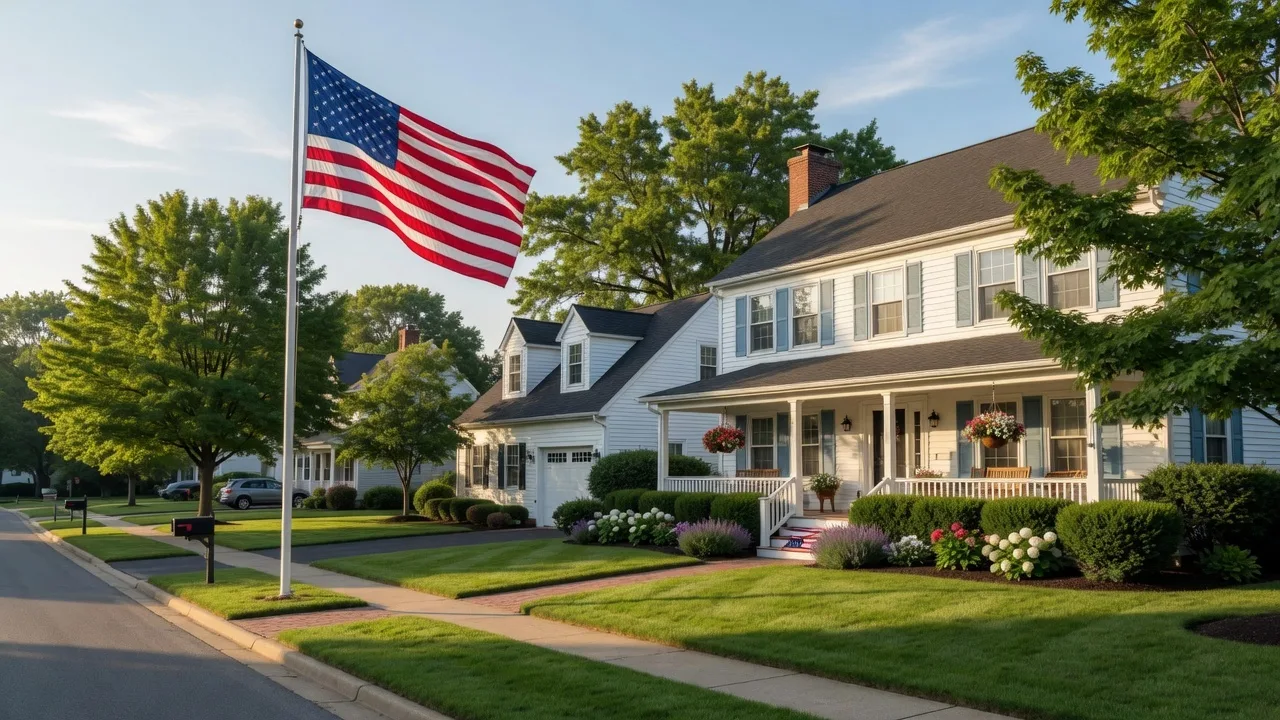
I work with a lot of military families — buyers who have served this country and deserve an agent who takes their time, their benefits, and their transition as seriously as they do. Whether you are PCS-ing to the Charlotte area from Fort Liberty, retiring near the Jefferson Barracks community in St. Louis, or settling into a well-earned life in Naples after years of service, the VA loan is your golden ticket. And in 2026, it has gotten even better.
This guide is not a generic brochure. It is the practical, market-specific information I share with every military and veteran client I represent — across Charlotte, St. Louis, and Naples. I am going to walk you through what the VA loan actually offers, the real numbers, the 2026 changes that matter, and the pitfalls I see military buyers walk into that cost them time and money.
Why VA Loans Remain the Best Deal in Real Estate
Let me start with the bottom line. On a $400,000 purchase, here is what a VA borrower pays compared to a conventional buyer with 3% down:
VA Loan at 6.25%
- Down Payment$0
- Monthly P&I$2,463
- PMI$0
- Monthly Total$2,463
Conventional at 6.50%
- Down Payment$12,000
- Monthly P&I$2,453
- PMI~$200/mo
- Monthly Total$2,653
Sources: Bankrate VA Rates, NerdWallet VA Rates, Veterans United (July 2026). VA rates typically run 0.25%–0.50% below conventional rates due to government backing. PMI estimates based on 3% down with 720+ credit score.
That is a $190-per-month savings for the VA borrower — $11,400 over five years — and the VA buyer put $12,000 less down at closing. Over a 30-year loan, the cumulative savings can exceed $50,000 when you factor in no PMI, lower rates, and no down payment requirement. This is not a marginal advantage. It is a structural one.
What Changed for VA Loans in 2026
The VA loan program did not undergo any wholesale overhaul, but several meaningful updates took effect that directly affect your buying power and long-term costs.
The Funding Fee Is Now Tax-Deductible
Starting with tax year 2026, the VA funding fee is deductible when you itemize on Schedule A (Form 1040). That is a real financial benefit. On a $400,000 loan with zero down, the first-use funding fee is 2.15%, or $8,600. If you are in the 24% bracket, that deduction saves you roughly $2,064 on your federal return. It does not eliminate the cost, but it softens the blow considerably.
Loan Limits Increased
The baseline conforming limit for 2026 rose to $832,750, up from $806,500 in 2025, as set by the Federal Housing Finance Agency (FHFA). In high-cost areas, it reaches $1,249,125. For veterans with full entitlement, there is technically no VA-imposed loan limit — your lender determines the maximum based on your income, credit, and the property. This means VA buyers in Charlotte's luxury market, Naples' waterfront communities, or upscale St. Louis neighborhoods can use their benefit at higher price points than ever.
The Partial Claim Program for Foreclosure Prevention
Signed into law as part of the VA Home Loan Program Reform Act in July 2025, a new Partial Claim Program launched on June 15, 2026. If a VA-backed borrower faces default, the program can cover up to 25% of the unpaid principal as a junior lien, giving you a path to catch up without losing your home. This is active for five years (through 2030) and represents a significant safety net that did not exist before.
Updated VA Appraisal Standards
The VA updated its Minimum Property Requirements (MPR) for purchases in 2026. The practical effect? VA appraisers are checking a few more boxes on health and safety items. This is generally good for buyers — it means fewer surprises after closing — but it can occasionally create friction with sellers who are not prepared for VA-specific requirements. More on how to handle that in the market-by-market section below.
VA Loan Funding Fees at a Glance
2026 VA Funding Fee Schedule
- 2.15% First-time use, zero down. On a $400K loan: $8,600. Can be rolled into the loan.
- 3.30% Subsequent use, zero down. On a $400K loan: $13,200. Higher because of repeat benefit use.
- 1.50% First-time use with 5%+ down. On a $400K loan with $20K down: $5,700. Significant reduction.
- 1.40% First-time use with 10%+ down. On a $400K loan with $40K down: $5,040. Lowest non-exempt rate.
- $0 Exempt. Veterans with 10%+ service-connected disability, surviving spouses, Purple Heart recipients, and certain others pay no funding fee at all.
Source: Veterans United, VA Loan Network (July 2026). Funding fee may be financed into the loan. Always verify your exemption status with your lender.
Charlotte, NC: Your VA Market Playbook
Charlotte is one of the most military-friendly markets in the Southeast. The Charlotte Air National Guard 145th Airlift Wing operates out of Charlotte Douglas International Airport, and Fort Liberty — one of the largest Army installations in the country — is a manageable two-hour drive east, feeding a constant stream of transitioning service members into the Charlotte metro.
Where VA Buyers Are Winning in Charlotte
In the current market — where inventory sits around 2.4 to 3.0 months of supply and the median hovers near $420,000 — VA buyers are competitive in the $300,000 to $500,000 range. Neighborhoods like Steele Creek, Pineville, Mint Hill, and Huntersville offer strong value with solid school districts and newer construction stock. If you are looking at Dilworth, South End, or Ballantyne, you will be competing in a tighter price band, but VA buyers with strong pre-approvals and clean offer terms are absolutely winning contracts in these areas.
The VA Appraisal Reality in Charlotte
Here is where I earn my fee. VA appraisals in Charlotte can occasionally come in below contract price — not because the home is overpriced, but because VA appraisers are stricter on health and safety items than conventional appraisers. A peeling paint issue on a 1940s bungalow in Dilworth, a missing handrail on exterior stairs in Steele Creek, or an aging HVAC in Huntersville — these are items a conventional appraiser might flag as informational, but a VA appraiser may require repaired before closing.
This is where having an agent who understands VA transactions makes a measurable difference. I coordinate pre-listing walk-throughs with my VA buyers so we identify potential MPR issues before the appraisal appointment. If the home needs repairs, we negotiate those into the purchase agreement upfront — not after the appraisal comes back and the seller is surprised. It keeps deals together and saves everyone stress.
St. Louis, MO: Tight Supply, Strong VA Opportunities
St. Louis is the tightest market of the three. With under two months of inventory in many areas and prices still climbing — the metro-wide median rose 7.4% year over year — competition is real. But VA buyers in St. Louis have some distinct advantages that many agents fail to leverage.
Jefferson Barracks and the South County Corridor
Jefferson Barracks Military Post, just 11 miles south of downtown, is the oldest operating military installation west of the Mississippi. It remains active with Air National Guard, Army Reserve, and Naval Reserve units. The surrounding communities — Affton, Mehlville, Oakville, and Green Park — are deeply military-rooted neighborhoods where VA offers are understood, accepted, and respected by sellers and listing agents.
How to Win in a Tight St. Louis Market with a VA Loan
The misconception that VA offers are weaker than conventional offers costs military buyers houses they should be winning. Here is the truth: in Missouri, a VA offer is treated the same as any other financing. There is no legal stigma, and smart listing agents know it. Here is how I structure VA offers in St. Louis to compete:
- Strong earnest money. A larger earnest deposit signals seriousness. In a market where $5,000 to $10,000 is standard, offering $8,000 to $12,000 on a VA offer tells the seller you are committed.
- Shortened appraisal contingency window. In Missouri, we can structure a tighter timeline for the VA appraisal, reducing the seller's uncertainty.
- Pre-inspection where possible. In a multiple-offer situation, if we can schedule a quick walk-through before offering, it demonstrates preparedness and reduces the seller's risk profile.
- Flexible closing timeline. Sellers in Kirkwood, Webster Groves, and Crestwood who are also buying often value a buyer who can accommodate their schedule. VA loans close in 45 to 60 days routinely — that is competitive with conventional.
St. Louis VA Buyer Neighborhood Sweet Spots
For VA buyers targeting the $250,000 to $400,000 range — which covers the majority of my military clients — look at Affton, Mehlville, Crestwood, and parts of South County for strong value, established neighborhoods, and proximity to Jefferson Barracks. For buyers willing to push into the $400,000 to $550,000 range, Kirkwood, Webster Groves, and south St. Louis County offer top school districts and tree-lined streets that feel like a completely different world from what most people picture when they hear "St. Louis."
Naples, FL: Luxury Meets the VA Benefit
Naples is an interesting VA market because it is the most expensive of the three and has shifted decisively toward buyers in 2026. With over eight months of supply and days on market stretching to 94 to 110 days, VA buyers have negotiating leverage they would never have had in 2022 or 2023.
The $832,750 Limit Matters Here
The new conforming loan limit of $832,750 is particularly relevant in Naples, where median home prices sit well above the national average. With full VA entitlement, a veteran can purchase a home in that range with zero down payment. For properties above the limit, a down payment on the excess portion is required — typically 25% of the amount exceeding the conforming limit. This is where the math gets specific, and I run those numbers with every military buyer before we start looking.
Naples VA Buyer Strategy
In a buyer's market with months of inventory, I advise my VA clients in Naples to:
- Lead with the VA benefit, not apologize for it. In Naples, sellers with sitting inventory welcome qualified buyers regardless of financing type. Your zero-down offer is not weaker — it is financed by the Department of Veterans Affairs. That is a government guarantee.
- Ask for concessions. In a market with 8+ months of supply, it is reasonable to ask the seller to cover a portion of your closing costs — even with a VA loan. I routinely negotiate $5,000 to $10,000 in seller concessions for my VA buyers in Naples.
- Factor in HOA and condo fees. Naples is heavy on condominium and HOA-governed communities. VA loans have specific requirements about HOA financial health and condo project approval. I verify VA condo approval status before we write an offer — this saves weeks of wasted time.
- Watch for Florida insurance realities. Homeowner insurance in Florida remains elevated. On top of your VA loan payment, budget $2,500 to $6,000+ annually for insurance depending on the property type, location, and storm history. This is not VA-specific, but it is a real cost that affects your total monthly obligation.
Common VA Loan Mistakes I See Military Buyers Make
After 20 years in real estate and hundreds of VA transactions, I can tell you the same five mistakes keep showing up. Here is how to avoid them.
1. Not Getting a VA-Specific Pre-Approval
A generic pre-approval letter from a lender who does not regularly process VA loans is a recipe for delays. VA loans have specific documentation requirements — the Certificate of Eligibility (COE), VA appraisal ordering, and funding fee calculations — that not every loan officer handles efficiently. I connect my military clients with VA-experienced lenders who can close in 45 days or less. That speed matters when you are competing for a home.
2. Assuming VA Offers Are Automatically Rejected
This is the myth that costs military buyers the most. In North Carolina, Missouri, and Florida, sellers cannot legally discriminate against VA financing. Some listing agents still harbor outdated biases, but the data tells a different story: VA offers close at comparable rates to conventional offers when they are well-structured and professionally represented (NAR, 2026). The key is having an agent who knows how to present and defend a VA offer.
3. Ignoring the Funding Fee When Budgeting
The VA funding fee can be financed into your loan, which is convenient, but it also increases your loan balance. On a $400,000 first-use loan with zero down, that $8,600 fee adds roughly $50 to your monthly payment. If you are exempt — and many veterans with service-connected disabilities are — make sure your lender has confirmed your exemption status before you lock in your numbers.
4. Skipping the Home Inspection Because VA Has Its Own Appraisal
The VA appraisal is not a home inspection. It checks for minimum property requirements — safety, structural integrity, habitability. It does not evaluate the condition of the plumbing, electrical systems, roof age, or HVAC efficiency in the way a licensed home inspector does. Always, always get an independent inspection. I coordinate this for every client, and I review the report with you line by line so you know exactly what you are buying.
5. Forgetting About Property Tax Exemptions
All three states — North Carolina, Missouri, and Florida — offer property tax exemptions or reductions for veterans with service-connected disabilities. In Florida, veterans with a total permanent disability related to service are exempt from property taxes on their primary residence. In North Carolina, disabled veterans receive a homestead exemption. In Missouri, disabled veterans with a 100% disability rating qualify for a full property tax exemption on their primary residence. These are not automatic — you have to apply — but they can save you thousands every year. I make sure every military buyer I represent knows what they qualify for and applies.
The PCS Timeline: How I Coordinate Your Move
If you are an active-duty service member receiving PCS orders to the Charlotte area, you are working against a timeline that most civilian buyers never face. You may have 60 to 90 days to secure housing before your report date. Here is how I structure the process to keep you on track:
- DAY 1 Initial consultation and market orientation. We review neighborhoods, price ranges, and your VA entitlement. I connect you with a VA-experienced lender for pre-approval. If you are coming from out of state, I schedule a virtual walkthrough of your target neighborhoods.
- WEEK 1–2 Active home search. We tour 6 to 10 homes in person or via live video. I evaluate each property for potential VA appraisal issues — deferred maintenance, safety items, structural concerns — so we only pursue homes that will clear the VA bar.
- WEEK 2–3 Offer, negotiation, and contract. I structure your VA offer for maximum competitiveness — strong earnest money, strategic concessions, and a timeline that works for both sides.
- WEEK 3–5 Diligence, inspection, and appraisal. I coordinate the home inspection, the VA appraisal, and any repair negotiations. If the appraisal comes in low — which happens — I use comparable sales data to renegotiate or explore alternative solutions.
- WEEK 6–8 Closing and keys. I attend closing with you, review every document, and make sure your VA loan funds properly. You get your keys, your BAH continues working for you instead of a landlord, and your family is home.
Why the VA Loan Is Not Just for First-Time Buyers
One of the most common things I hear from veteran clients is, "I already used my VA loan — is it gone?" In most cases, no. If you paid off your previous VA loan, your full entitlement is restored. You can use the benefit again and again, on as many properties as you qualify for. And if you still have an active VA loan, you can often hold two simultaneously — one on your current home and one on a new purchase — as long as you meet the lender's debt-to-income requirements.
This is particularly relevant for veterans relocating from one VA-eligible market to another. If you have a home in St. Louis with an active VA loan and you are PCS-ing to Charlotte, we can often keep that St. Louis property as a rental, use your restored or partial entitlement for the Charlotte purchase, and build long-term wealth through real estate — all with zero down on the new home.
I have helped clients execute this strategy across all three of my markets, and it is one of the most powerful wealth-building moves available exclusively to military families.
Your Benefits Are Hard-Earned — Protect Them
If you are military, a veteran, or a surviving spouse, you have earned a homebuying benefit that no civilian program can match. Zero down payment. No private mortgage insurance. Lower interest rates than conventional. And now, a tax-deductible funding fee and a new foreclosure safety net through the Partial Claim Program. The VA loan in 2026 is stronger than it has been in years.
But the benefit is only as powerful as the team surrounding you. I have spent 20 years in real estate, I hold active broker licenses in North Carolina, Missouri, and Florida, and I have built my business on treating every client like family. When a military family calls me, I understand the urgency, the logistics, and the weight of the decision. I do not just help you buy a house — I protect your family through the entire process.
Ready to Use Your VA Benefit? Let's Talk.
Whether you are PCS-ing to Charlotte, retiring to Naples, or buying your first home in St. Louis — I will run the numbers, connect you with the right VA lender, and build a strategy that protects your family and your benefit. Free, no-obligation, and no sales pressure.
Schedule Your Free VA Consultation30-minute video call or phone. Bring your COE, your questions, and your timeline. No sales pressure, ever.
Frequently Asked Questions from Military Buyers
Can I use a VA loan if I am still on active duty?
Absolutely. Active-duty service members, Guard members, and reservists with sufficient service time are all eligible. You will need a Certificate of Eligibility (COE), which your lender can obtain electronically through the VA's system — usually within minutes.
How long does a VA loan take to close?
VA loans typically close in 45 to 60 days, which is comparable to conventional financing. The VA appraisal can add a few days compared to conventional, but with an experienced team and a VA-experienced lender, we routinely close in 45 days or less.
Can I buy a condo with a VA loan?
Yes, but the condo project must be on the VA-approved list. Many Charlotte condos are approved. Some Naples condo projects are, but not all. I verify VA approval status before we tour so you never waste time on a property that will not qualify.
What if the VA appraisal comes in lower than the contract price?
This happens occasionally and is not a deal-breaker. We can renegotiate the price with the seller based on comparable sales, the buyer can cover the difference in cash, or we can walk away with your earnest money protected under the VA appraisal contingency. I have negotiated through all three scenarios successfully.
Can my spouse use my VA loan benefit?
Your spouse can be a co-borrower on a VA loan. However, only the veteran or service member with entitlement can be the primary VA borrower. If your spouse is also a veteran, they may have their own entitlement available.
20 years of expertise. Three states. Same commitment to every family I serve.
— Tracey De Simon