
The Fed Just Raised Rates: What It Means for Buyers, Sellers & Relocators in Charlotte, St. Louis & Naples
On September 15 and 16, 2026, the Federal Reserve raised its benchmark interest rate for the first time since 2023, and here is what that means for your home search in Charlotte, St. Louis, or Naples: 30-year fixed mortgage rates are holding just under 7 percent, and most forecasters do not expect them to fall sharply this year. That sounds like a reason to wait, but the practical truth is that the moment some buyers freeze is exactly where prepared buyers and smart sellers find their leverage. Here is what actually happened, what it means in each of my three markets, and the exact moves I would make this quarter whether you are buying, selling, or relocating.
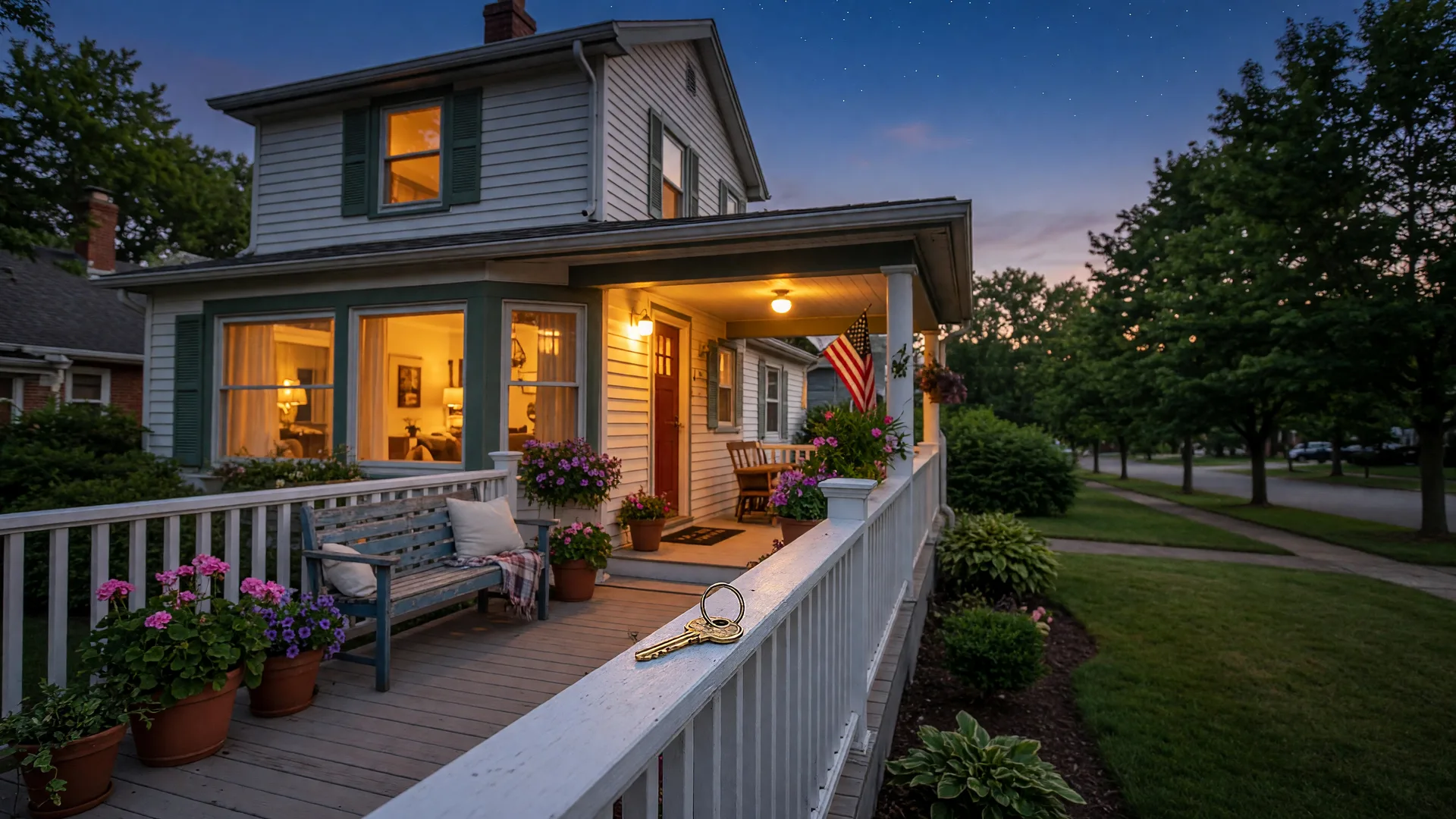
Let me be direct with you, the way I would be on the phone: this rate hike is real news, but it is not the catastrophe the headlines can make it sound like. I have guided clients through twenty years of rate cycles, from the 2006 to 2008 era through the pandemic lows and everything since. The pattern never changes. The buyers and sellers who stop, get their numbers together, and act with a plan always do better than the ones who wait for a headline to save them. Let me break down the announcement, what it means in Charlotte, St. Louis, and Naples, and how I would play the next few months.
01 -- What the Fed Actually Did, and What It Did Not Do
At its September 15 to 16 meeting, the Federal Reserve voted 12 to 0 to raise its benchmark interest rate by a quarter point, to a target range of 3.75 to 4.00 percent, its first hike since 2023. The Fed cited inflation that is still running hotter than it wants, and the statement signaled that another increase could come before the end of the year. That is the headline. Here is the nuance that matters more to you than any headline.
The Fed does not set mortgage rates. It sets the short-term rate that banks charge each other, and mortgage rates follow a different track: they are priced on long-term bond yields and on what investors expect inflation and the economy to do over the next ten to thirty years. That is why you can see the Fed cut rates and mortgage rates barely move, and why a Fed hike does not automatically push your payment up by a full quarter point. A meaningful chunk of this hike was already priced into mortgage rates before the meeting happened.
So where do rates actually stand? The 30-year fixed mortgage averaged 6.76 percent in Freddie Mac's September 10 survey, and a few lenders have crossed the 7 percent mark this month. Forecasters surveyed after the announcement expect the average to hold in the mid-to-upper 6 percent range through the rest of 2026, with the Mortgage Bankers Association projecting 6.60 to 6.70 percent and Fannie Mae 6.70 to 6.80 percent. In plain English: rates are not about to crater, but they are also not running away from you. They are high, stable, and plan-able, which is a very different situation from a market in free fall.
- The Fed's move: raised its benchmark rate a quarter point to 3.75 to 4.00% on September 16, 2026, the first hike since 2023, with one more possible this year.
- The 30-year fixed mortgage: averaged 6.76% in Freddie Mac's September 10 survey; some lenders crossed 7% this month.
- What forecasters expect: roughly 6.5 to 6.8% for the rest of 2026, nowhere near the 3% and 4% rates of the pandemic era.
- The honest takeaway: the time to buy is when the payment fits your budget, not when a headline says rates finally dropped.
02 -- Lock, Float, or Wait? The Only Three Options, Honestly Weighed
Every buyer this fall faces the same three doors, and I want you to walk through them with me before a lender ever asks. You can lock your rate now, you can float and hope for a dip, or you can wait on the sidelines entirely. Here is how I weigh each one for my clients in this exact market.
Lock when the payment fits your life
A rate lock holds your interest rate for a set window, typically 30 to 60 days, while your loan is processed. With rates where they are, my advice is simple: lock when the monthly payment works for your budget and your lender can live with the lock fee. You are not locking because you think rates are about to spike. You are locking because a known payment lets you negotiate, write offers, and plan a move without one eye on the news every morning.
Float-down clauses are the middle path
Many lenders offer a float-down option: you lock now, and if rates drop by a certain amount before closing, you get the lower rate anyway, often for a small fee. Ask for it. It is the classic headline-proof strategy for a market like this one. You get the security of a lock and the upside if forecasters are wrong in the good direction.
Why waiting usually costs more than it saves
Here is the math nobody puts in the headline. If you wait a year for rates to fall a half a point, you are paying rent for that year, and rent in Charlotte, St. Louis, and Naples all rose in 2026. More importantly, home prices in Charlotte and St. Louis have been climbing between 2 and 7 percent a year, so the same house often costs more when you finally buy it, which eats the rate savings in one bite. And in a balanced market like Charlotte's, the buyers who act while others freeze face the least competition, which is worth more than a fraction of a point on the rate.
One more honest note: mortgage rates are notoriously hard to time, and the professionals who spend their careers predicting them get it wrong constantly. What I can predict with confidence is that a buyer with a pre-approval, a locked payment, and a clear plan beats a buyer waiting for the perfect headline in virtually every market I have worked in twenty years.
03 -- How Each Market Is Absorbing the Rate News
A rate hike does not hit all three of my markets the same way, because the markets themselves are in very different positions. Here is the snapshot I would give you over coffee, city by city.
- Median home price: roughly $410,000 (Canopy MLS, July 2026), with some measures near $430,000.
- Active listings: about 17,500, up roughly 10% year over year, the most since before the pandemic.
- Months of supply: about 4.5, a genuinely balanced, buyer-friendlier market.
- Days on market: median around 66, up about 9.5 days from a year ago.
- The takeaway: the most leverage and the most selection Charlotte buyers have had in years, and rate news only deepens the negotiating room.
- Median residential price: about $340,000, up about 6.6% year over year (St. Louis REALTORS, August 2026).
- Townhouses and condos: about $220,000.
- Active listings: roughly 5,850 residential homes, up about 15% year over year.
- Months of supply: about 2 to 2.6, still seller-leaning even as it rebalances.
- The takeaway: the value leader of my three markets is still moving quickly, but buyers now get real choices for the first time in years.
- Overall median closed price: about $590,000, up 2.6% year over year (NABOR, July 2026).
- Single-family: about $745,000, up about 12.9%.
- Condos: about $400,000, down about 4.8%.
- Months of supply: about 5.8, down from 8.7 a year ago, sitting right at the balanced line.
- The takeaway: Naples is a cash-heavy market, which makes it the least rate-sensitive of the three, and its condo segment still holds real buyer leverage.
Put the three together and the picture is clearer than any single headline. Charlotte has the most inventory and the most leverage, so rate news slows things down and sharpens the deals. St. Louis is still scarce enough that a well-priced home moves, and the hike mostly pushes buyers to act rather than disappear. Naples leans on cash buyers who never touch a mortgage, so the single-family side barely blinks, while condo sellers feel the rate pinch most. Wherever you are, the rate news changes who is in the room with you, which is exactly the kind of information a professional negotiator turns into an advantage.
04 -- For Buyers: Five Moves That Actually Work at Seven Percent
If you are buying this quarter, here is the exact sequence I would run. None of it is glamorous, all of it works.
First, get pre-approved before you look at a single house. With rates around 6.7 to 6.8 percent, the monthly payment is the whole game, and a clean pre-approval is what separates the offers that get accepted from the ones that get set aside. This is not a suggestion, it is the first move.
Second, shop the lender as seriously as you shop the house. Two lenders can quote meaningfully different rates, points, and fees on the same loan. Ask each one for a written Loan Estimate, compare the total cost, and flat-out ask about float-down options and rate buydowns. You have negotiating power on the financing side too, and most buyers never use it.
Third, ask for the concession instead of settling for the price. In Charlotte especially, sellers who are carrying a listing into fall are motivated. A seller-paid rate buydown or a closing cost credit can lower your payment for the life of the loan and is often easier for the seller to stomach than dropping the price, because it costs them roughly the same while protecting their recorded sale price. This is one of the first things I negotiate, and it is worth real money.
Fourth, look where the supply is deepest. In Charlotte that means townhomes, condos, and new construction in places like Steele Creek, the River District, and the northern suburbs. In Naples it means condos, where months of supply still favor you. In St. Louis it means neighborhoods where new construction is active and builders are offering their own rate incentives. Builders have been competing for buyers with mortgage rate buydowns and closing cost help all year, and that is not slowing down after the hike.
Fifth, and most important, do not try to time the bottom. I have never met a buyer who successfully caught the exact low, and I have met plenty who missed years of living in the right house while they waited for a better number. If the payment fits, the neighborhood fits, and the house fits, that is the right time. Everything else is noise.
05 -- For Sellers: The Rate Hike Reprices Expectations, Not Just Loans
Sellers, I will give it to you straight. The market you are selling into this fall is not the market of 2021, and the rate news makes that gap impossible to ignore. In Charlotte, more than half of local listings have seen a price reduction this year, and the typical seller is closing around 96 to 97 percent of the original list price. That is not a disaster, it is a normal market, and normal markets reward the sellers who prepare. Here is what I would do this quarter.
Price to today's closed sales, not to what your neighbor listed. Listing prices are wishes. Closed sales are facts. In a rising-inventory market the first two weeks of your listing set the tone, and an overpriced home that sits for thirty days is almost always harder to sell, for less, than one priced right on day one. I build pricing from the comps that closed in the last ninety days, and I would not list a Charlotte home today without that discipline.
Plan to help the buyer's payment, not just the price. Buyers financing at 6.7 to 6.9 percent cannot stretch the way they could at 5 percent, and every half point of rate roughly adds or subtracts about 5 percent of purchasing power. A seller contribution toward a rate buydown, points, or closing costs often unlocks the exact buyer who is ready to say yes, and it is cheaper than a price cut while keeping your net similar. In St. Louis, where homes still sell in about a month and a half, offering a modest closing cost credit can create the competition that gets you to closing faster.
Present the home ready to show, because buyers compare. Charlotte buyers have seventeen thousand homes to scroll through, so the homes that photograph well, show clean, and are staged or decluttered win the tour. It sounds basic, but in a high-inventory market it is the difference between forty days and ninety days on market, in every metro.
Know your market's own rules of gravity. In Naples, single-family sellers can still be patient, the market is proving price-resilient, while condo sellers should lead with the association's reserve fund and financials in writing, because Florida's new inspection and reserve requirements have made buyers cautious about underfunded buildings. In St. Louis, time your list for the fall buyers who are out there now, and do not assume the hike cleared the room, because it often just makes the serious buyers more serious.
06 -- For Relocators: The Latest News in All Three Cities
Rates matter to relocators in a special way, because you are often carrying one mortgage decision from a place you are leaving into a completely different housing market, tax system, and contract style. Here is the freshest relocation news in each of my markets, and how I factor it into a move.
Charlotte: the jobs pipeline is still the story, and it survived the rate hike intact. Capital Group is building a $60 million east-coast operations hub expected to bring about 600 jobs, PSA Airlines moved its headquarters from Dayton with about 400 more, and the regional development alliance says the pipeline still holds roughly 7,000 jobs and $1.4 billion in potential investment, including a Cadillac Formula 1 team facility targeting Concord with about 300 jobs. Thirty-plus corporate projects in two years mean two things for you: a deep buyer pool to compete against, and a city that keeps needing housing. One honest caveat: the wins are not universal. In September the state terminated an incentive grant for TTI Floor Care, the company behind Dirt Devil, Hoover, and Oreck, which pledged 200 Charlotte jobs and is instead leaving for South Carolina. That is the normal churn of a big economy, and it is worth knowing as you make decisions.
St. Louis: the biggest relocation story of the year, Boeing returning its Defense, Space & Security headquarters to the region, is now fully official. Boeing established its St. Louis site as the BDS headquarters in February, and it has been hiring steadily, with hundreds of open positions across the metro. That anchors roughly 65,000 open jobs regionwide and keeps the defense and aerospace corridor the center of St. Louis gravity. Not every headquarters is staying: HFW Companies, a national architecture and engineering firm, moved its HQ from St. Louis to Dallas this spring. For a relocator, the arithmetic still leans your way: the metro median around $340,000 buys the kind of home, schools, and yard that command twice the price on the coasts, and your paycheque consistently goes further here.
Naples: the best news for relocators is literally arriving by air. American Airlines will begin nonstop service between Naples and Charlotte on December 2, 2026, the first scheduled commercial flights out of Naples Airport since 2017, and a direct answer for anyone splitting time between the two metros. Southwest Florida International Airport is meanwhile in a $1.1 billion expansion adding a new Concourse E with up to 33 gates. On the jobs side, medical-device maker Arthrex announced a $63 million-plus expansion in North Naples this spring with about 560 new positions, part of a quiet tech-and-healthcare diversification that now ranks the region among the top 20 tech metros nationally. And the tax angle still does work no Fed meeting can undo: no state income tax in Florida is a line item relocators should model carefully, right alongside property taxes and homeowners insurance, which are real in Collier County.
- Get pre-approved in BOTH states before you shop. NC, MO, and FL contracts, taxes, and timelines genuinely differ.
- Model the full monthly cost, not just the mortgage: property tax, insurance, HOA dues, and the income tax difference between your states.
- Ask your employer about relocation assistance up front, including mortgage rate buydowns, buyout programs, and temporary housing.
- Use new flight connections to time the move. The Naples to Charlotte nonstop starts December 2, which changes what "close to home" means for a two-metro family.
- Work with a broker licensed in all three states so the rate, contract, and timing questions get one answer instead of three.
07 -- The Bottom Line, in Plain English
Here is everything above in three sentences. The Fed raised rates, mortgage rates are holding in the high 6s, and forecasters see no big drop this year, so waiting costs you rent, price appreciation, and competition while it saves you almost nothing. Charlotte offers the most leverage and selection in years, St. Louis offers the most value for your money, and Naples offers the most patience if you have it. If the payment fits and the house fits, September and October are a genuine sweet spot, because the buyers reading the scary headlines are not in the room with you.
I have bought and sold through twenty years of rate news, and the clients who come to me with their numbers and their questions always land on their feet. That is the whole job: I advocate vigorously for my clients, and I treat them all like family. If the last week of headlines has you wondering what to do next, bring me your questions. We will put the numbers on the table, look at your actual timeline, and make a decision you can sleep on. That is a free consultation, and it costs you nothing but the time.
Wondering What the Rate Hike Means for Your Move?
Let us run your actual numbers together over a free consultation. Whether you are buying your first home, selling in a balanced market, or relocating across state lines, you will leave with a clear plan and no pressure, just honest answers from a 20-year broker licensed in NC, MO, and FL.
Book Your Free ConsultationSources
Market data and forecasts compiled from publicly available reports as of September 2026. Figures vary by source, neighborhood, and price band. This article is for general information only and is not legal, tax, or financial advice.
- Fed rate decision, September 2026: CNBC
- 30-year fixed-rate mortgage average: Freddie Mac Primary Mortgage Market Survey
- Mortgage rate forecast after September 2026 Fed decision: WRE News / Reuters
- Mortgage rates cross the 7 percent threshold: Yahoo Finance
- Charlotte housing market report: Canopy Realtors
- Charlotte mid-year housing market review: The Charlotte Observer
- St. Louis REALTORS monthly housing report: St. Louis REALTORS
- St. Louis housing market report: eMetropolitan
- Naples housing market report (July 2026): NaplesED
- Capital Group operations hub in Charlotte: Office of the Governor of North Carolina
- PSA Airlines relocates HQ to Charlotte: The Charlotte Observer
- Cadillac F1 team facility targeting Concord: Charlotte Regional Business Alliance
- TTI Floor Care leaves Charlotte for South Carolina: The Charlotte Observer
- Boeing establishes defense headquarters in St. Louis: St. Louis Public Radio
- HFW Companies relocates HQ from St. Louis to Dallas: St. Louis Business Journal
- Arthrex expansion in Collier County: FloridaCommerce
- American Airlines nonstop Naples to Charlotte service: Naples Real Estate
- Southwest Florida International Airport expansion: Love The Way You Live in Naples