
Community Spotlight: Charlotte, North Carolina.
The Queen City offers a rare blend of big-city opportunity and warm Southern hospitality. Here is everything you need to know about one of the fastest-growing metros in the country.
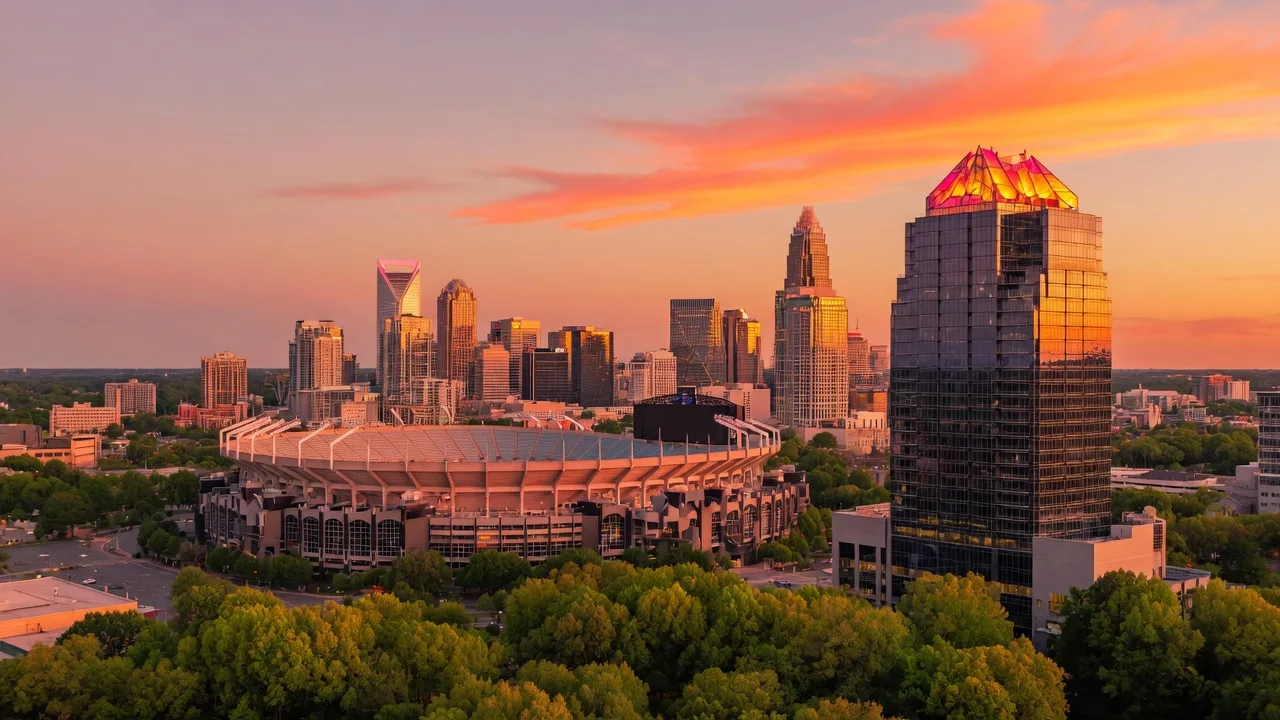
If you are considering a move to the Southeast, Charlotte has likely appeared on your radar. And for good reason. As one of the fastest-growing cities in the United States, Charlotte combines a thriving job market in banking, healthcare, and technology with a quality of life that is hard to match. You get the energy of a major city, the charm of the South, and a cost of living that still feels reasonable compared to other booming metros.
I moved to Charlotte recently myself, and I can tell you firsthand: this city welcomes you with open arms. The neighborhoods each have their own distinct personality, the food scene is exploding, and the sense of opportunity here is palpable. Whether you are relocating for a job, buying your first home, or looking for a fresh start, Charlotte has something for you.
What Makes Charlotte Unique
Charlotte is the largest city in North Carolina and the 15th-largest in the United States, with a metro population of over 2.7 million people. It is the second-largest banking center in the country after New York, home to Bank of America's global headquarters and a major East Coast hub for Wells Fargo. This financial backbone has fueled decades of steady growth, diversifying into tech, healthcare, and energy along the way.
But Charlotte is more than its skyline. The city is known for its tree canopy, earning it the nickname "The City of Trees." Uptown (the locals call the central business district Uptown, not Downtown) is a compact, walkable core with skyscrapers, museums, sports venues, and a growing collection of rooftop bars and restaurants. Surrounding Uptown are dozens of distinctive neighborhoods, each with its own personality, from the historic mansions of Myers Park to the brewery-lined streets of South End.
Charlotte is also a city that loves its sports. The Carolina Panthers (NFL), Charlotte FC (MLS), and the Charlotte Hornets (NBA) call the city home, and NASCAR's Hall of Fame is right in Uptown. In 2026, Charlotte is hosting multiple FIFA World Cup matches, putting the city on an international stage.
The Housing Market in Charlotte
Charlotte's housing market is as diverse as its neighborhoods. Across the latest published 2026 data, the median home sale price in the Charlotte region runs roughly $410,000 to $425,000, per Canopy MLS (whose July 2026 regional median was $410,000) and Redfin-based trackers, with significant variation depending on the neighborhood. You can find condos and townhomes in the $250,000 to $400,000 range, single-family homes in the $350,000 to $700,000 range, and luxury properties in the million-dollar-plus range in the city's most prestigious neighborhoods. Inventory sits near its highest level since before the pandemic, so buyers finally have real choice, and homes are spending more time on market: about 55 days on average in July 2026, up from roughly 46 a year earlier. For sellers, pricing accurately from day one is the surest path to a quick sale.
What makes Charlotte's market particularly appealing is its relative affordability compared to other major metros. A $500,000 home in Charlotte buys you significantly more space and quality than a comparable home in Atlanta, Nashville, or especially coastal cities like Washington DC or Boston. The market has seen steady appreciation of 5% to 8% annually over the past five years, driven by strong in-migration from other states.
The city has also seen a boom in new construction, particularly in the suburbs and emerging neighborhoods. Townhome developments are sprouting up in walkable areas, catering to young professionals and downsizers who want urban living without the maintenance of a single-family home.
Charlotte Market Snapshot (2026 Reports)
- Median home price: ~$410,000 to $425,000 (Canopy MLS July 2026 regional median $410,000)
- Price range: $250K (condos) to $2M+ (luxury estates)
- Annual appreciation: about 1% year over year on the median (July 2026), steadier than the boom years
- Property tax rate: ~$0.81 per $100 assessed value (Mecklenburg County)
Top-Rated Schools
Charlotte-Mecklenburg Schools (CMS) is the largest school district in North Carolina, serving over 140,000 students across more than 180 schools. The district offers a wide range of options, including traditional public schools, magnet programs, and early colleges. Some of the most notable high schools include Myers Park High School, Ardrey Kell High School, and Providence High School, all of which consistently rank among the top in the state.
Charlotte is also home to a strong network of private and charter schools. Charlotte Latin School, Providence Day School, and Charlotte Country Day School are among the top private institutions in the Southeast. The city also offers several highly regarded magnet programs, including the International Baccalaureate program at Myers Park High and the STEM program at Mallard Creek High.
For higher education, Charlotte is home to the University of North Carolina at Charlotte (UNCC), a growing research university with over 30,000 students. Queens University of Charlotte, a private liberal arts college, is located in the heart of the Myers Park neighborhood.
Things to Do in Charlotte
Charlotte's cultural scene has grown dramatically over the past decade. The Uptown area is home to the Mint Museum, the Bechtler Museum of Modern Art, the Harvey B. Gantt Center for African-American Arts + Culture, and the Discovery Place Science museum. The Blumenthal Performing Arts Center hosts Broadway tours, concerts, and theater productions year-round.
For outdoor enthusiasts, the city has an impressive network of parks and greenways. Freedom Park, just south of Uptown, is a 98-acre oasis with a lake, walking trails, sports fields, and a playground. The U.S. National Whitewater Center, located just west of the city, offers whitewater rafting, zip-lining, mountain biking, and rock climbing on 1,300 acres of outdoor adventure.
The food and beverage scene in Charlotte is thriving. South End is the epicenter of the craft brewery scene, with over a dozen breweries within walking distance of each other along the light rail line. Uptown offers everything from steakhouses to farm-to-table restaurants, while neighborhoods like Plaza Midwood and NoDa serve up eclectic, locally owned dining options. The city's farmers markets, particularly the Charlotte Regional Farmers Market, are a weekend staple for locals.
Commute & Location
Charlotte is exceptionally well-connected. Charlotte Douglas International Airport (CLT) is the second-busiest airport in the world by operations, offering nonstop flights to over 170 destinations. The city's location at the intersection of I-85 and I-77 puts it within a three-hour drive of the mountains (Asheville) and a three-hour drive of the beach (Myrtle Beach, SC, and Wilmington, NC).
The Charlotte Area Transit System (CATS) operates the LYNX Blue Line light rail, which runs from the University of North Carolina at Charlotte through Uptown to South End and all the way to Pineville. The light rail is a game-changer for commuters and a major factor in the popularity of neighborhoods along its route. The city also has an expanding network of bike lanes and greenways.
Commute times in Charlotte are manageable compared to other major metros. The average commute is about 25 minutes, though traffic on I-77 and I-85 during peak hours can push that to 40 minutes or more for longer suburban commutes.
Who Lives Here
Charlotte attracts an incredibly diverse mix of residents, which is one of the things I love most about this city:
- Young professionals drawn by the banking, tech, and healthcare job markets. South End, Uptown, and NoDa are the neighborhoods of choice for this group.
- Families looking for great schools, safe neighborhoods, and a reasonable cost of living. Dilworth, Myers Park, and the suburban communities offer excellent options.
- Relocating professionals from other states, particularly New York, California, and the Midwest. Charlotte is a top destination for corporate relocations.
- Retirees and empty nesters who want an active urban lifestyle with access to culture, dining, and healthcare. The city's mild climate is a major draw.
- Sports fans who love having NFL, MLS, NBA, and NASCAR all within a few miles of each other.
A Few Things to Know Before You Buy
Charlotte is a fantastic city, but no place is perfect for everyone. Here are a few things to keep in mind:
- Traffic is growing. As the city grows, so does congestion on the interstates and major arteries. The light rail helps, but it only covers a limited corridor. If you commute by car, factor in extra time.
- Property taxes are moderate but rising. Mecklenburg County's tax rate is reasonable, but rapid appreciation means your tax bill may increase over time. Budget for potential reassessments.
- Neighborhoods vary dramatically. A 10-minute drive can take you from a historic district with million-dollar homes to a more affordable area with a completely different character. Working with a local agent who knows the nuances is essential.
- It is growing fast, and that is a good thing. More restaurants, more cultural venues, more jobs. The city is investing heavily in infrastructure, parks, and transit. The Charlotte of today is already different from the Charlotte of five years ago, and the trajectory is positive.
The Bottom Line on Charlotte
Charlotte is a city that works. It has a strong economy, diverse neighborhoods, excellent schools, and a quality of life that keeps drawing people from across the country. Whether you are moving here for a job, a relationship, or just a fresh start, you will find a community that welcomes you.
I moved to Charlotte recently myself, and I am constantly amazed by the energy and opportunity here. Every neighborhood has its own personality, and every client I work with finds a different part of the city that speaks to them. That is the beauty of Charlotte, it has room for everyone.
Thinking about Charlotte?
Whether you are ready to tour homes in Charlotte or just starting to explore the Queen City, I will help you find the neighborhood that fits your lifestyle, budget, and goals. No pressure, just real expertise.
Schedule a Free Consultation30-minute video call. No sales pressure, ever.
20 years of expertise. Dual Metro. Same unstoppable results.
-- Tracey De Simon