
What's Breaking Ground: The Public Money, Projects, and Policy News Reshaping Charlotte, St. Louis & Naples
This is the story of the decisions that will shape your neighborhood's next five years, made in just the last ten days: Charlotte voters approved a $425 million bond package, North Carolina won 204 new federal Opportunity Zones, St. Louis is pouring Rams settlement money into a downtown sports and entertainment district ahead of the 2028 Olympics, and Naples broke ground on workforce housing while a mystery buyer assembled a $311 million waterfront estate. Here are the numbers, the honest translation for your home's value, and exactly what I would do with this information if I were buying, selling, or relocating in any of my three markets.
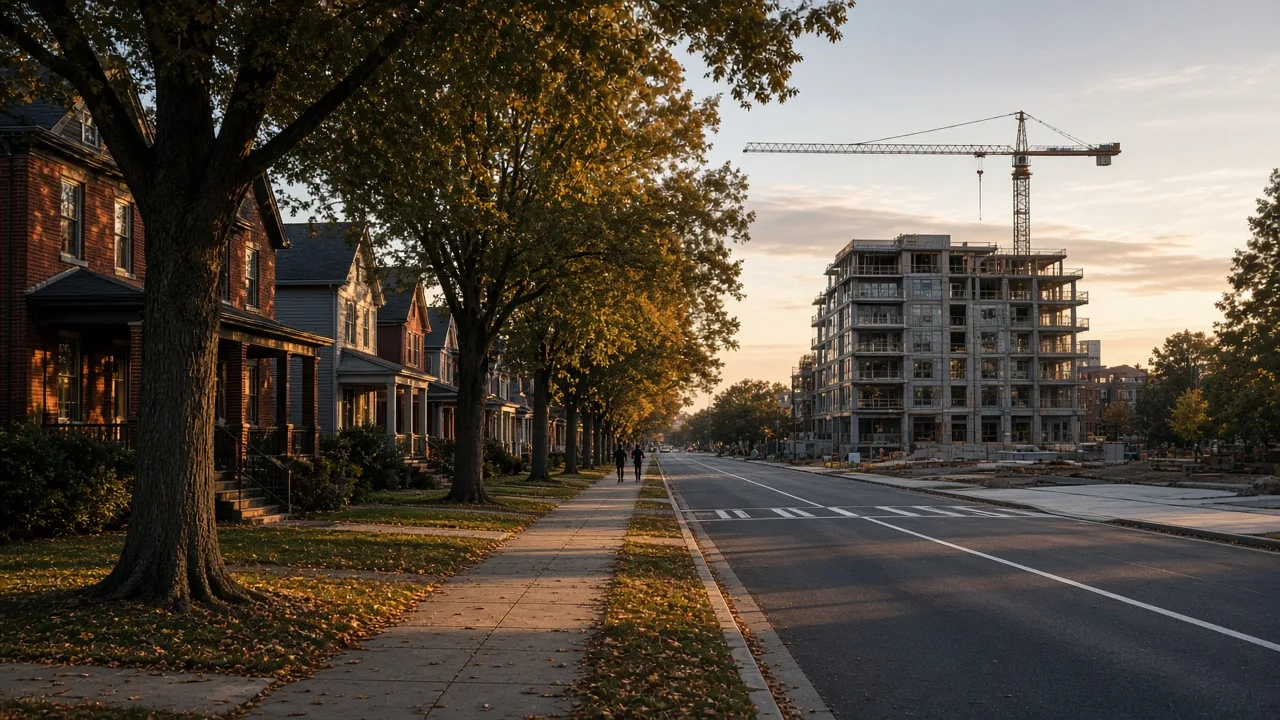
Market reports tell you where prices are. This is different: it is the story of the public money, private projects, and policy changes that tell you where prices are going, because the ground under a home's value is built as much in city council chambers and ballot boxes as it is in open houses. In the past ten days, all three of my markets made consequential decisions about what gets built next. If you are buying, selling, or relocating, this is the news that will show up in your appraisal and your commute over the next few years. Let me walk you through each market, then give you the playbook.
01 -- The One Number That Frames the News
Before the ballot boxes and the bulldozers, the rate backdrop: the 30-year fixed-rate mortgage averaged about 7.18 percent in Freddie Mac's Primary Mortgage Market Survey for the week ending November 5, 2026, the third consecutive weekly decline, with the 15-year at about 6.57 percent. That is down from 7.24 percent the week before, and up from 6.22 percent a year ago. The direction matters more than the size: after months of drifting between the high 6s and the low 7s, every small dip pulls a fresh wave of buyers off the fence, which is exactly why the people already pre-approved are the ones writing the offers this month.
And do not count on a rate rescue in 2027. The forecasters are unusually aligned that the big drop is not coming: Fannie Mae's October outlook expects the 30-year to average about 7.5 percent through 2027, the Mortgage Bankers Association sees the low 7s easing only slightly to about 7.1 percent by the fourth quarter, and even the optimists like Goldman Sachs, which expects a meaningful easing, still see rates staying near 6.4 percent. With national price growth forecast near flat, Fannie at about plus 0.6 percent and Cotality's November outlook at about plus 0.9 percent, the market you are in right now is not a waiting game. It is a selection game. And in a selection game, the difference between neighborhoods is increasingly being written by the projects below.
02 -- Charlotte: A $425 Million Vote for the Next Decade
On November 4, Charlotte voters approved a historic $425 million general obligation bond package with no property tax increase: $280 million for transportation, $125 million for affordable housing, and the remainder for neighborhood projects. That is the single biggest signal yet about where the city believes its future is: it is spending more on moving people and on housing the workforce than on anything else, and that combination tells you a lot about which corridors and which price points are being prepared for growth.
The very next day, November 5, Governor Josh Stein announced that North Carolina received U.S. Treasury certification for 204 census tracts as new federal Opportunity Zones, effective January 1, 2027, including tracts in the Charlotte region. Opportunity Zones offer tax incentives for private investment in designated communities, and the practical translation for buyers and sellers is simple: these are the neighborhoods where the smart money is being actively invited to build, renovate, and invest over the next ten years. They are not a promise of appreciation, but they are a road map of where the city's attention will be. I mapped the corridor-level growth stories in the up-and-coming neighborhoods guide, and these zone designations reinforce that picture.
- Median sale price: about $420,000 over the three months ending September (Redfin), with the Canopy MLS 16-county region median near $392,990, down 0.5% year over year, and the average near $512,541, up 1.7%.
- Days on market: about 58, up from about 52 a year earlier: buyers finally have time to compare.
- Months of supply: near 4.3 to 4.5 region-wide, the most balanced reading in years.
- The bond vote: $425 million approved November 4 with no property tax increase: $280M transportation, $125M affordable housing, rest neighborhood projects.
- The policy news: 204 new North Carolina Opportunity Zones certified November 5, effective January 1, 2027, including Charlotte-region tracts.
- The takeaway: prices are steady while the city invests heavily in the infrastructure and housing that support long-term values.
If you are a buyer in Charlotte, the bond vote and the Opportunity Zones are a reason to expand your search, not narrow it. The $125 million affordable housing piece, in particular, is a signal that the city is serious about keeping the workforce in the city, which supports values across the middle of the market. If you are a seller, and your neighborhood sits near a funded transportation project or in a newly designated zone, that is a real story to tell in your marketing, as long as you pair it with pricing anchored to the current market, which is balanced, not hot. Homes are still taking about 58 days to find a buyer, so the first two weeks on the market matter more than ever.
03 -- St. Louis: Downtown Money and a 2028 Olympics Story
Greater St. Louis is my value market, and this month it got the most underreported story of my three metros: downtown is being rebuilt with purpose. Coverage published November 1 tied the downtown revitalization directly to St. Louis hosting soccer matches in the 2028 Olympics, with a public-private venture spending $55 million in Rams lawsuit settlement funds and a new Downtown St. Louis Sports and Entertainment district taking shape around it. Add the November 5 partnership between Greater St. Louis, Inc. and the St. Louis Small Business Empowerment Center to help small businesses access financing and compete for contracts, and the November 10 relaunch of the St. Louis Development Corporation's Small Business Grant Sprint, and the picture is a city investing in both the big stage and the small storefronts around it.
- Metro median: about $274,000 list and about $273,000 typical home value, up about 3.3% to 7.5% year over year depending on the measure (Zillow via Picks by Property); MSA median sold near $305,000, up about 6% year over year (August).
- Days on market: roughly 11 metro-wide, with the City of St. Louis near 23: the suburbs still move fast.
- Inventory: about 8,900 to 9,000 homes for sale, up about 9% year over year, with the sale-to-list ratio near 100.1%.
- The downtown story: $55 million in Rams settlement funds and a new Downtown St. Louis Sports and Entertainment district ahead of 2028 Olympics soccer matches.
- The small-business story: Greater St. Louis, Inc. and SBEC partnership signed November 5; SLDC's Small Business Grant Sprint relaunched November 10.
- The takeaway: homes still sell quickly in the suburbs, the City offers the deepest value, and the downtown investment is the region's long-term story.
For sellers in St. Louis, the message is the same one I have given for twenty years, with a fresh twist: price to the current market, and if you are anywhere near the downtown district or a funded corridor, tell the 2028 story. For buyers, the honest advice is that this remains the market where your dollar goes furthest, and where the City itself rewards patience: near the $250,000 median, homes take about three weeks to find a buyer, which gives you real time to compare. And if you are a relocator choosing between my metros, St. Louis is the one where the rent-to-price math is kindest and the public investment is now backing the urban core, not just the suburbs. You can see the full city and county picture on my St. Louis market page.
04 -- Naples: Workforce Housing Breaks Ground, and a Record Estate Takes Shape
Naples made news this month at two extremes of the market, and both matter. On the workforce side, McDowell Housing Partners closed financing and started construction on Clara Landings, an 84-unit affordable community at 4470 Santa Barbara Boulevard in Naples: 60 one-bedroom and 24 two-bedroom apartments in a four-story building, with rents capped across 30, 60, and 70 percent area median income tiers, and completion expected in spring 2028. It joins the 62 affordable units Collier County commissioners approved in East Naples in the same week, plus a mixed-use development with workforce housing replacing an abandoned restaurant at U.S. 41 and Andrew Drive. For a market that has spent years wrestling with affordability, that is real supply, and it tells every buyer and employer in the region that the county is serious about keeping its workforce housed.
At the other extreme, a mystery buyer spent $86 million on a property along Gordon Drive in Port Royal in early November, assembling a 19-acre waterfront estate totaling roughly $311 million, with demolition permits already approved. It is the kind of headline that says the top of the Naples market is not just surviving, it is consolidating. In between, a second Costco is under construction on Collier Boulevard in East Naples, which is as good a sign as any that the county's population growth is here to stay.
- Median closed price: about $575,000, up 4.5% year over year (September NABOR report); year-to-date essentially flat near $600,000.
- Inventory: about 4,240 active listings, down about 17.3% year over year, with months of supply compressed to about 5.5 from about 7.8 a year earlier.
- The texture: average days on market near 99, down about 7.5% year over year, with 623 closed sales and 1,073 new listings in September.
- The workforce news: Clara Landings, 84 affordable units, broke ground on Santa Barbara Boulevard; 62 more affordable units approved in East Naples; workforce housing approved at U.S. 41 and Andrew Drive.
- The luxury news: a mystery buyer assembled a 19-acre, roughly $311 million waterfront estate in Port Royal.
- The takeaway: the market is firming for season while the county builds the housing its workforce needs.
For buyers, the Naples story is about timing and segment. Single-family homes are firming as the season arrives, and the 17 percent inventory compression means the patient window from earlier in 2026 is closing. Condos remain the segment where buyers hold more leverage, and the new workforce supply is a reminder that affordability pressure is being addressed at the county level, which is good for the region's long-term stability. For sellers, the Port Royal headline and the inventory compression are useful context, but the September ratio still holds: homes close at about 94.8 percent of list on average, so realistic pricing wins the week. For relocators, the December 2 start of American Airlines' Naples-to-Charlotte nonstop makes the two-metro life dramatically easier, and the workforce housing pipeline is the most concrete affordability answer the county has produced in years.
05 -- What Public Investment Actually Does to Home Values
Let me be the honest one in the room, because I have watched twenty years of announcements come and go. A bond vote, a designation, or a groundbreaking is not a guarantee of appreciation. It is a signal about where a city is choosing to spend the next decade of tax dollars and private attention. Transportation funding tends to support values along the corridors it touches, but it also changes where the traffic goes, so the specific street matters. Affordable housing production is the single most stabilizing force for a hot market, because it relieves the exact pressure that prices out teachers, nurses, and young families. And an Opportunity Zone is an invitation to capital, not a promise of it: some zones thrive, and some stay quiet.
So here is the disciplined way to use this news. Never buy a story you would not buy the neighborhood without. If the project completes, you should still be glad you live there; if it stalls, you should still be glad you live there. Walk the corridor, check the commute, look at the school path, and price your decision on the neighborhood as it is today, with the project as upside, not as the price. And always check the practical details a headline does not show: what a funded road project means for your block's traffic, whether a new workforce complex changes the character of a street, and whether any of it shows up in your taxes or association dues.
06 -- The November Playbook: Buyers, Sellers & Relocators
Public money is only useful as a plan. So here is exactly how I would use the last ten days of news in each seat, market by market.
- Use the 7.18 percent window now: rates have fallen three weeks in a row and forecasters see them holding in the low 7s for 2027, so the dip you can lock today is the dip you can count on.
- In Charlotte, map the bond and the zones: walk the corridors that got transportation funding and the newly designated Opportunity Zones, then compare prices against nearby neighborhoods. The value is in the location, not the headline.
- In St. Louis, buy near the downtown story if you can tolerate construction: the $55 million district spend and 2028 Olympic matches are real catalysts, and the City still offers the deepest value at about 23 days on market.
- In Naples, act before the season peaks: inventory is down about 17 percent and single-family is firming; condos still favor you, and the 94.8 percent close-to-list ratio tells you sellers are negotiating.
- Ask the project questions before you offer: what is the timeline, what is the traffic plan, does it change school zoning, and does any of it touch your HOA or property taxes?
- Get pre-approved before you tour. Every market in this post rewards the buyer who can write a clean offer with a rate locked, and that has not changed.
- Charlotte: if your neighborhood is in the path of a funded transportation project or a new zone, put it in your marketing, and pair it with pricing anchored to the last 90 days of closed sales, because 58 days on market means the first two weeks decide the sale.
- St. Louis: the suburbs still sell in about 11 days at essentially full list, so you do not need a discount, but you do need honest staging and photos. Downtown-adjacent? Lead with the 2028 district story.
- Naples: list before Thanksgiving to catch the early seasonal buyers, price condos against the softer segment, and count on negotiating: buyers close at about 94.8 percent of list on average.
- Everywhere: a seller-paid rate buydown or closing-cost credit often costs you less than a price cut, and at 7.18 percent it can be the exact thing that converts a tire-kicker into a contract.
- Charlotte if you want a city that is building its own future: a $425 million bond with no tax increase, 204 new Opportunity Zones, and a job machine that keeps adding high-wage employers. The infrastructure spending is a long-term value signal.
- St. Louis if you want the most house and the deepest urban value: the downtown and Olympics investment is the region's most underrated story, and the rent-to-price math is the kindest of my three metros.
- Naples if you are building a two-metro life: the Charlotte nonstop starts December 2, workforce housing is breaking ground, and the luxury market is consolidating, which tells you the region's floor is solid.
- Check the practical ledger before you fall in love: property taxes, insurance, HOA dues, and the income-tax difference between your old state and your new one. Public projects are upside; your monthly budget is the baseline.
- Work with a broker licensed in NC, SC, MO, and FL so the contract, tax, and timing questions get one answer instead of four, and start the conversation before you land, because the best listings in every market still move while the calendar says quiet.
07 -- The Bottom Line, In Plain English
Here is everything above in four sentences. Rates are at about 7.18 percent after three straight weekly declines, and the forecasters agree the big drop is not coming in 2027, so the buying power you have this month is the buying power you should use. Charlotte is investing $425 million in transportation and housing with no tax increase, St. Louis is pouring Rams money into a downtown district ahead of the 2028 Olympics, and Naples is building workforce housing while the top of the market consolidates. None of it guarantees appreciation, but all of it tells you where each city's attention and money will go for the next decade. The people who act on that information this month will be the ones who got to choose; everyone else will watch the cranes from the sidelines.
This is the part of my job I love the most: turning headlines into a plan for your family. I have advocated for buyers and sellers through twenty years of this business and every kind of market, and I still treat every client like family, because that is how this is supposed to feel. If you are wondering what any of this means for your move, bring me the question. We will look at your timeline, walk the neighborhoods that fit you, run the real numbers for your market, and decide together, free, with no pressure and no obligation. That is what the next hour is for.
Let's Map Your Move Together
Book a free consultation and we will put your timeline and your numbers on the table. Whether you are buying, selling, or relocating across state lines, you will leave with a clear plan for the months ahead and no pressure, just honest answers from a 20-year broker licensed in NC, SC, MO, and FL.
Book Your Free ConsultationSources
Market data and news compiled from publicly available reports as of November 9, 2026. Figures vary by source, geography, and price band. This article is for general information only and is not legal, tax, or financial advice.
- 30-year and 15-year fixed-rate mortgage averages: Freddie Mac Primary Mortgage Market Survey and Freddie Mac news release
- 2027 mortgage rate and price forecasts: LendingTree, Goldman Sachs, and Cotality
- Charlotte $425 million bond approval: WFAE
- North Carolina Opportunity Zones: N.C. Department of Commerce
- Charlotte market data: Redfin and Canopy REALTORS
- St. Louis downtown and Olympics investment: Planetizen
- St. Louis small business partnership: St. Louis American
- St. Louis market data: Picks by Property, Redfin, and St. Louis REALTORS
- Naples Clara Landings groundbreaking: Florida YIMBY
- Naples week in review (Nov 2-8, 2026): Your Naples Expert
- Naples Port Royal estate assembly: Robb Report
- East Naples affordable housing approvals: Hoodline and Naples Daily News
- Naples market data: NaplesED and NABOR