
Where the Growth Is: The Up-and-Coming Neighborhoods to Watch in Charlotte, St. Louis & Naples
Every market has two speeds: the neighborhoods everyone already knows, and the ones everyone is about to know. This article names the up-and-coming areas in Charlotte NC, greater St. Louis MO, and Naples FL right now, with the real price data behind each one, the buyer, seller, and relocator moves they reward, and the fresh early-November developments that point each corridor's direction. If you want to see the next wave of growth before it fully arrives, this is the list I hand my own clients.
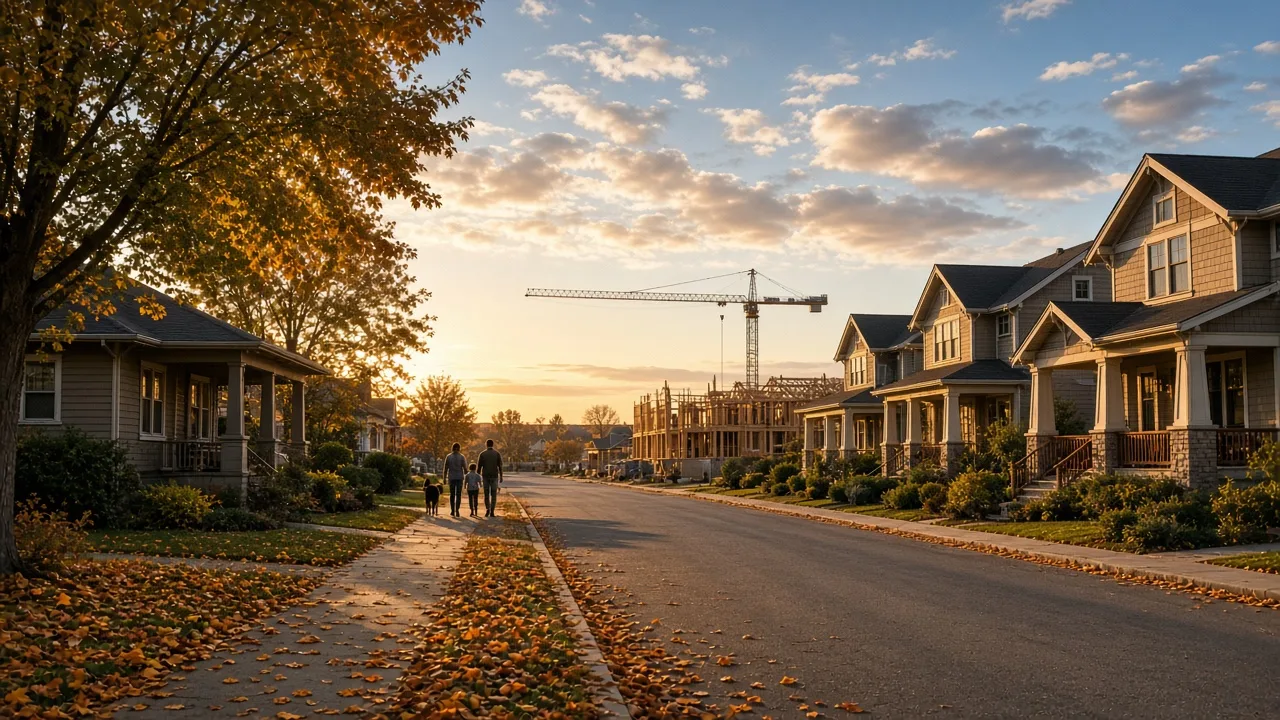
Clients ask me some version of this question almost every week, in all three of my markets: where is the next South End? Or the next Kirkwood? The next place that still feels like everyone else is about to discover it? The honest answer in late 2026 is more specific than it has been in years, because the broad metro numbers have gone quiet while the corridor numbers have stayed loud. Total appreciation has cooled almost everywhere, but growth has not disappeared, it has concentrated. The people getting the most out of this market are the ones reading the neighborhood-level data instead of the metro headline, and that is exactly what I want to do with you today.
01 -- Why "Up-and-Coming" Matters More in a Balanced Market
Here is the big-picture shift first, because it explains everything else. The 30-year fixed rate is hovering in the low 7s, near about 7.24 percent in Freddie Mac's late-October survey, and after two years of normalization the metro-wide medians have mostly flattened. Charlotte's metro median sits around $420,000, roughly flat to down about 1 percent year over year depending on the source, even as Canopy and Opendoor report modest 2 to 4 percent growth in their own measures. St. Louis remains the value story, with the City's median near $250,000 over the three months ending September and St. Louis County's median near $325,000, up an eye-opening 8 to 12 percent across Redfin and MORE REALTORS measures. Naples has absorbed a genuine correction, with the countywide typical home value near $552,000, down from the 2024-2025 peak but firming as season begins.
The translation is simple: when the tide goes flat, the inlets still move. In all three metros, the neighborhoods and corridors I am about to name are the ones where prices are climbing, new housing is landing, jobs are arriving, or all three at once. Buying before a corridor turns is how buyers in earlier cycles locked in the equity their friends chased later; selling into one is how sellers capture the premium; and relocating into one is how families land somewhere with momentum instead of a rumor. Let us read each market street by street.
02 -- Charlotte: Where the City's Energy Is Concentrating
Charlotte's headline is balanced, but the block-level data tells a different story: the city's coolest ZIP codes are still appreciating at double-digit clips while the metro median sits still. Of the in-town neighborhoods buyers ask me about most, the momentum leaders are South End, the Lower South End (LoSo), and Wesley Heights, and west of the city proper, Belmont, Mount Holly, and the Kannapolis value play.
- South End: median around $565,000, up about 4.6% year over year, roughly 11% over the spring-to-summer stretch in one Redfin reading, and about 41% over five years, the strongest long-term appreciation in the metro. The Rail Trail, the light rail, the breweries: the growth is priced in, but it keeps compounding.
- LoSo (Lower South End): the same energy one degree further south, with a mid-2026 median near $530,000 on RPR. Slightly more room to the price, slightly less to the scramble.
- Wesley Heights: the west-end story, with a Canopy MLS median around $409,000 as of Q3 2026, buoyed by the Iron District development near Bank of America Stadium. That is one of the last in-town medians still under $450,000 within ten minutes of Uptown.
- Fastest-appreciating ZIPs: 28206 (up about 11.6% year over year) and 28208 (up about 9.1%), the west-side industrial-to-residential corridor, though the older data points run hot, so price carefully.
- Belmont: the standout suburb, median around $555,000, up about 5% year over year in Redfin's spring reading, with the riverfront, the downtown Main Street, and the Daniel Stowe connection.
- Mount Holly: the same west-side momentum $20,000 to $40,000 cheaper than Belmont, with older single-family homes from the $240Ks to $345Ks and newer construction from the $320Ks to $455Ks.
- Kannapolis: the value-growth play, median around $302,500 in Resideline's October reading with a Zillow average near $284,000, and Concord's new construction running $240,000 to $320,000. Nothing in the metro gives you this much house for the payment this close to the action.
What makes these corridors worth watching is not the price, it is the catalyst. South End keeps compounding because apartments, offices, and the Rail Trail keep landing there. Wesley Heights is not just up-and-coming, it is about to be wired into the stadium district. And the western suburbs from Belmont through Mount Holly to Kannapolis sit on the side of the metro where employment is spreading fastest, which is how a corridor becomes a neighborhood people plan around. If you are a buyer who wants to be early without being reckless, my honest guidance is LoSo and Wesley Heights in town, and Mount Holly if you want a yard at a price that still feels 2020.
03 -- St. Louis: The City's Rehab Frontier and the County's Growth Belt
Greater St. Louis is the market where "up-and-coming" is a literal construction site, because the region is building two stories at once. Inside the City, a ring of historic neighborhoods is being rehabbed block by block at prices that make out-of-town buyers blink twice. In St. Charles County, whole suburbs are growing from zero, population up and rooftops going down in straight lines.
- The Grove (Forest Park Southeast): the city's most talked-about rising neighborhood, anchored by the CITY SC stadium district and the $40 million Union at the Grove, which adds more than 160 residential units. It shows up on nearly every top up-and-coming list in the region.
- Fox Park / Cherokee Street: described by local analysts as one of the last truly undervalued pockets south of Lafayette Square, with rents climbing from about $1,100 to $1,500-plus in 24 months as rehabs spread street by street.
- Tower Grove South: a 2026 median around $258,000 on Redfin (up about 13.7% in the latest month) and a 12-month median near $275,000 on Homes.com (up about 8%). The city's sweet spot of value, parks, and restoration, with a mid-year pause buyers treated as a stabilization window.
- Wentzville: population roughly 49,500 in the Census Bureau's July 2025 estimate, up about 75% since 2010, with an average home value near $404,000. One of Missouri's fastest-growing cities, full stop.
- Cottleville: St. Charles County's fastest-growing community, with a 2026 median around $452,000 on Redfin and a typical value near $535,900, up about 3%. This is where the county's new-construction wave is landing.
- St. Charles City: median around $330,000, up about 2% year over year, with new inventory surging, which is exactly the recipe that keeps a growth market negotiable.
The City versus County split is the whole story of St. Louis right now, and it is a gift for buyers who know their own priorities. Inside the City, the medians are still in the $230,000 to $275,000 band in Tower Grove South, and the carbon-copy comment I hear from my out-of-market clients is "why are these houses so cheap?" Because the work is ahead of the price, and that is precisely the window. In St. Charles County, you are not buying a fixer story, you are buying the built-out future, schools, trails, and new neighborhoods, with the trade-off that you are in the car more. Buy the City for the value and the culture at the price of elbow grease; buy the County for the turnkey life at the price of the commute.
04 -- Naples: The Shift East and North Is Already Underway
Naples's headline story for years was the Gulf-front luxury corridor, but the growth story of 2026 is decidedly inland. Collier County is pushing east and north, up the Collier Boulevard corridor, into Golden Gate Estates, across to the master-planned town of Ave Maria, and eventually into tens of thousands of approved acres in eastern Collier. For buyers priced out of the west-of-41 premium, this is where the market opens back up.
- East Naples / the Collier Boulevard corridor: the fastest-growing quadrant in the county. ZIP 34114 logged 1,092 sales in the twelve months ending August 31, 2026, the most of any Naples ZIP, including 228 builder-direct new homes at a $922,500 median. The typical value sits near $510,849, down about 8.9% year over year, which means the newest houses are where the leverage is.
- Golden Gate Estates: the acreage value play east of the city, where the ten-acre lot still exists. Roughly 715 to 731 homes closed in the twelve months ending September 30, 2026 at a median around $570,000, including 220 new builds at $575,000, while 364 raw lots traded at a $130,000 median for about 2.27 acres each.
- Ave Maria: the eastern Collier master-planned town around Ave Maria University, where builders sold 377 homes directly in the twelve months ending August 2026 at a $435,000 median and resales ran about $390,000. That is near-North Carolina pricing with Naples weather, about 24 miles inland.
- North Naples: the family-growth story with the top school district and the Mercato expansion, plus the I-75 diverging-diamond interchange at Pine Ridge Road now under construction to handle the traffic paradise creates.
- On the horizon: Corkscrew Grove Villages, approved for up to 4,502 homes on about 1,446 acres of former citrus land; Caymas, the roughly 780-acre Pulte and Stock Luxury community off Collier Boulevard with homes from the $800Ks to $2 million-plus; and the Town of Big Cypress villages along Oil Well Road, with construction hoped for as early as 2028.
Here is the honest read from a broker who watches all three of her markets through the same lens. Collier County's single-family market is firming just in time for season, with the September median closed price near $575,000, up about 4.5 percent. But the correction that flattened prices across 2025 and early 2026 created real openings in the growth corridors: East Naples builder-direct homes, Golden Gate Estates acreage, and Ave Maria new construction all traded below their 2024 highs even as the rest of the market stabilized. If you have been dreaming of a Naples lifestyle at a price your payment can actually carry, the inland half of the county is where that math works, and the master-planned pipeline shows the county already knows it.
05 -- The Early-November News That Points the Direction
Neighborhoods do not go up-and-coming by accident. They go up because jobs, money, and housing policy land there, and the first week of November delivered fresh signals in all three of my metros.
Charlotte, NC: the financial-services flywheel keeps adding a floor. On November 3, the Charlotte Regional Business Alliance released an analysis of six recent financial-services expansions in the region: Citigroup, SoFi, Pacific Life, Capital Group, Sumitomo Mitsui Banking Corp., and JPMorgan Chase, projecting roughly 4,200 to 4,500 net new jobs, with corporate functions about 36 percent of the roles and technology about 24 percent. A week earlier, The Clearing House Payments Company chose Charlotte over Atlanta, Dallas, and Tampa for a client operations center with 200 jobs at an average salary around $162,000. High-wage jobs mean two things for the corridors above: sustained demand in the in-town neighborhoods where those workers want to live, and spreading employment that keeps the western suburbs and the airport corridor credible for the next decade.
Greater St. Louis, MO: momentum is coming home. On November 2, Greater St. Louis, Inc. highlighted national coverage of how the 2028 Los Angeles Olympics is shaping downtown St. Louis revitalization, an unusual headline for the region and a reminder that its turnaround story is being written about nationally. The office market adds texture: Q3 leasing hit about 460,000 square feet with vacancy holding near 21.1 percent, and the geography of where the tenants went, Chesterfield on the Highway 40 corridor and Earth City in Riverport, tracks exactly the County growth belt I described. Where employers put their desks is where families put their roots.
Naples, FL: the county is building for the people who power it. On October 27, Collier County commissioners approved two affordable-housing developments in East Naples, a 30-unit and a 32-unit project totaling 62 units aimed at workers and young families. On October 30, they unanimously approved a mixed-use workforce-housing development at U.S. 41 and Andrew Drive in East Naples, with more than 80 percent of the apartments income-restricted, one of the most intensive for-profit workforce-housing projects the board has considered. Read the pattern: the county is deliberately putting housing where the growth is, which is how an up-and-coming corridor becomes a stable community instead of a boom-and-bust.
06 -- The Checklists: Buyers, Sellers & Relocators
Knowing where the growth is only matters when it changes what you do next week. Here is exactly what I would do in each seat, market by market.
- Buy the corridor, not the street corner. A low price with no catalyst is just a low price. The names above all have a concrete reason: a stadium district, a light rail, top schools, employer growth, or approved development. Buy near the reason.
- Compare the neighboring blocks. In South End, the premium is on the Rail Trail frontage; one block east or west still gets you the walkability at a more honest price. The same curiosity applies to LoSo, Wesley Heights, and Tower Grove South.
- In St. Louis, decide between the two stories early. City rehab value in Tower Grove South and Fox Park, or turnkey growth in Wentzville and Cottleville. They are different lives, and the mistake is drifting between them for months.
- In Naples, shop the builder-direct and the lots. East Naples builder homes and Golden Gate Estates acreage give you the most negotiation room in the county right now, and the 364 raw lots that traded near $130,000 for 2-plus acres are how people build their own equity positions.
- Get pre-approved before you tour the hot corridors. South End and Cottleville still see competition, and a lender's letter is what makes an offer on a listed home credible in a neighborhood where the pace surprises you.
- Ask what is coming in the next 24 months. The Iron District, the Union at the Grove, the Pine Ridge interchange, Corkscrew Grove: approved development is public record, and it is the single best predictor of what the block looks like when you refinance.
- If you live in a growth corridor, the future is your comp. In Wesley Heights, Belmont, Tower Grove South, or North Naples, the neighborhoods around you are being priced for the next five years, not the last one. Price against where the corridor is heading, but anchor in the last 90 days of closed sales so buyers believe you.
- Charlotte and Naples both require the first-two-weeks discipline. With metro medians flat in Charlotte and Naples still correcting inland, the market punishes the overpriced listing on day one. Lead with the corridor data in your listing, not just your square footage.
- In St. Louis County, the appreciation is your headline. A 8 to 12 percent year-over-year county median is a genuine story for a seller; say it with a one-page market brief buyers can read.
- Price to the buyer's payment, not your neighbor's wish. At rates in the low 7s, a seller-paid buydown or closing-cost credit often closes the gap faster than a price cut, and in a growth corridor it lets you hold more of the price while giving the buyer the thing they actually feel each month.
- Following a job to Charlotte? The financial-services wave puts roughly 4,200 to 4,500 new jobs across the region, and the in-town corridors (South End, LoSo, Wesley Heights) plus the western suburbs (Belmont, Mount Holly) are where that workforce is heading. See the full picture on my relocation guide.
- Maximizing every dollar in St. Louis? The City's $250,000 medians and the County's 8 to 12 percent growth give you a choice no other metro in this article offers: cheap and climbing, or turnkey and climbing. Either way, you are buying into momentum at a price that leaves room.
- Moving to Naples on a lifestyle budget? The inland corridors from East Naples through Golden Gate Estates to Ave Maria are the answer, and the workforce-housing approvals tell you the county intends to keep them affordable. Act before the season's cash buyers arrive in force.
- Model the full cost before you fall in love: insurance in Florida, property taxes in Missouri, HOA dues in Charlotte's new communities. The corridor with the best price per square foot is not always the cheapest to own, and that math is my favorite thing to run with a client.
- Use a broker licensed in NC, SC, MO, and FL so your cross-market questions get one consistent answer, and start the conversation before you land, because the best value in an up-and-coming corridor rarely waits for the moving truck.
07 -- The Bottom Line, In Plain English
In three sentences: the metro headlines in Charlotte, St. Louis, and Naples have gone quiet, but the corridor-level stories are louder than they have been in years, and the neighborhoods above are where the growth is actually landing. Buyers who match a catalyst to a budget, sellers who tell the five-year story with last-quarter comps, and relocators who let their job and their lifestyle pick the corridor are the ones this market rewards. The early-November news, thousands of jobs in Charlotte, a national spotlight on St. Louis, and deliberate workforce housing in Naples, says the direction of travel is set.
This is the part of my job I love most: sitting with someone, pulling up the sales data for the exact blocks they are considering, and turning a scary decision into a simple plan. Twenty years in, I have watched this exact movie play out in St. Louis and now in Charlotte, and I know how good it feels to buy on the right side of a corridor's turn. If you are wondering whether your neighborhood is next, or whether a corner I did not name should be on your list, bring me the question. We will look at your timeline, run the real numbers for your market, and decide together, free, with no pressure and no obligation.
Let's Find Your Up-and-Coming Address Together
Book a free consultation and we will put your timeline, your budget, and the corridor data on the table. Whether you are buying, selling, or relocating across state lines, you will leave with a clear plan and honest answers from a 20-year broker licensed in NC, SC, MO, and FL.
Book Your Free ConsultationSources
Market data and news compiled from publicly available reports as of early November 2026. Figures vary by source, geography, and price band. This article is for general information only and is not legal, tax, or financial advice.
- 30-year fixed-rate mortgage average: Freddie Mac Primary Mortgage Market Survey
- Charlotte metro median, South End, Dilworth, Belmont, and Steele Creek markets: Redfin
- Charlotte neighborhood ROI and five-year appreciation leaders: ListRE Group 2026 analysis
- Charlotte up-and-coming neighborhood analysis (South End, LoSo, Wesley Heights): Dante Pinto Real Estate and The Luxury Playbook
- Belmont and Mount Holly housing data: Redfin Belmont and Nafisah Realty Mount Holly guide
- Kannapolis median: Resideline and Zillow
- St. Louis City and County medians and growth: Redfin St. Louis County and RE/MAX Best Choice
- The Grove, Fox Park, Cherokee Street, and Tower Grove South analysis: House Sold Easy and Lizzy Dooley top neighborhoods list
- Tower Grove South market data: Redfin Tower Grove South and Homes.com
- Wentzville population and housing data: Living St. Louis MO and Zillow
- Cottleville and St. Charles County data: Living St. Louis MO and RE/MAX Best Choice
- Naples countywide typical value and ZIP-level sales: Naples Ed ZIP analysis and Domain Realty Group
- Golden Gate Estates sales data: Move with Momentum and Alpizar Real Estate
- Ave Maria market data: Redfin Ave Maria and McGreevy & Comisar
- Collier County development pushing east and north: Naples Daily News and Marco Eagle
- Corkscrew Grove Villages approval: Gulfshore Business and Estero SWFL
- Caymas and Big Cypress communities: Esplanade Naples and Team 239
- Charlotte financial-services job projections (November 3): Power 98 FM and Hoodline
- The Clearing House Charlotte selection: North Carolina Department of Commerce
- St. Louis 2028 Olympics downtown revitalization coverage: Greater St. Louis, Inc.
- St. Louis Q3 2026 office market: St. Louis Business Journal
- East Naples affordable housing approvals: Hoodline and Marco Eagle