
The Fall Move Planner: Market Trends, School Timing & Relocation News in Charlotte, St. Louis & Naples
If you are planning a move this fall, the calendar is just as important as the market. Between school enrollment deadlines, changing mortgage rate forecasts, fresh inventory data, and big relocation news in all three of my metros, there is a lot to coordinate. This is the update I am giving clients who are moving this season: what the numbers say right now, what is changing in each city, and the exact timing plan I recommend for buyers, sellers, and relocating families.
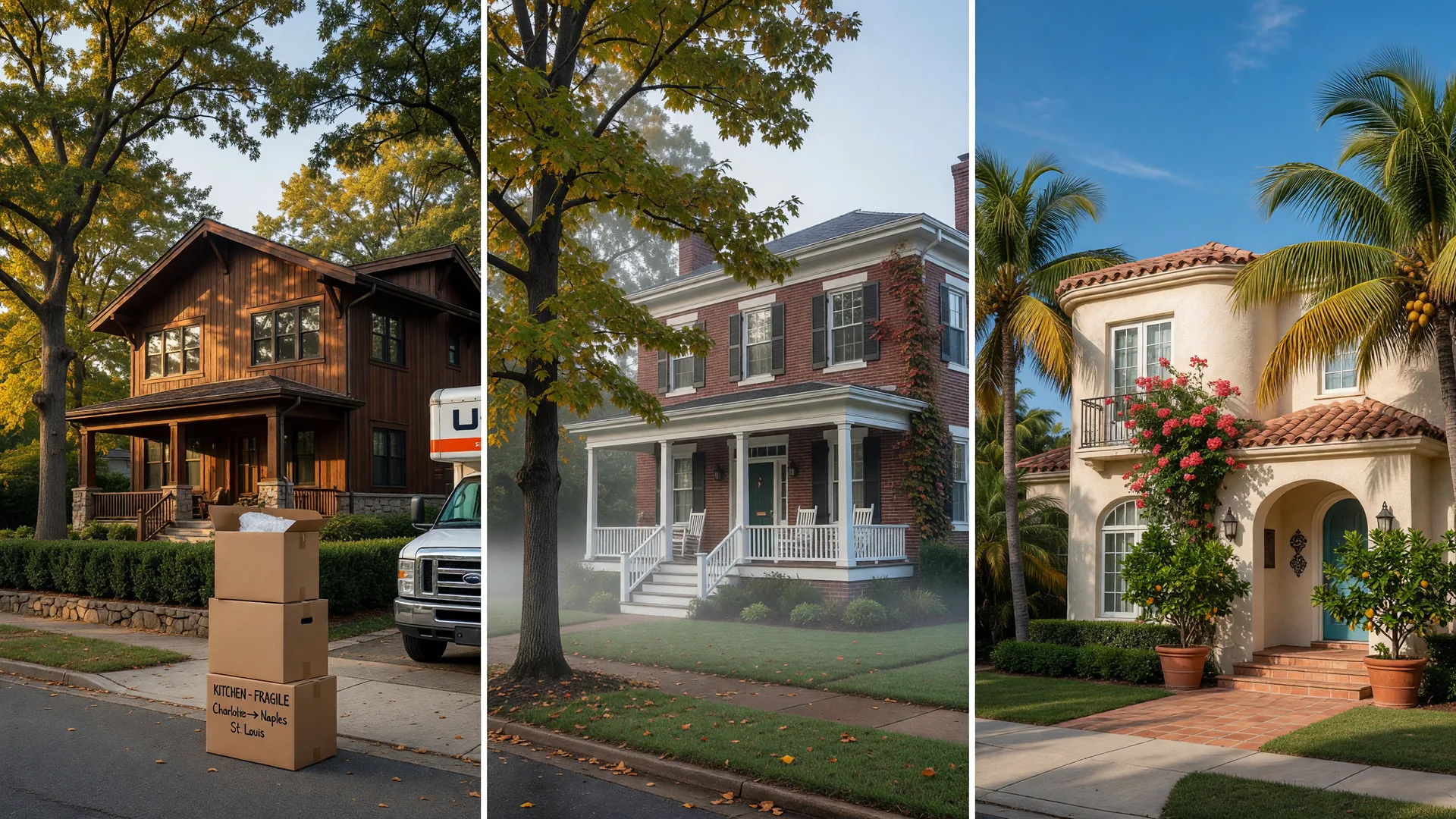
I have been in this business for twenty years, and I still tell clients that a successful move is eighty percent planning and twenty percent luck. This fall, the planning matters more than ever, because three calendars are converging at once: the mortgage rate calendar, the school calendar, and the seasonal market calendar. Families who understand all three will make their move with far less stress, and often on better terms, than families who just react to whatever listing catches their eye.
I officially relocated my own practice from St. Louis to Charlotte in May, so I am living this planning process right alongside my clients. Here is the honest, current picture for all three of my markets, the fresh news that is changing each one, and the practical move plan I am walking my clients through this fall.
01 -- The Fall Rate Reality: What Changed Over the Summer
Let us start with the number that frames every buying decision right now. Through the spring, forecasters were calling for mortgage rates to drift toward six percent by the end of 2026. That forecast was revised upward repeatedly through the summer, and the honest current outlook is that the 30-year fixed rate will average in the high sixes for the rest of the year. Fannie Mae's August forecast puts it at roughly 6.7 percent in the third quarter and 6.8 percent in the fourth. The Mortgage Bankers Association is close behind at 6.6 and 6.7 percent. Neither group sees rates dropping below six percent before 2027.
What does that mean for you? It means the window of waiting for a rate miracle is officially closed, and that is actually liberating. When rates are stable-ish, the math becomes knowable. You can plug real numbers into a payment calculator, decide what you can afford, and act with confidence. The buyers who are in the market this fall are serious, they have financing in place, and they are deciding on homes, not on headlines.
It also means terms beat price. In a high-sixes rate world, a seller who buys down your rate or covers your closing costs can be worth more to you than a seller who knocks twenty grand off the asking price. That single insight is driving more of my negotiations this year than any other.
Rate Reality, As of Early September 2026
- Fannie Mae forecast: 30-year fixed averaging ~6.7% in Q3 2026, ~6.8% in Q4 2026.
- MBA forecast: ~6.6% in Q3, ~6.7% in Q4, holding above 6% into 2027.
- The takeaway: plan around today's rates, negotiate terms, and stop waiting for a rate event that is not on the calendar.
02 -- The School-Year Clock: The Quiet Force Behind Move Timing
If you are moving with school-age children, the school calendar quietly controls everything: when you can reasonably sign a contract, when you can close, and even which state you choose. Here is the detail most relocating families never hear until it is too late: the three states in my portfolio do not agree on when a child is old enough for kindergarten.
Kindergarten Age Cutoffs: NC vs. MO vs. FL
Cutoff: Must turn 5 by August 31
Implication: Standard cutoff used by most districts nationwide
Cutoff: Must turn 5 before August 1
Implication: A full month earlier than NC and FL; summer-birthday children may wait a year
Cutoff: Must turn 5 by September 1
Implication: Latest cutoff of the three; most forgiving for summer birthdays
That one-month difference changes real families' plans every single year. A child with a mid-August birthday is kindergarten-eligible in Florida and North Carolina but waits a full year in Missouri. If you are weighing a move between these markets, that is the kind of detail that should be part of your decision before you fall in love with a house, not after.
For families already in motion this fall, the good news is that public schools in all three states enroll new residents throughout the year. You are not locked out by arriving mid-semester. But you will need to bring your paperwork, so start gathering it now: a birth certificate or passport for age, two proofs of residency like a lease or utility bill, and immunization records. Florida is the most particular of the three: first-time Florida enrollees need the state's DH 680 immunization form, which your pediatrician can convert from out-of-state records, plus a physical exam completed within the last twelve months. That appointment alone can take weeks, so book it the moment you decide to move.
Here is the market angle most people miss: because families feel they must move between June and August, fall is the season with the least family-to-family competition. If you are an empty-nester, a couple without children, or a relocator who can move on a company timeline, September and October are your window to negotiate with far less pressure. And if you are a family whose schedule allows it, buying in the fall for a smooth spring or summer move-in is a legitimate strategy that saves money and stress.
03 -- Charlotte: More Homes, New Transit Momentum, and a Deep Buyer Pool
Charlotte's market keeps normalizing in a healthy way. Canopy MLS, our local multiple listing service, reported a May median sales price of $410,000, up 1.2 percent from a year earlier, with the average sale around $534,000. The region ended May with a 3.4-month supply of inventory, the highest level since before the pandemic and up from 3.2 months the month before. Translation: buyers have choices they have not had in years, and sellers can no longer assume a bidding war.
The Relocation News Shaping Charlotte
The job engine is still turning. Scout Motors, Volkswagen's American brand, announced its new corporate headquarters at the Commonwealth development in Plaza Midwood, a $207 million investment expected to bring around 1,200 jobs by 2030, the city's largest single job announcement in a decade. JPMorgan Chase opened up a new SouthPark office for roughly 1,000 employees, and Transit Technologies moved its corporate headquarters from Tennessee to Charlotte this summer. EG Group, a global convenience and fuel retailer, is relocating its worldwide headquarters here from England.
I believe in telling you the whole picture, so here is the honest counterweight: Maersk put its planned Charlotte headquarters on hold earlier this year, and Six Flags announced it will move its headquarters back to Texas by early 2027. No city wins every company. What matters is the pipeline, and it is still overwhelmingly positive.
The bigger story for homeowners is transit. Charlotte City Council approved $37.9 million in March to advance the Red Line commuter rail connecting Uptown to Lake Norman, and the new Metropolitan Public Transit Authority, funded by last year's voter-approved sales tax, is moving an east-west light rail line from Belmont to Indian Trail toward reality. Neighborhoods along those corridors, the northern suburbs and the west side, are the ones I would watch closely. Transit announcements do not move prices overnight, but they absolutely shape the next ten years.
Fall Moves for Charlotte Buyers
With supply at its highest level in years, you have leverage, use it. Get a fully underwritten pre-approval first, then look at homes that have sat 30 to 60 days; those sellers are ready to talk. In a balanced market I am routinely negotiating closing-cost concessions and rate buydowns worth two to three percent of the purchase price. And think a little differently than the crowd: the close-in neighborhoods relocators love, South End, Dilworth, Plaza Midwood, Myers Park, stay tight, so start there if you want in-town character, but expect competition. The west side, Steele Creek and the emerging River District, plus the northern suburbs, offer more room to negotiate.
Fall Moves for Charlotte Sellers
The mistake I still see sellers make is pricing against last year. With 3.4 months of supply and the strongest inventory in years, your competition is not just the neighbors, it is every listing in your school district. Price within a couple of percent of recent closed comps from day one, present the home beautifully, and separate yourself with a buyer incentive like a rate buydown contribution. The relocators arriving for new jobs at Scout, JPMorgan, and the rest are real, and they are under deadline pressure to find a home. A well-priced, well-presented home still gets a clean contract this fall.
- Market: Median ~$410K, supply ~3.4 months, the most inventory since before the pandemic.
- Relocation news: Scout Motors HQ in Plaza Midwood, JPMorgan's SouthPark office, Transit Technologies HQ, Red Line rail advancing.
- Buyers: Negotiate concessions and rate buydowns; expect tight competition in close-in neighborhoods.
- Sellers: Price against 2026 closed comps and offer terms; the influx of job-driven buyers is real.
04 -- St. Louis: Boeing Returns Home and Value Keeps Winning
St. Louis remains the value story of my three markets, and it just got a very big headline. Boeing formally named its St. Louis site the headquarters of its Defense, Space and Security business in February, bringing the division home in conjunction with a multi-billion-dollar investment in advanced combat-aircraft facilities and roughly 500 new direct jobs tied to a major expansion in North St. Louis County. For a region that has spent years diversifying beyond its legacy industries, having Boeing's defense arm headquartered in St. Louis again is a statement.
The market data backs up the confidence. The St. Louis REALTORS single-family median is around $320,500, up 10.7 percent year over year, with the county near $312,000 to $325,000 depending on the month and the city around $268,000. Supply runs roughly 2.3 months in the county and about 3.5 months in the city, with active inventory up more than 10 percent from a year ago. That is still a seller-leaning market by the six-month benchmark, but it is the most buyer-friendly St. Louis has been in years.
More St. Louis Relocation News
The momentum is broader than Boeing. Pivot Bio expanded its Hazelwood center with a seven-figure investment and opened a research and innovation center in Creve Coeur inside the 39 North agtech district. Winland Foods is investing $38.5 million in its South St. Louis manufacturing plant. Downtown is the quiet comeback story: the long-vacant Millennium Hotel site near the Arch is moving toward a $670 million mixed-use redevelopment, a roughly $232 million project near CityPark will bring 450-plus apartments and a 29-story mass-timber tower, and new state legislation signed this summer created incentives to transform vacant office towers like the AT&T and Railway Exchange buildings. The new National Geospatial-Intelligence Agency campus is also opening its doors to employees this year.
Fall Moves for St. Louis Buyers
You are getting more negotiating room than buyers in this market have had in years. West county suburbs like Chesterfield, Wildwood, and Ballwin have the most new listings, while city neighborhoods like Tower Grove South and The Grove offer affordable entry points with real energy. Missouri's Mortgage Credit Certificate can save qualifying buyers up to roughly $2,000 a year on federal taxes, and MHDC offers down payment assistance in the 3 to 4 percent range. If you are a first-time buyer or a relocator watching your budget, St. Louis remains one of the best affordability stories in the country.
Fall Moves for St. Louis Sellers
St. Louis is balanced enough now that the days of list-it-and-wait are gone. Homes that sell quickly are priced honestly, presented well, and often paired with a small seller concession. Do not anchor to spring comps; your buyer's agent certainly will not. Price to what is closing in your exact neighborhood this month, fix what an inspection would flag before you list, and treat your listing like the competitive product it is. The buyers are there, and the Boeing and NGA arrivals give you a year-round base of demand that most markets would envy.
- Market: Single-family median ~$320K, supply ~2.3 to 3.5 months by area, inventory up ~10%.
- Relocation news: Boeing's Defense HQ returns to St. Louis; NGA West campus opening; Millennium Hotel and Downtown West redevelopments advancing.
- Buyers: Negotiate now; ask about the MCC tax credit and MHDC down payment assistance.
- Sellers: Price to current closed comps, not spring. Terms still win the prepared buyer.
05 -- Naples: The Market Is Firming, and the Pre-Season Window Is Open
Naples has quietly changed character over the past year, and the July numbers make it official. The Naples Area Board of Realtors reported an overall median closed price of $590,000 for Collier County, up 2.6 percent year over year. Single-family homes sit at a median around $745,000, up nearly 13 percent, while condos have eased to roughly $400,000. The most important shift is supply: months of inventory fell from 8.7 a year ago to about 5.8 now, while closed sales jumped more than 14 percent. A year ago I described Naples as a buyer-favorable market. Today it is moving back toward balance, which means the deepest discounts are behind us.
The Relocation and Development News in Naples
Luxury is reshaping the skyline. The Naples Beach Club, a Four Seasons Resort, opened late last year after a more than $1 billion redevelopment, bringing 220 rooms and 153 private residences to the Gulf. The Ritz-Carlton Residences at Vanderbilt Beach began welcoming owners this summer, and Caymas Naples, a roughly 780-acre resort-style lakefront community, is set to open its 25,000-square-foot clubhouse this fall. The Avenue, a luxury mixed-use development just east of Fifth Avenue South, broke ground in January, and the long-delayed Imperial Lakes project in North Naples is finally moving toward construction.
Infrastructure matters to buyers here, and it is improving. The Naples Pier rebuild is underway with completion targeted around mid-November, and the $97 million I-75 at Collier Boulevard interchange project is slated to wrap up late this year. That interchange has been a traffic sore spot for years; its completion will make the east side of town genuinely more accessible.
Fall Moves for Naples Buyers
Seasonality is everything here. More than 100,000 seasonal residents arrive between November and April, and when they do, competition intensifies and seller pricing power returns. Right now, in September and October, you are pre-season: inventory is still available, sellers are still motivated, and prices are typically well below the winter peak. I have said it for years and it has not changed: if you are serious about Naples, your months are September and October. The one caution is supply. With months of inventory down from 8.7 to 5.8, the market has already absorbed the deepest correction. Move with intent, not hesitation. And never skip the homework: vet condo association reserves and budgets, and budget honestly for insurance, which still runs several thousand dollars a year in Collier County.
Fall Moves for Naples Sellers
The firming market is good news for sellers, but it is not a return to 2021. Condo sellers still need to be realistic, the median has repriced and buyers know it. Present transparent, healthy association financials, price against listings that actually closed, and consider covering the first year of association dues or offering a closing cost credit. Single-family sellers have more momentum behind them, especially in North Naples, Pelican Bay, and the newer east-side communities. The smart play is to list before the seasonal crowd arrives in November, when your listing can stand out against a thinner field.
- Market: Overall median ~$590K; single-family ~$745K; condos ~$400K; supply down from 8.7 to ~5.8 months.
- Relocation news: Four Seasons resort reshaping the luxury market; Ritz-Carlton residences arriving; Pier rebuild and I-75/Collier Blvd. interchange finishing late 2026.
- Buyers: September and October are the pre-season window. The deepest discounts are behind you, so act with intent.
- Sellers: List before the seasonal buyers arrive in November; lead with healthy association financials.
06 -- The Relocator's Fall Checklist: Turn the News Into a Plan
All of this research is only useful if it becomes a plan. Here is the exact sequence I recommend to every relocating client, the same one I used for my own move from St. Louis to Charlotte this spring.
Start ninety to one hundred twenty days before your target move date. That window sounds generous until you try to line up school enrollment, a home sale, a home purchase, driver's licenses, vehicle registration, and moving trucks all at once. It takes longer than you think, and the niceties, like choosing the right school district or the right side of town, are the things you cannot rush.
Choose your neighborhood before you choose your house. Every one of these metros is really a collection of villages. Pick your village first, based on commute, schools, and lifestyle, then shop within it. A great house in the wrong village is a mistake you live with for years.
Work with a broker licensed in your destination state, ideally one who also knows your departure state. The contracts in North Carolina, Missouri, and Florida are genuinely different, and the handoff between a local and an out-of-state agent is where timelines leak. Because I hold active credentials in all three states, my relocating clients get one advocate who understands both ends of the move. That continuity is why I built my practice this way.
Talk to a CPA about the tax side of the move. Florida has no state income tax; North Carolina and Missouri do. That difference can change your net proceeds by thousands of dollars, and it should be part of your plan, not a surprise at tax time.
- Start 90 to 120 days out. School slots, visas, licenses, and movers all take longer than expected.
- Know the kindergarten cutoff. NC is August 31, MO is August 1, FL is September 1. It can change your move year.
- Gather enrollment paperwork now. Birth certificate, two proofs of residency, immunization records. Florida also wants the DH 680 form and a recent physical.
- Choose your neighborhood first. Then shop within it. Each city is a collection of villages.
- Work with a broker licensed in your destination state. NC, MO, and FL contracts are fundamentally different.
- Talk to a CPA about multi-state taxes. Florida has no state income tax; NC and MO do.
- Time your move to the market. Charlotte buyers have inventory, St. Louis buyers have value, and Naples buyers have a pre-season window that closes in November.
Let Us Plan Your Fall Move Together
Whether you are buying, selling, or relocating across markets, let us map out your timeline and strategy over a free consultation. No pressure, just honest answers and a clear plan for the months ahead.
Book Your Free ConsultationSources
Market data and forecasts sourced from publicly available reports as of early September 2026.
- Charlotte housing market continues to normalize as inventory reaches highest level since before the pandemic: Canopy Realtors
- Charlotte lands $207M auto company relocation, bringing 1,200 jobs: WBTV
- Transit Technologies moves corporate headquarters from Tennessee to Charlotte: Charlotte Business Journal
- Charlotte Red Line rail moves closer to reality: The Template Team
- St. Louis Home Prices & Housing Market: eMetropolitan
- Boeing moves Defense, Space & Security headquarters to St. Louis: St. Louis Economic Development Partnership
- Approved bill to bring hundreds of millions in new investment to Downtown St. Louis: Greater St. Louis, Inc.
- Naples housing market report, July 2026: Naples ED
- 2026 Naples development update: Leane Suarez Group
- Mortgage rates forecast 2026-2027: Forbes Advisor
- Experts update mortgage rate and housing market forecast: TheStreet
- Kindergarten age requirements: North Carolina General Statutes, Missouri DESE, Florida Statutes
Keep Reading
- September 2026 Market Pulse: The Post-Labor-Day Shift in Charlotte, St. Louis & Naples
- Three States, Three Systems: How Home Buying Actually Works in NC, MO, and FL
- Relocating to Charlotte: An Interstate Guide for Out-of-State Movers
- How to Choose the Right Neighborhood in Charlotte, St. Louis, or Naples
20 years of expertise. Dual Metro. Same unstoppable results.
-- Tracey De Simon