
Finding Your Perfect Fit: A Neighborhood Selection Guide for Charlotte, St. Louis, and Naples.
You can change almost everything about a house. You cannot change its location. Here is how to choose the right neighborhood for your lifestyle, budget, and future across three very different markets.
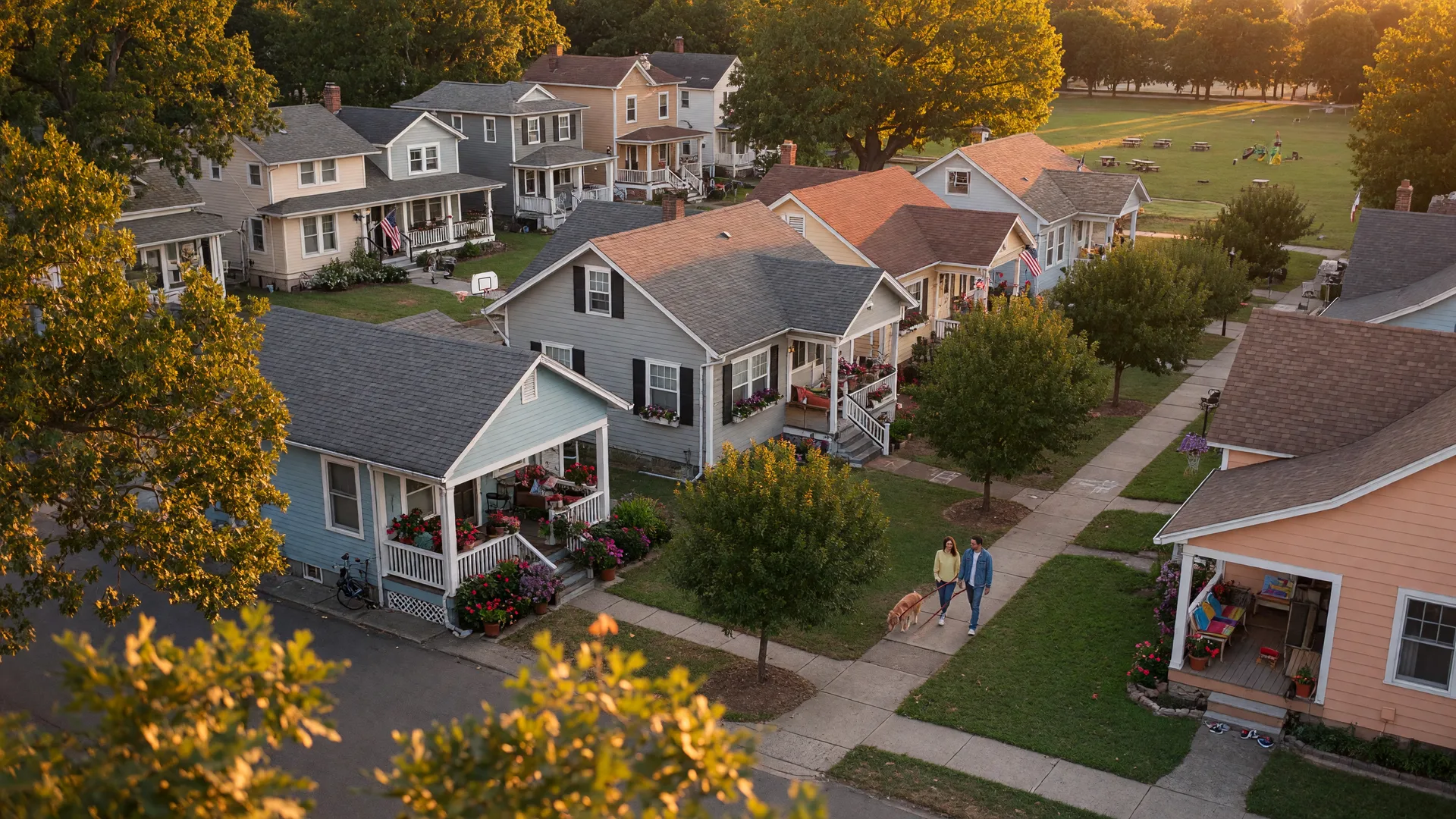
I tell every buyer the same thing on our first conversation: you can change the paint color, you can renovate the kitchen, you can add a bathroom, and you can even knock down walls. But you cannot move the house to a better street, a better school district, or a shorter commute. The neighborhood is the one thing about your purchase that is permanent. Choosing wisely is not just about finding a place to live. It is about protecting your investment and your quality of life for years to come.
Over 20 years of helping buyers across Charlotte, St. Louis, and Naples, I have developed a framework for neighborhood selection that has saved my clients from costly mistakes and led them to homes they truly love. This guide walks you through how to evaluate a neighborhood before you buy, what makes each of my three markets unique, and the specific questions you need to ask yourself before you make an offer.
The Five Factors That Define a Great Neighborhood
Before we talk about specific neighborhoods, let me give you the framework I use with every client. These five factors apply whether you are buying in Ballantyne, Kirkwood, or Old Naples. The weight you give each one depends on your personal priorities, but ignoring any of them is a risk I do not recommend taking.
1. Schools and Education
Even if you do not have children, school quality affects your home's resale value more than almost any other neighborhood factor. A home in a highly rated school district can command a premium of 10% to 20% over an identical home just a few blocks away in a different attendance zone. In Charlotte, neighborhoods like Myers Park, Dilworth, and Providence Plantation feed into some of the highest-rated schools in Mecklenburg County. In St. Louis County, school districts like Kirkwood, Clayton, Ladue, and Parkway are the gold standard and command a significant price premium for that reason. In Naples, the Collier County public school system is consistently among the best in Florida, with North Naples schools like Barron Collier High School and Pine Ridge Middle School drawing families into the area from across the country.
If schools matter to you, do not rely on what your agent tells you. Go to the school district's website yourself. Check the attendance zone maps — they change, and the school your neighbor's child attended may not be the one your child is zoned for. Drive past the school during drop-off and pick-up to see what the traffic and atmosphere are like. Talk to parents in the neighborhood. These are the details that make the difference between being happy with your decision and regretting it later.
2. Commute and Accessibility
The average American spends roughly 55 minutes per day commuting (U.S. Census Bureau). Over a year, that is nearly 11 full days in the car. In Charlotte, the I-77 and I-485 corridors are the main arteries, and a 15-mile commute from Ballantyne to Uptown can take 35 minutes during peak hours and over an hour when traffic is heavy. South End and Dilworth residents, by contrast, can walk to the LYNX Blue Line and be Uptown in 10 minutes. The LYNX Gold Line streetcar extension is also expanding access along Central Avenue, so neighborhoods like Elizabeth and Plaza Midwood are becoming even more connected.
In St. Louis, the commute dynamic is different. The metro area is more compact, and a 20-minute drive covers a lot of ground. The neighborhoods closest to the Central West End and Cortex Innovation District — like the Central West End itself, DeBaliviere Place, and Skinker DeBaliviere — offer walkability to employment hubs, restaurants, and MetroLink stations. Suburban communities like Kirkwood and Clayton have their own town centers where you can walk to shops and restaurants without getting in the car at all.
In Naples, the commute is generally short. Most errands, schools, and shopping are within a 10- to 15-minute drive. The main traffic corridors are US-41 (Tamiami Trail) and I-75, and during snowbird season (January through March), congestion increases noticeably. For year-round residents, this is an important consideration, especially if you are commuting from Golden Gate Estates or Ave Maria into central Naples for work.
3. Lifestyle and Amenities
This is the factor that is hardest to quantify but matters most to your daily happiness. What do you want your weekends to look like? Do you want to walk to a coffee shop every Saturday morning? Do you want a backyard large enough for a garden and a dog? Do you want to live where your neighbors know your name, or do you prefer privacy and space?
In Charlotte, South End is for buyers who want an urban, walkable lifestyle with breweries, restaurants, and the Rail Trail right outside their door. Plaza Midwood and NoDa offer a creative, artsy vibe with historic homes and a lively music scene. Myers Park and Dilworth offer gracious historic homes with mature trees, sidewalks, and a strong sense of community. Ballantyne and Steele Creek offer master-planned suburban living with pools, clubhouses, and excellent schools — ideal for families who want a built-in community without sacrificing space.
In St. Louis, Tower Grove South and Shaw offer beautiful historic architecture, walkable commercial corridors, and the massive green space of Tower Grove Park. The Central West End is the area for buyers who want a cosmopolitan, urban feel — high rises, brownstones, world-class restaurants, and cultural institutions. For families wanting the best schools and a small-town feel, Kirkwood and Webster Groves offer historic downtowns with their own shops, restaurants, and community events.
In Naples, the lifestyle spectrum is wide. Old Naples and the Moorings offer waterfront living with walkability to Fifth Avenue South's shops and restaurants. Pelican Bay and Aqualane Shores offer luxury gated living with beach access. North Naples is where families and year-round residents gravitate for newer homes, top schools, and proximity to shopping and dining. Golden Gate Estates offers larger lots and a more rural feel for buyers who want space and privacy.
4. Resale Value and Appreciation Trajectory
Real estate is a long-term investment, and the neighborhood you choose today will determine how your home performs when it is time to sell. In Charlotte, neighborhoods close to Uptown like South End, Dilworth, and Plaza Midwood have seen the strongest appreciation over the past five years — consistently 5% to 8% annually. Areas near the new River District development and the expanding Blue Line extension are poised for strong future appreciation as infrastructure continues to develop.
In St. Louis, neighborhoods near the Cortex Innovation District and Washington University Medical Center — the Central West End, Skinker DeBaliviere, and Dogtown — have seen consistent appreciation driven by job growth in the innovation economy. Kirkwood and Clayton offer more modest but steady appreciation of 3% to 5% annually, with very low volatility. These are safe, stable investments.
In Naples, the market is more seasonal and more cyclical. Waterfront properties in Port Royal, Aqualane Shores, and Old Naples have historically held their value better than inland properties during market corrections. North Naples has delivered consistent 3% to 5% annual appreciation over the past decade. The key in Naples is to buy in a neighborhood with a proven track record of holding value through multiple market cycles.
5. Safety and Community Feel
Safety is the foundation of any great neighborhood. You should feel comfortable walking your dog at dusk, letting your kids ride bikes on the street, and knowing your neighbors have your back. Every market has neighborhoods with different safety profiles, and the best way to assess them is to visit at different times of day. Drive through on a weekday evening. Walk around on a Saturday morning. Stop at the local coffee shop and chat with a resident.
In Charlotte, Myers Park, Dilworth, Ballantyne, and Weddington consistently rank among the safest neighborhoods. In St. Louis, Kirkwood, Clayton, and the Central West End have strong safety records, though like any city, block-by-block variation matters. In Naples, the overall crime rate is well below the national average, with Pelican Bay, Old Naples, and North Naples being among the safest communities in the state.
Tracey's Rule: Do the Drive
The single best thing you can do before committing to a neighborhood is drive the route from your potential new home to your workplace, your grocery store, and your children's school. Do it during rush hour, not on a Sunday afternoon. The 45-minute commute you discover after closing is not something you can negotiate away. I have seen buyers fall in love with a house and regret the neighborhood six months later because they did not test the commute. Do not let that be you.
How to Research a Neighborhood Before You Buy
Online research is a starting point, not a substitute for boots-on-the-ground investigation. Here is the research process I guide every buyer through:
Step One: The Data Check
- School ratings: Check GreatSchools.org for test scores, parent reviews, and diversity data. Cross-reference with the district's official attendance zone maps. In Charlotte, you can use the CMS School Zone Finder. In St. Louis County, check individual district websites. In Collier County, the district provides an online school zone lookup.
- Crime data: Use CrimeMapping.com and local police department portals. Look for trends, not just raw numbers — a single incident can skew data for a month. I also recommend joining neighborhood-specific NextDoor and Facebook groups to get a real-time sense of community safety concerns.
- Walk Score: WalkScore.com ranks neighborhoods on walking, biking, and transit access. A score of 70 or higher means most errands can be accomplished on foot. In Charlotte, South End and Dilworth score in the 80s. In St. Louis, the Central West End and the Delmar Loop area score well. In Naples, Old Naples and Fifth Avenue South are the most walkable areas.
- HOA rules and fees: If you are buying in a community with a homeowners' association, review the covenants, conditions, and restrictions (CC&Rs) before you make an offer. Some HOAs have strict rules about rentals, pet ownership, parking, and exterior modifications. In Charlotte's Ballantyne area, HOA fees typically run $300 to $600 annually. In Naples gated communities, they can be $2,000 to $8,000 or more depending on amenities.
Step Two: The Neighborhood Visit
- Visit on a weekday evening and a weekend afternoon. The feel of a neighborhood changes dramatically between 5 PM on a Tuesday and 10 AM on a Saturday.
- Park your car and walk for 15 minutes in every direction from the home you are considering. Notice the condition of neighboring homes, the presence of sidewalks, the amount of street parking, and the general upkeep of yards.
- Strike up a conversation with a neighbor. I have had buyers learn more about a neighborhood from a five-minute chat with someone walking their dog than from any data source. Ask about noise levels, community events, and what they wish they had known before moving in.
- Check cell phone reception inside and outside the house. This sounds trivial, but I have had clients close on a home only to discover they cannot get a reliable signal in their own living room. Walk through every room and make a call.
Step Three: The Future Outlook
A neighborhood that is perfect today might look very different in three years. Check the city and county planning department websites for approved developments, zoning changes, and infrastructure projects in the area. In Charlotte, the River District development and the expansion of the Blue Line are transforming the west side of the city. In St. Louis, the continued growth of the Cortex Innovation District is driving demand in surrounding neighborhoods. In Naples, new communities are being built in the northeastern part of the county, and the expansion of I-75 and the new county courthouse project are shaping growth patterns.
I also check whether any large multifamily developments are planned near the home you are considering. New apartment construction can change the character of a street and affect traffic, parking, and noise levels. It can also increase property values if it brings new retail and amenities. The key is knowing what is coming so there are no surprises.
Charlotte, NC: Neighborhoods at a Glance
Charlotte's neighborhoods are defined by their location relative to Uptown and the major highway corridors. Here is how I help buyers narrow their search:
Charlotte Neighborhood Matchmaker
- URBAN South End, Uptown, NoDa, Plaza Midwood. Walkable, vibrant, packed with restaurants and nightlife. Ideal for young professionals and buyers who want to be where the action is. Condos, townhomes, and historic bungalows. Expect to pay $350 to $500 per square foot.
- HISTORIC Myers Park, Dilworth, Eastover. Tree-lined streets, grand homes, top schools, and proximity to Uptown. Ideal for families who want classic Charlotte charm with excellent schools. Single-family homes from $800K to $3M+. Strong long-term appreciation.
- SUBURBAN Ballantyne, Steele Creek, Weddington, Marvin. Master-planned communities, newer construction, top-rated schools, and family-friendly amenities. Ideal for growing families who want space, safety, and a built-in community. Homes from $450K to $1.5M.
- VALUE Wesley Heights, Villa Heights, Optimist Park, LoSo. Up-and-coming neighborhoods near Uptown with strong appreciation potential. Ideal for buyers willing to invest in a neighborhood's growth story. Entry prices from $300K to $600K.
St. Louis, MO: Neighborhoods at a Glance
St. Louis neighborhoods are more compact and defined by their school districts and historic architecture. Many of my relocating buyers are surprised by how much house their money buys here compared to Charlotte or Naples.
St. Louis Neighborhood Matchmaker
- URBAN Central West End, Tower Grove South, Shaw, DeBaliviere Place. Historic architecture, walkable commercial corridors, and proximity to employment centers like Cortex and Barnes-Jewish Hospital. Ideal for professionals and buyers who want urban living with character. Condos and historic homes from $250K to $800K.
- FAMILY Kirkwood, Webster Groves, Clayton, Ladue, Crestwood. Top-ranked school districts, historic downtowns, and strong sense of community. Ideal for families who want the best education options and a small-town feel within a major metro area. Homes from $400K to $1.2M+. Consistently strong resale value.
- AFFORDABLE Hi-Pointe, Lindenwood Park, North Hampton, Maplewood. Great value for buyers who want safe, family-friendly neighborhoods with good schools at a lower price point. Median prices from $170K to $350K. Strong appreciation potential as buyers seek more affordable options close to the city.
Naples, FL: Neighborhoods at a Glance
Naples neighborhoods have a different rhythm. Many buyers here are relocating from colder climates or buying a second home. The market is driven by lifestyle, weather, and the unique appeal of coastal living.
Naples Neighborhood Matchmaker
- BEACHFRONT Old Naples, Port Royal, Aqualane Shores, Park Shore, Moorings. Waterfront living at its finest. Walkable to Fifth Avenue South and the Naples Pier. Ideal for luxury buyers, seasonal residents, and those who want to be steps from the Gulf. Homes from $1.5M to $20M+. Strongest long-term value retention in Naples.
- GOLF & GATED Pelican Bay, Grey Oaks, Mediterra, Fiddler's Creek, Talis Park. Resort-style living with golf courses, clubhouses, tennis, and social calendars. Ideal for retirees, golfers, and buyers who want a full-service community. Homes from $600K to $5M+. HOA fees range from $4,000 to $12,000 annually.
- FAMILY North Naples, Vineyards, Pelican Marsh. A-rated schools, newer construction, and proximity to shopping and dining. Ideal for year-round families who want the Naples lifestyle with top-tier schools. Homes from $500K to $1.5M. Strong and steady appreciation.
- SPACE & VALUE Golden Gate Estates, Ave Maria, East Naples. Larger lots, newer construction, and more affordable price points. Golden Gate Estates is known for its half-acre and one-acre lots. Ave Maria offers a master-planned town built around a Catholic university. Ideal for buyers who want space and value. Homes from $350K to $800K. Strong projected appreciation of 5% to 7% annually.
The Neighborhood Questions You Must Ask Yourself
Before you start touring homes, I ask every buyer to answer these seven questions. The answers will save you time, money, and heartache.
- What is my non-negotiable commute time? Be honest with yourself. If you hate sitting in traffic, do not buy a home that requires a 45-minute drive to work. No granite countertop or walk-in closet is worth the daily resentment of a commute you hate.
- How important are schools to my home's future resale value? Even if you do not have children, buying in a strong school district is one of the best financial decisions you can make. Homes in top-rated districts consistently outperform the broader market in appreciation and hold their value better during downturns.
- Do I want a walkable neighborhood, or do I prefer space and privacy? These are fundamentally different lifestyles, and neither is wrong. The mistake is buying a home in a walkable neighborhood when you actually want a large backyard, or buying a home on an acre lot when you actually want to walk to dinner. Know yourself before you start looking.
- Can I afford the total cost of living in this neighborhood? Your mortgage payment is not the only expense. Property taxes vary significantly by neighborhood and school district. In Charlotte, property taxes on a $500,000 home can range from $3,500 to $5,000 depending on the neighborhood. In St. Louis County, they can range from $4,500 to $7,500. In Naples, a $500,000 home might have property taxes of $4,000 to $6,000, but homeowners insurance can add $4,000 to $8,000 or more per year. HOA fees can add another $500 to $12,000 per year. Know the full picture before you commit.
- What is the neighborhood's five-year outlook? Are there new developments planned? Is the area experiencing growth or decline? What is the trajectory of home values? Your Realtor should be able to answer these questions with data, not just opinions.
- Will this neighborhood work for my family's next chapter, not just today? If you are planning to have children, is there a good school within walking distance? If you are planning to retire here, is the neighborhood walkable to the amenities you will need as you age? If you work from home, is there reliable high-speed internet and a quiet environment for calls?
- Does this neighborhood feel like home? This is the one question that data cannot answer. After you have checked the schools, the commute, the crime stats, and the appreciation projections, you need to trust your gut. When you drive through the neighborhood, do you feel a sense of ease? Can you picture yourself walking your dog, chatting with a neighbor, sitting on the front porch? That feeling matters more than any spreadsheet.
How I Can Help You Navigate This Decision
Choosing a neighborhood in a new city — or even in a city you have lived in for years — is one of the most important decisions you will make in the home-buying process. I have helped buyers from across the country find their perfect fit in Charlotte, St. Louis, and Naples. I know the school zones, the commute patterns, the HOA dynamics, and the appreciation trajectories of each neighborhood in all three markets. I have walked the streets, talked to the residents, and watched these neighborhoods evolve over two decades.
When you work with me, you are not just getting someone who will show you homes. You are getting a guide who will sit down with you before we look at a single property, understand what matters most to you, and build a neighborhood search strategy tailored to your priorities. I will show you the data, share the neighborhood nuances that only come from experience, and make sure you feel confident in every decision you make.
Whether you are relocating, upgrading, downsizing, or buying your first home, the right neighborhood is out there. Let us find it together.
Not Sure Where to Start? Let's Talk Neighborhoods.
Whether you are relocating from out of state or exploring a new part of town, I will help you narrow down the neighborhoods that fit your lifestyle, budget, and goals. Free, no-pressure, and packed with real data.
Book Your Free Neighborhood Consultation30-minute video call. No sales pressure, ever.
20 years of expertise. Dual Metro. Same unstoppable results.
— Tracey De Simon