
The Relocator's Money Map: Cost of Living, Taxes & the Real Estate Market in Charlotte, St. Louis & Naples
If you are weighing a move between Charlotte, St. Louis, or Naples, the sticker price on the house is only the first line of the story. State income tax, property tax, homeowners insurance, and everyday living costs can change your real buying power by tens of thousands of dollars a year. Here is the honest side-by-side comparison across my three markets in 2026, the current market data in each city, and the practical buying and selling advice that comes with it.
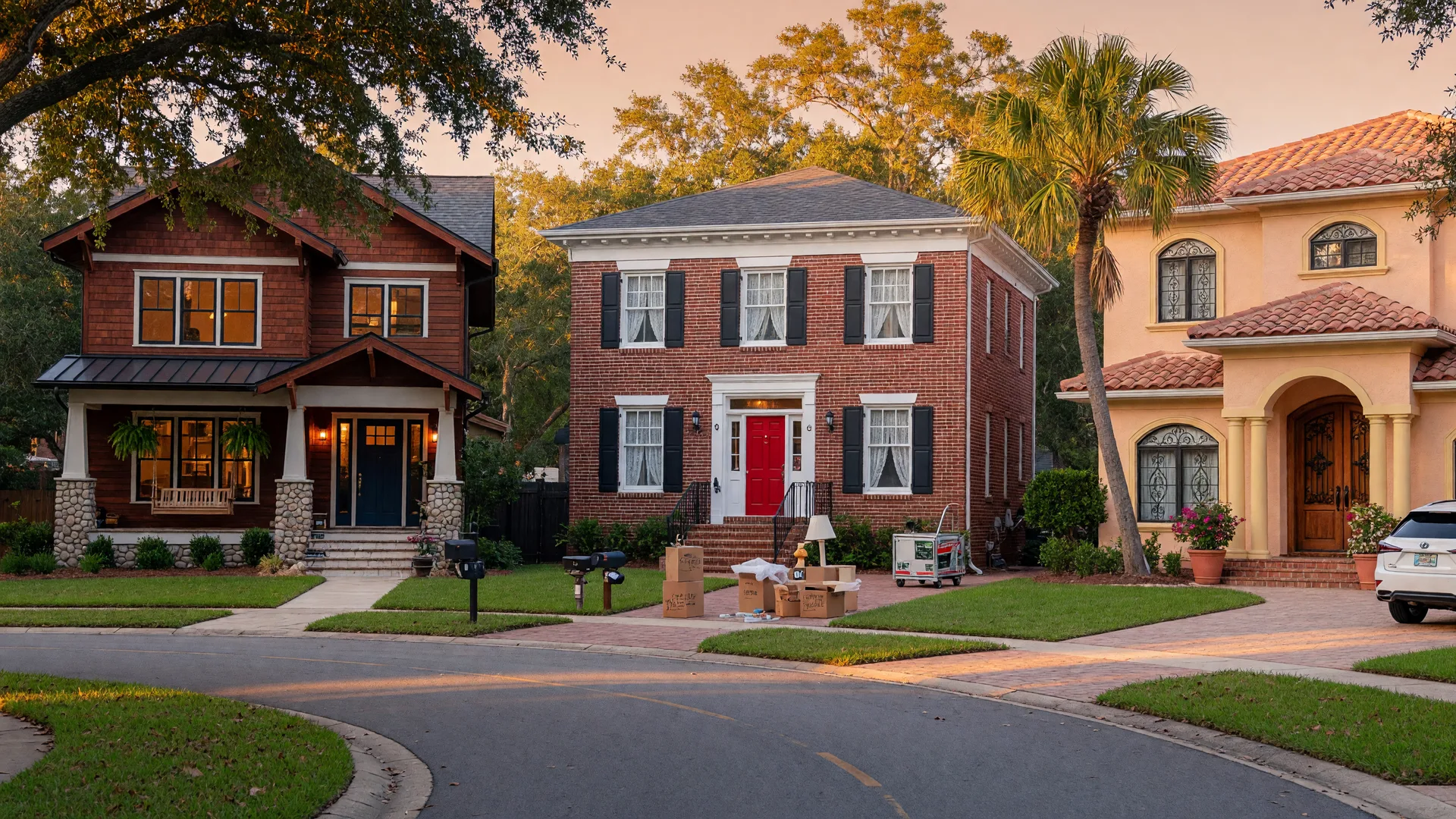
I hold active brokerage credentials in North Carolina, Missouri, and Florida, and I made my own move from St. Louis to Charlotte this past May. So I have lived this comparison, not just studied it. Let me walk you through the numbers that actually decide how far your money goes in each of these three markets, and then I will give you the specific moves I recommend for buyers, sellers, and relocators right now.
01 -- The Numbers That Matter Most to a Relocator
When people compare cities, they usually start with the median home price. That is a fair place to begin, but it is only the beginning. Four numbers drive the real cost of living in each metro: the price of the house, the state income tax on your paycheck, the property tax bill you carry every year, and the homeowners insurance premium that can vary by thousands of dollars between one state and the next. Add all four together and two markets that look similar on the surface can be very different for your monthly budget.
Here is the quick version of the 2026 picture. St. Louis is the clear affordability champion, with a cost of living roughly 18 percent below Charlotte and median prices that are a fraction of Naples. Charlotte sits near the national average, and it is where the corporate relocation wave is landing. Naples is the most expensive, with the highest prices and the highest insurance, though Florida is the one of the three with no state income tax at all. That tax savings is real, but it does not close the gap on its own. Let me show you each market in detail.
02 -- Charlotte: A Balanced Market With a Deep Relocation Pipeline
Charlotte is the market that has moved closest to balance this year, which is excellent news for buyers who have felt priced out over the past few years. Median closed prices are running around $410,000 to $425,000, up only about 1 percent from a year ago. Months of supply has climbed to roughly 4.4 to 4.5 months, up from about 2.5 months in early 2026, and median days on market have stretched from about 27 days to the mid-60s. Active listings are up around 10 percent year over year. What does that add up to? A market where buyers have real room to negotiate, and sellers have to be honest about price from day one.
The Cost Side of Charlotte
North Carolina levies a flat state income tax, currently 4.25 percent and scheduled to drop to 3.99 percent in 2027. Mecklenburg County's effective property tax rate is a modest roughly 0.75 percent, which on a near-median home works out to about $2,700 to $2,800 a year. Homeowners insurance is reasonable compared with the coast, typically around $2,400 to $3,000 a year on a median-priced home. Charlotte's overall cost of living sits just about at the national average, with a little breathing room on housing compared with the biggest metros.
Why Relocators Keep Coming
The reason Charlotte's buyer pool stays deep is the corporate pipeline, and the 2025 announcements were the biggest the city has seen in a decade. Scout Motors is putting its American headquarters in Plaza Midwood, a roughly $207 million investment and about 1,200 jobs by 2030 at an average salary north of $172,000. Maersk chose Charlotte for its North American headquarters with more than 500 jobs. Odyssey Logistics moved its global headquarters to Mecklenburg County earlier in the year. These are families boarding planes, and every one of them is a buyer or a future buyer.
The Moves I Recommend in Charlotte
Buyers, this is the most leverage you have had in years. With inventory up and days on market longer, you can ask for a seller-paid rate buydown or a closing cost credit instead of just a price cut, and in a payment-driven market that is often the more valuable concession. Target neighborhoods where new supply is concentrated, Steele Creek, the growing River District, and the northern suburbs, because builders are competing and there is real room to negotiate.
Sellers, the honest message is that the hyper-competitive days are over for most price bands. Homes priced within a couple of percent of recent closed sales are still moving, while the ones sitting are the ones anchored to last year's numbers. If you want to catch the relocating professionals arriving through the fall, price to today's comps and present the home ready to show. The sale-to-list ratio near 96 percent tells you the gap between asking and closing is real now.
- Median home price: roughly $410,000 to $425,000.
- State income tax: flat 4.25% in 2026, dropping to 3.99% in 2027.
- Property tax: effective rate near 0.75%, roughly $2,700 to $2,800 a year on a median home.
- Homeowners insurance: roughly $2,400 to $3,000 a year.
- Market: balanced, with rising inventory and real buyer leverage.
03 -- St. Louis: The Affordability Champion
St. Louis is the market where your money goes the furthest, and the value is not fading. The St. Louis REALTORS monthly report puts the median residential sales price around $340,000, up about 6.6 percent from a year ago, while townhouses and condos sit near $220,000. Other metro measures show the median listing closer to $290,000, with active inventory up around 10 percent and days on market lengthening. By jurisdiction, the City of St. Louis runs near $250,000 and St. Louis County near $275,000. Across the board you are getting substantially more house for the dollar than in the other two markets.
The Cost Side of St. Louis
St. Louis is roughly 18 percent cheaper to live in than Charlotte, with a cost-of-living index in the low 80s against the national baseline of 100. Missouri's income tax is a progressive rate that has been cut in recent years. Property taxes run higher by rate, around 1.0 to 1.2 percent effective, but because homes are so much cheaper the dollar bill is often lower, near $1,900 to $2,000 a year in the city. Homeowners insurance is comparable to the rest of the Midwest, roughly $2,400 to $2,600 a year on a median home. Put it all together and a relocator coming from a high-cost market often feels like they just got a raise.
The Relocation News That Matters
The biggest headline in St. Louis is Boeing bringing its Defense, Space & Security headquarters back to the region, a strong sign for aerospace and for the broader job market. The International Institute launched a program called Move2STL to attract out-of-state workers to the roughly 65,000 open jobs in the region. Manufacturing keeps expanding too, with Winland Foods growing a south-city pasta plant and Gulfstream expanding its operations at the downtown airport. St. Louis has quietly become a place where a relocator can find serious work and serious housing value in the same zip code.
The Moves I Recommend in St. Louis
Buyers, take advantage of the rising inventory and the negotiating room it creates, but do not assume every well-priced home is waiting for you. The value segment still moves fast when priced right, so be ready with pre-approval and honest comps. Ask your lender about the Missouri Mortgage Credit Certificate and MHDC down payment assistance, both built for exactly this kind of market. The west county suburbs of Chesterfield, Wildwood, and Ballwin, plus city neighborhoods like Tower Grove South and the Grove, offer some of the best entry points for the money.
Sellers, the market has shifted enough that pricing discipline matters more than it did a year ago. With inventory up roughly 10 percent and days on market lengthening, a home priced to today's comps still sells, but one that chases last year's peak will sit. Offer a closing cost credit to meet buyers where the monthly payment math actually lives.
- Median home price: roughly $290,000 to $340,000 depending on the measure; City near $250,000, County near $275,000.
- State income tax: progressive, with recent rate cuts.
- Property tax: effective rate near 1.0 to 1.2%, but a lower dollar bill on cheaper homes.
- Homeowners insurance: roughly $2,400 to $2,600 a year.
- Market: strong value, rising inventory, still steady demand.
04 -- Naples: The Tax Win With a Different Price Tag
Naples is the one of the three where the relocation math flips. It is the most expensive, without question, but it is also the only one with no state income tax at all. The July 2026 Naples Board of Realtors data puts the overall Collier County median closed price around $590,000, up about 2.6 percent from a year ago. The single-family and condo markets are moving in opposite directions. Single-family homes are the resilient segment, running near $745,000 and up sharply from a year ago, while condos have eased to a median near $400,000, down about 5 percent. Months of supply has compressed from near 9 months to about 5.8 months overall, but condo supply still runs higher, around 7 to 10 months versus closer to 5.6 for single-family.
The Cost Side of Naples
Florida's lack of a state income tax is a genuine, recurring advantage, saving a buyer on taxable income roughly $3,000 to $3,500 a year for every $100,000 of taxable earnings versus the other two states. But the price and the insurance are the counterweights. Naples cost of living runs about 13 percent above the national average. Property taxes are lower by rate, near 0.6 to 0.9 percent, but on a far more expensive home the dollar bill is often the highest of the three, commonly around $3,600 a year or more. And homeowners insurance is the real shocker: Southwest Florida premiums routinely run $5,000 to $9,000 a year depending on the home, driven by wind exposure. That insurance line item has made many a Naples offer fall apart, so budget for it before you commit.
What the Relocation News Means for Naples
Naples does not have the same kind of corporate headquarters pipeline as Charlotte or the manufacturing wins of St. Louis, and in fact one big construction firm moved its regional headquarters from Naples to Fort Myers this year. But Collier County remains one of Florida's top job-growth markets, with a workforce projected to grow significantly through 2045, and a large share of its workers commute in from surrounding counties partly because local home prices are so high. For a relocator, that means Naples is less about a job dropping you here and more about choosing a lifestyle, then letting the seasonal and second-home markets shape your buying opportunity.
The Moves I Recommend in Naples
Buyers, the single-family market is resilient and the condo market has real soft spots, so start with the building type in mind. For a condo, vet the association's financial statements and its reserve study before you fall in love, because new state reserve-fund requirements are putting pressure on buildings with thin reserves. Budget insurance honestly before you commit to a payment. And remember the seasonal calendar: the window before the winter crowd arrives is historically the softer one for prices, so act before the season builds.
Sellers, lead with transparency. Document healthy reserves, the absence of looming special assessments, and your insurance in writing, because the buyers doing homework right now are the ones writing the offers. In a market with 5 to 7 months of supply, a well-presented home priced to current closed sales still sells, while one that ignores the condo correction will sit.
- Median closed price: roughly $590,000 overall; single-family near $745,000, condos near $400,000.
- State income tax: none. A real, recurring savings for relocators.
- Property tax: lower rate near 0.6 to 0.9%, but a higher dollar bill on expensive homes.
- Homeowners insurance: the big one, often $5,000 to $9,000 a year.
- Market: single-family resilient, condos easing, seasonal buyer window matters.
05 -- The Relocator's Action Plan
Here is how I would turn all of this into a plan, whether you are moving for a job, a family, or a fresh chapter. The first step is to model the full monthly cost, not just the mortgage. Add the property tax, the insurance, the income tax difference on your actual paycheck, and the everyday cost of living, and only then compare two homes in two states on a level playing field. That single spreadsheet habit has saved clients from more than one expensive surprise.
Second, work with a broker licensed in both your departure and destination states. I cannot stress this enough after doing my own cross-state move. North Carolina runs on the due diligence fee model, Missouri relies on earnest money and classic contingencies, and Florida carries its own unique contract. Having one advocate who knows all three means the tax and contract questions get answered before they become problems.
Third, get your financing in order before you tour. With rates near 6.7 to 6.8 percent on a 30-year fixed loan, the monthly payment is the number that decides almost everything, so a pre-approval and a clear picture of seller concessions and buydowns matters more than ever. And fourth, pick the neighborhood before you pick the house. Each of these metros is a mosaic of villages, South End, Ballantyne, and Steele Creek in Charlotte, the Central West End, Chesterfield, and Clayton in St. Louis, and Old Naples, North Naples, and the newer east-county communities in Collier. Choose the village first, and the market does the rest.
- Model the full monthly cost: mortgage, property tax, insurance, and the income tax difference together.
- Work with a broker licensed in both states. NC, MO, and FL contracts are genuinely different.
- Get pre-approved first. At 6.7 to 6.8% rates, the payment decides everything.
- Pick the neighborhood before the house. Each metro is a collection of villages.
- Ask about tax programs. MHDC and the Mortgage Credit Certificate in Missouri, and homebuyer help in each state.
One closing thought. I made this exact kind of move this year, so I know the fear and the excitement that come with it. The good news is that a well-informed relocator holds a real advantage in all three of these markets right now, whether that advantage is buyer leverage in Charlotte, housing value in St. Louis, or a tax-friendly lifestyle in Naples. I would love to help you run the numbers on your own move.
Ready to Run the Numbers on Your Move?
Whether you are relocating to Charlotte, St. Louis, or Naples, let us put real numbers on your cost of living over a free consultation. No pressure, just honest answers and a clear plan for your move.
Book Your Free ConsultationSources
Market data and forecasts compiled from publicly available reports as of September 2026. Figures vary by source, neighborhood, and price band.
- Charlotte mid-year housing market review: Charlotte Observer
- Charlotte housing market report: Homes.com
- 30-year fixed-rate mortgage average: Freddie Mac Primary Mortgage Market Survey
- St. Louis REALTORS monthly housing report: St. Louis REALTORS
- St. Louis housing market report: eMetropolitan
- Naples housing market report (July 2026): NaplesED
- Naples real estate market report (July 2026): Alpizar & Company
- Charlotte vs. St. Louis cost of living: BestPlaces
- Naples cost of living: BestPlaces
- State income tax rates by state 2026: FinanceWonk
- Scout Motors HQ in Charlotte creating 1,200 jobs: WBTV
- Maersk selects Charlotte for North American headquarters: North Carolina Commerce
- Odyssey Logistics relocates global HQ to Charlotte: WCNC
- Boeing defense headquarters returns to St. Louis: St. Louis Magazine
- International Institute launches Move2STL: First Alert 4
- Winland Foods expanding in St. Louis: First Alert 4
- Construction firm moving regional HQ from Naples to Fort Myers: Business Observer
- Florida job growth leaders include Naples area: Naples Daily News
- Homeowners insurance in Charlotte: Hippo
- Homeowners insurance in St. Louis: ValuePenguin
- Homeowners insurance in Naples: Wexford Insurance