
Real Estate Investing in 2026: Where to Put Your Money Across Charlotte, St. Louis, and Naples.
With rates in the mid-6% range and three very different markets in play, real estate investing in 2026 requires a sharper pencil than ever. Here is my honest breakdown of cash-flow opportunities, appreciation plays, and the strategies that actually work in Charlotte, St. Louis, and Naples right now.
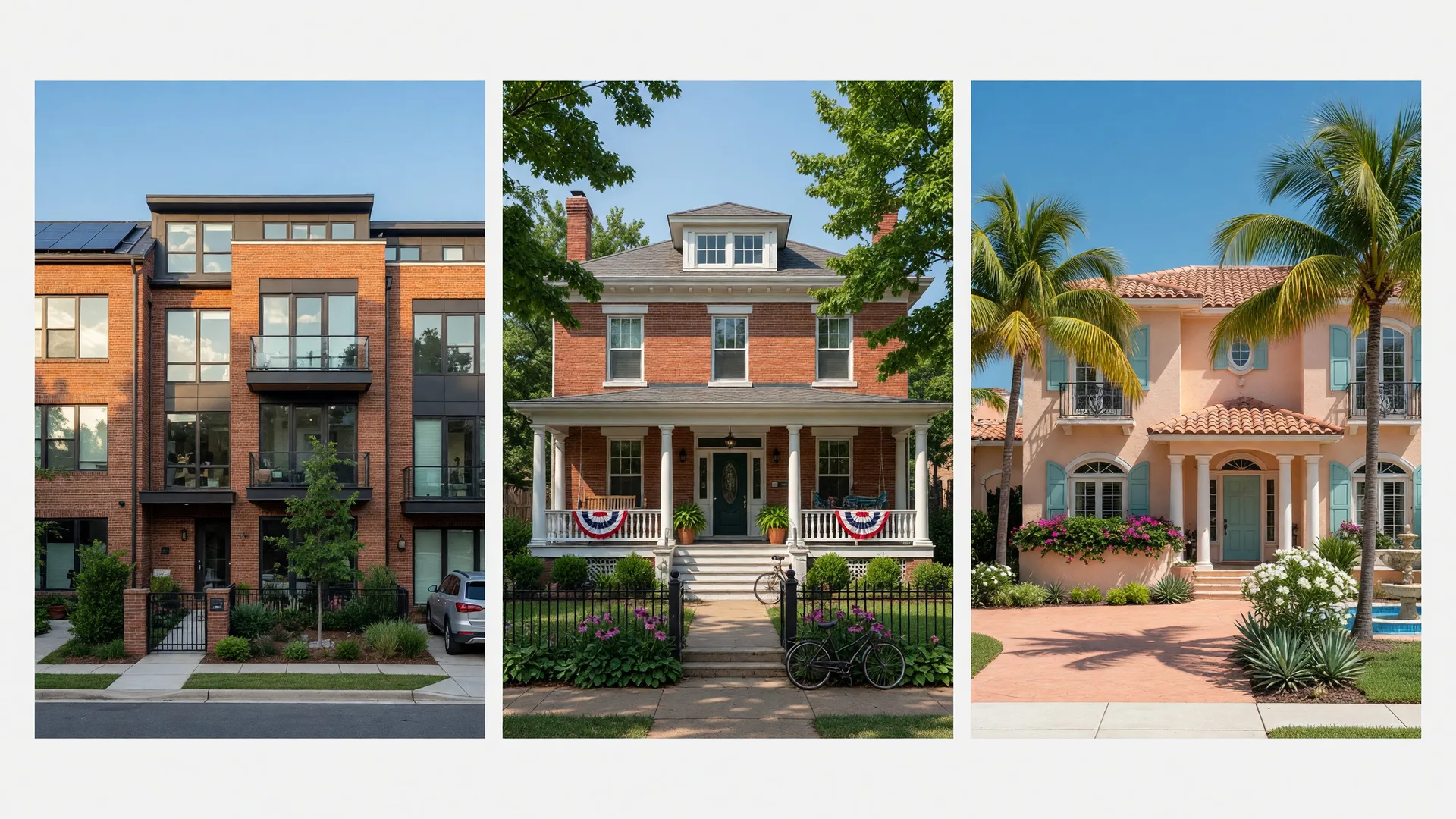
If you are a real estate investor, you already know that 2026 is not 2021. The days of buying any property, throwing a coat of paint on it, and flipping it three weeks later for a $50,000 profit are behind us. That does not mean the opportunity is gone — it means the rules have changed, and the investors who adapt are the ones who will build real, sustainable wealth.
I am Tracey De Simon. Over the past 20 years I have helped buyers, sellers, and investors across three distinct markets — Charlotte, North Carolina; St. Louis, Missouri; and Naples, Florida. Each of these markets is behaving differently in summer 2026, and each offers a unique kind of investment opportunity. One is a cash-flow machine. One is a long-term appreciation play riding a wave of corporate relocation. And one is a luxury market where patient capital can pick up deals that were not available two years ago.
Let me walk you through all three — and what I would be looking at if I were investing my own money today.
The 2026 Investing Landscape: What Has Changed
Before we get into specific markets, let us be honest about the macro environment. The 30-year fixed mortgage rate is hovering around 6.37% to 6.56%. That means financing costs more than it did a few years ago, and the margin for error on any deal is thinner. Cap rates need to pencil out at these rates, not at the 3% rates we saw in 2021.
But here is the flip side. Because financing is more expensive, fewer amateur investors are in the game. The competition is down. Inventory is up in many markets. And sellers who bought during the frenzy and now need to exit are more motivated than they have been in years. For the disciplined, well-capitalized investor, 2026 is a buying opportunity — not a time to sit on the sidelines.
Three numbers I look at before I evaluate any investment property:
1% Rule: Does the monthly rent equal at least 1% of the purchase price? In a $300,000 market, that means $3,000/month in rent. This is getting harder to hit at current prices, but St. Louis still delivers it in many neighborhoods.
Cash-on-Cash Return: After financing, taxes, insurance, property management, and vacancy reserves — what is your actual annual return on the cash you put in? I want to see 8% to 12% on a long-term hold, or 15%+ on a value-add play.
Months of Supply: Remember, this tells you who has leverage. Under 4 months = seller's market. Over 6 months = buyer's market. Between 4 and 6 = balanced. Each market I cover is in a different zone right now.
St. Louis, MO: The Cash-Flow Champion
If you are an investor focused on cash flow, St. Louis is the standout of my three markets in 2026 — and it has been for years. The median home price in the St. Louis metro sits around $289,000 to $295,000, roughly 30% to 40% below the national average. That low barrier to entry, combined with strong rental demand, makes this the best market I know for building a portfolio of rental properties that actually generate positive cash flow month one.
Why St. Louis Works for Investors
- Affordable entry points: You can find solid single-family homes in the $180,000 to $250,000 range in desirable neighborhoods like Tower Grove South, St. Louis Hills, and Southampton. In the metro area, St. Charles, Kirkwood, and Crestwood offer move-in-ready properties in the $250,000 to $350,000 range.
- Rental demand is steady: St. Louis has a diversified economy anchored by health care (BJC HealthCare, Mercy), higher education (Washington University, Saint Louis University), and a growing tech scene. Vacancy rates in the single-family rental market hover around 4% to 6%, and the average rent for a 3-bedroom home is $1,800 to $2,400 depending on the neighborhood.
- The 1% rule is alive here: In many St. Louis neighborhoods, a $200,000 home rents for $2,000 a month. That is a 1% return right out of the gate — a threshold that is nearly impossible to hit in Charlotte or Naples at current prices.
- Active building permits are surging in St. Charles and Jefferson Counties, signaling that developers see the same supply gap I do. New construction will help, but the existing home inventory in the city core remains tight, supporting both prices and rents.
The BRRRR Strategy in St. Louis
If you are familiar with the Buy-Rehab-Rent-Refinance-Repeat (BRRRR) method, St. Louis is one of the best markets in the country to execute it. Here is why: you can buy a dated but structurally sound home in a strong neighborhood for $120,000 to $160,000. Put $30,000 to $50,000 into renovations — kitchen, bathrooms, flooring, mechanicals, paint. The after-repair value of that home is typically $220,000 to $280,000. You rent it out for $2,200 to $2,500 a month. Then you refinance based on the new appraised value, pull your original capital back out, and repeat.
I have seen this strategy work repeatedly in neighborhoods like Tower Grove East, The Grove, and Benton Park. The key is knowing which blocks are appreciating and which are stagnant — and that is exactly the kind of local knowledge a 20-year broker brings to the table.
What to Watch Out For
St. Louis property taxes vary significantly by municipality. A home in the city of St. Louis has a different tax rate than one in St. Louis County, and the rates in St. Charles County are different again. Factor those differences into your underwriting. Also, Missouri's property tax assessment cycle means that after a significant renovation, your reassessment may increase your tax bill — build that into your long-term projections.
Charlotte, NC: The Appreciation and Relocation Magnet
Charlotte is a different kind of investment play. Right now, with a median price around $420,000 to $435,000 and monthly supply of 2.5 to 3.0 months, this is not a market where you will find deep cash flow on day one. What you will find is long-term appreciation driven by relentless population growth, corporate relocations, and infrastructure investment.
The Charlotte Investment Thesis
- People are moving here. The Charlotte metro added roughly 15,000 to 20,000 new residents per year through the pandemic recovery, and that pace has not slowed. The city is a magnet for young professionals, families, and corporate transplants from higher-cost markets like New York, Chicago, and California.
- Corporate demand is real. Bank of America, Truist, Duke Energy, Lowe's, and Honeywell either have headquarters or major operations here. The financial services and energy sectors anchor the economy, and the growth in fintech and logistics is accelerating. Corporate relocations create a steady stream of well-qualified buyers and renters.
- Infrastructure is expanding. The LYNX Blue Line extension is already reshaping development patterns. Properties near planned light-rail stations historically appreciate faster than the broader market. Charlotte Douglas International Airport's ongoing expansion — now the 6th busiest in the US — adds connectivity that fuels corporate interest.
- Inventory is growing but demand keeps pace. With 2.5 to 3.0 months of supply, Charlotte is not oversupplied. It is simply returning to balance after years of extreme seller advantage. Homes priced correctly are still selling at 98% to 99% of asking price within 48 to 72 days (Canopy Realtors, 2026).
The Best Charlotte Plays for Investors
Near the LYNX Blue Line stations. Properties within a half-mile of future light-rail stations — particularly in the northern corridor — have historically appreciated 10% to 20% more than comparable properties farther from transit. This is a medium-term hold strategy (3 to 7 years) that rewards patience.
Emerging neighborhoods with strong fundamentals. South End is already mature, but neighborhoods like NoDa, Plaza Midwood, and Optimist Park still offer opportunities for investors willing to buy into a long-term growth trajectory. Entry prices are in the $350,000 to $500,000 range for smaller bungalows and townhomes, and rental demand is strong from the young professional workforce that works in Uptown.
Suburban corridors with school-district demand. Ballantyne, Waxhaw, Marvin, and Fort Mill (just across the SC border) consistently attract families relocating for jobs at the area's corporate campuses. A 4-bedroom home in the $500,000 to $650,000 range in a top Union County or Fort Mill school district is a strong appreciation play, even if the cash flow is modest in the early years.
What to Watch Out For
North Carolina's Due Diligence contract structure is unique. Unlike most states, NC buyers pay a non-refundable Due Diligence fee directly to the seller — typically 1% to 3% of the purchase price — in exchange for a longer due diligence period. As an investor, this means you need to have your financing, inspection, and appraisal lined up before you go under contract, because walking away from a deal costs you that fee. Work with an agent who understands the NC contract inside and out.
Naples, FL: The Patient Buyer's Opportunity
Naples is the most interesting market right now, and the most misunderstood. The headlines — prices down, inventory up, days on market stretching — scare some investors away. But for the investor who understands cycles, Naples in 2026 is a market where patient capital can pick up assets at discounts that have not existed since 2019.
The Naples Market in Numbers
- Overall median closed price: approximately $590,000, down about 9.1% year over year (NABOR, May 2026).
- Single-family median: $795,000 to $850,000 — resilient, with roughly 3% year-over-year appreciation.
- Condo median: $425,000 to $550,000 — softer, with meaningful price moderation.
- Months of supply: 3 to 5 months overall, but the condo segment has more inventory than single-family.
- Days on market: 45 to 75 days for well-priced homes; 100+ days for overpriced listings.
- Pending sales: up 30.6% year over year, indicating that buyers are active and motivated (NABOR, 2026).
The Play for Condo Investors
The Naples condo market is where the most interesting opportunity lies right now. New Florida legislation requires structural reserve studies for condominium buildings over three stories, and many associations are levying special assessments or raising HOA fees to fund the required reserves. This has scared off some buyers — which means condos are sitting longer, and sellers are motivated to negotiate.
If you can buy a well-located condo in a building with strong, well-funded reserves — or in a building that has already completed its structural study — you are buying into a market that other investors are avoiding out of fear, not data. The key is due diligence on the association's financials. I run every condo listing through a financial health check before I recommend it to an investor client. Buildings in Pelican Bay, Park Shore, and Moorings with strong reserves and stable HOA histories are still excellent long-term holds.
The Play for Single-Family Investors
Single-family homes in Naples are holding value better than condos, and the luxury segment at $2 million+ has actually seen price growth (NABOR, 2026). For investors, the strategy here is longer-term: buy a home in a desirable gated community or beach-adjacent neighborhood, hold it as a seasonal rental, and benefit from both appreciation and the premium rental income that Naples commands during peak season (January through April).
Seasonal rental yields in Naples can be substantial. A $1.2 million single-family home in a community like Grey Oaks or Pelican Bay can generate $8,000 to $15,000 a month in seasonal rent, with occupancy rates approaching 70% to 80% during peak season. The off-season is lighter, but the annual income can still produce a 4% to 6% cap rate when combined with appreciation.
What to Watch Out For
Florida has no state income tax, which is a major benefit for investors. But the property insurance market is challenging. Florida homeowners insurance premiums have risen significantly, and windstorm coverage in coastal areas can be expensive. Factor a realistic insurance cost into your underwriting — and expect it to increase over time. Also, the new condo reserve requirements mean that some buildings will pass major assessments to owners. Do not skip the financial review of any condo association you are considering.
Cross-Market Strategy: Why One Agent in Three States Matters
Here is something most investors do not have access to. Because I hold active licenses in North Carolina (Broker 365141), Missouri, and Florida, I can help you build a multi-market portfolio without having to coordinate between three separate agents who do not know each other or your overall strategy.
Imagine this scenario: you sell a rental property in a market that has peaked, and redeploy that capital into a market that is heating up. Or you use the equity from a St. Louis cash-flow property to fund a down payment on a Charlotte appreciation play. Or you diversify your portfolio by buying a maintenance-free condo in Naples for seasonal rental income while keeping your St. Louis properties as steady cash-flow generators.
This is the kind of cross-market portfolio strategy I help my investment clients build. I understand the tax implications, the contract differences, the property management dynamics, and the exit strategies in each market. And because I know you and your goals, I can help you make decisions that are aligned with your overall plan — not just one-off transactions.
Investor Checklists for Summer 2026
For the First-Time Investor
- Start in St. Louis. The entry price is lower, the cash flow is stronger, and the learning curve is more forgiving. Buy a $200,000 to $250,000 single-family home in a neighborhood with strong rental demand.
- Get pre-approved for financing before you start looking. Rates are what they are — the key is knowing your number and moving fast when you find a deal that pencils out.
- Factor in property management fees (8% to 12% of monthly rent) if you are not managing the property yourself. Most first-time investors underestimate the work involved in being a landlord.
- Build a 10% vacancy reserve and a 5% repair reserve into your pro forma from day one. Every property has months where nothing breaks. Every property also has months where everything breaks.
For the Expanding Investor
- Look at Charlotte's emerging corridor neighborhoods — NoDa, Optimist Park, and the future LYNX station areas — for medium-term appreciation plays.
- Consider a 1031 exchange from a fully depreciated property into a higher-growth asset. Charlotte's appreciation trajectory and population inflows make it a strong 1031 destination.
- Diversify into a different market. If all your properties are in one city, you are exposed to that city's economic risks. A St. Louis + Charlotte portfolio hedges against regional downturns.
For the Seasoned / Institutional Investor
- Naples condo market: look for well-capitalized buildings in prime locations where other buyers are hesitating. The fear around the new reserve requirements creates buying opportunities for those who do their homework.
- Charlotte multifamily: the city's population growth and rental demand make small to mid-size multifamily properties (5 to 20 units) an attractive play. Cap rates are tighter than in St. Louis, but appreciation potential is higher.
- St. Louis value-add: find dated but well-located properties in appreciating neighborhoods, execute a renovation, increase rents, and refinance to pull capital out. The BRRRR method works here better than anywhere else I know.
The Bottom Line on 2026 Investing
Real estate investing is never about timing the market perfectly. It is about time in the market — and making disciplined, informed decisions at every cycle. 2026 is not the boom of 2021, but it is also not a bust. It is a market where the amateurs are dropping out and the professionals are finding opportunity.
St. Louis gives you cash flow today. Charlotte gives you appreciation for tomorrow. Naples gives you a buying opportunity if you are patient and thorough. And together, across all three markets, a diversified portfolio can weather any economic cycle while generating returns that passive investments simply cannot match.
Whether you are looking for your first rental property, planning a 1031 exchange, or building a portfolio across multiple states — I would love to sit down (virtually or in person) and walk through the numbers with you. No pressure, no sales pitch. Just honest, experienced insight from a broker who has been investing in and serving these markets for 20 years.
Let's Run the Numbers on Your Next Investment
Whether you are evaluating a single property in St. Louis, building a Charlotte portfolio, or exploring the Naples condo market — I can help you analyze the deal, understand the local dynamics, and make a confident decision. Free, no-obligation consultation.
Book Your Free Strategy Session30-minute video or phone call. Bring your questions — I will bring the data.
20 years of expertise. Dual Metro. Same unstoppable results.
— Tracey De Simon