
New Construction vs. Resale: How to Choose the Right Home Across Charlotte, St. Louis, and Naples.
Builders are offering their best incentives in years. Resale inventory is shifting. But the right answer depends on where you are buying and what matters most to your family. Here is a practical, market-by-market guide to one of the biggest decisions you will make.
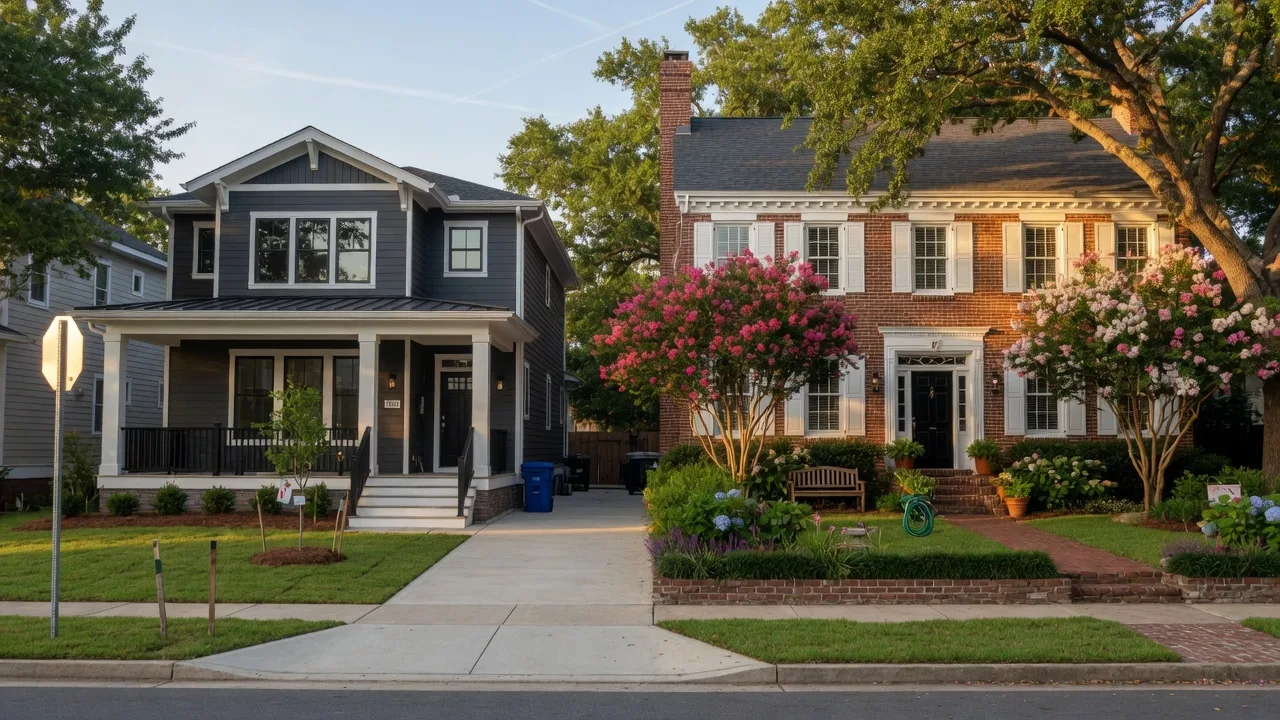
Every buyer I work with eventually faces this fork in the road: should I buy a brand-new home from a builder, or should I look for an existing home in an established neighborhood? The answer used to be simpler. New construction cost more per square foot but promised turnkey living. Resale homes offered charm and location but came with deferred maintenance. In 2026, those lines have blurred significantly, and the right choice depends heavily on which market you are buying in.
I have represented buyers across three very different markets long enough to see how the math shifts depending on location, builder incentives, inventory levels, and buyer priorities. In Charlotte, new construction communities are competing aggressively for buyers with rate buydowns and upgrade credits that can be worth $20,000 or more. In St. Louis, the resale market remains the dominant force, with tight inventory and strong demand for well-maintained homes in established school districts. And in Naples, where a condo buyer's market has emerged, the new vs. resale calculus is different still. Let me walk you through what I am seeing in each market and how to make the call that fits your life.
The Big Picture: How 2026 Changed the Math
For much of the post-pandemic period, new construction carried a 10% to 15% price premium over comparable resale homes. That gap has narrowed considerably in 2026. In some high-growth metros, new construction price per square foot has even dipped below resale as builders compete for buyers with aggressive incentives and spec inventory discounts. Meanwhile, existing home inventory in many desirable neighborhoods remains constrained, as homeowners locked into low mortgage rates are reluctant to sell and trade up to a higher rate (Zillow, 2026).
The result is a market where new construction is more accessible than it has been in years, but resale homes in prime locations continue to offer advantages that cannot be replicated. Here is how I help buyers weigh the trade-offs in each of my three markets.
Charlotte, NC: The New Construction Capital
Charlotte is the most active new construction market of the three, and it is not close. With steady population growth driven by corporate relocations in finance, fintech, and healthcare, builders have been adding inventory across the metro at a healthy clip. The median new construction price in Charlotte sits at approximately $425,000 in mid-2026, with the most active price band between $350,000 and $550,000 (View Charlotte, 2026).
What Builders Are Offering Right Now
Charlotte builders are offering the most aggressive incentives I have seen in my 20-year career. Here is what is on the table in mid-2026:
- 2-1 interest rate buydowns are the most common incentive, costing builders $15,000 to $25,000 and lowering your rate by 2% in Year 1 and 1% in Year 2. On a $425,000 home, that translates to roughly $470 in monthly savings in the first year and $235 in the second.
- Design center credits ranging from $20,000 to $40,000, covering upgrades like hardwood floors, quartz countertops, and premium cabinetry. This is real money that directly improves your home.
- Closing cost credits of $5,000 to $10,000 to reduce your out-of-pocket expenses at the closing table.
- Spec and inventory home discounts on homes that are already built or near completion. Builders want these off their books, and I have seen discounts of 5% to 10% off list price on spec inventory in Steele Creek, Indian Trail, and the Lake Norman corridor.
The hottest corridors for new construction in Charlotte right now are South Charlotte and the Ballantyne area for families, the Lake Norman corridor for those who want space and water access, and the northeast corridor through Concord and Harrisburg for the best value per square foot. Steele Creek and University City offer more affordable entry points into new construction.
When Resale Still Wins in Charlotte
For all the builder incentives, resale homes in Charlotte's established neighborhoods still offer advantages that new construction cannot match. Dilworth, Plaza Midwood, and South End offer walkability, mature tree canopies, historic architecture, and proximity to Uptown that you simply will not find in a master-planned community on the outskirts of the city. If location and character are your primary drivers, the premium you pay for a resale home in these neighborhoods is often worth it.
The other factor is timing. New construction takes 6 to 10 months from contract to completion in Charlotte. If you need to move in within 60 days, you are looking at spec inventory or resale. If you have flexibility and want a home built to your specifications, new construction with today's incentives is hard to beat.
Charlotte Bottom Line
If you have a 6- to 10-month timeline and want the best value per square foot with modern finishes, new construction in Charlotte is the strongest option it has been in years. If you need walkability, character, or immediate move-in, target resale in Dilworth, Plaza Midwood, or South End. Either way, bring your own agent to the builder's sales office on your first visit -- the builder's agent works for the builder, not for you.
St. Louis, MO: The Resale Market Remains King
St. Louis tells a very different story. While Charlotte is awash in new construction communities, St. Louis's built environment is older and more established. New construction in St. Louis County and the surrounding areas tends to be infill development -- individual lots or small subdivisions in established neighborhoods rather than the master-planned mega-communities common in Charlotte.
The Resale Advantage in St. Louis
St. Louis remains a tight market with under two months of inventory in many desirable areas (HouseSoldEasy, June 2026). Well-maintained homes in Kirkwood, Webster Groves, Clayton, and Crestwood are selling quickly at or above asking price. For buyers, this means resale is the primary path to homeownership, and the competition can be fierce.
The advantages of resale in St. Louis are hard to argue with. Established neighborhoods offer mature trees, larger lots, and proximity to some of the best school districts in Missouri. Many homes in these areas have been updated and expanded over decades, giving you quality construction with modern amenities. And the city's historic architecture -- brick bungalows, Colonial Revivals, and Mid-Century ranches -- offers a level of character that new construction cannot replicate.
New Construction Options in St. Louis
New construction does exist in the St. Louis market, but it is concentrated in specific areas. Wildwood, Chesterfield, and parts of St. Charles County have active new home communities. Townhome developments in and around Clayton and Central West End offer a new construction option for buyers who want modern finishes without leaving the urban core.
Builder incentives in St. Louis are less aggressive than in Charlotte -- typically rate buydowns in the $10,000 to $15,000 range rather than the $20,000-plus packages common in North Carolina. The reason is simple: St. Louis builders face less competition from resale inventory, so they do not need to offer the same level of incentives to attract buyers.
The School District Factor
In St. Louis, the school district question often decides the new vs. resale debate. The most sought-after school districts -- Kirkwood, Clayton, Ladue, Parkway, and Webster Groves -- have limited new construction options. Buyers who want access to these districts almost always buy resale. If school quality is your top priority, you need to be looking at existing homes in these boundaries, not at new construction communities.
St. Louis Bottom Line
St. Louis is a resale market first and foremost. If you want top school districts, established character, and larger lots, focus on resale in Kirkwood, Webster Groves, Clayton, and Crestwood. New construction is available in the western and northern suburbs for buyers who want modern finishes and are willing to trade some location for newness. Builder incentives exist but are more modest than in Charlotte.
Naples, FL: A Tale of Two Markets
Naples is the most complex market of the three when it comes to the new vs. resale question. With single-family inventory at roughly 5.6 months of supply and condo inventory approaching 8 months in some price bands, the market has shifted decisively in favor of buyers (Naples Area Board of REALTORS, June 2026). But the dynamics differ significantly between new construction and resale, and between condos and single-family homes.
New Construction in Naples: Luxury Meets Opportunity
Naples has long been a destination for luxury new construction, and that continues in 2026. Communities like Ave Maria farther east, Fiddler's Creek, and the newly developed areas of North Naples offer new construction single-family homes ranging from $500,000 to well over $2 million. Custom builders are active throughout the market, and buyers who want a home built to their exact specifications have more options and better pricing leverage than they did two years ago.
Builder incentives in Naples are growing. Rate buydowns are becoming more common, and I am seeing some builders offer $20,000 to $30,000 in design center credits or closing cost assistance on spec inventory. The key is that Naples builders are feeling the same market pressure as resale sellers -- more inventory, longer days on market, and buyers who can afford to be patient and selective.
The Condo Question
This is where Naples gets its own special chapter. For condominium buyers, the market has shifted dramatically. With new Florida structural reserve legislation requiring associations to maintain fully funded reserves, many condo associations are facing special assessments or increased monthly fees. This has cooled buyer demand for condos and created significant negotiation leverage for buyers who are willing to navigate the new regulatory landscape.
If you are looking at resale condos in Naples, I recommend asking for three things: a copy of the most recent reserve study, the current reserve funding percentage, and documentation of any planned special assessments. Sellers who have these documents ready are serious about selling, and buyers who come prepared to evaluate them have a significant edge.
New construction condos in Naples, on the other hand, are generally built to the new standards and come with fully funded reserves from the start. This makes them attractive to risk-averse buyers, though they typically carry a price premium over comparable resale units.
Resale Single-Family Homes in Naples
The resale single-family market in Naples is active but selective. Days on market average 90 to 110 days for single-family homes, and nearly 39% of listings have taken at least one price reduction (NABOR, June 2026). Buyers have choices and are taking their time. Pending sales are up 30.6% year over year, suggesting that buyers are finding value at current price levels -- but they are not rushing.
The sweet spot for resale buyers in Naples right now is homes priced between $500,000 and $900,000 that have been on the market for 60 to 90 days. These sellers have typically already adjusted their price expectations and are ready to negotiate. The homes that sold in 2022 and early 2023 are not comps anymore -- pricing must reflect the current market reality.
Naples Bottom Line
Naples offers the most buyer leverage of the three markets. For condos, new construction offers peace of mind on reserves, but resale units are deeply negotiable if you do your homework. For single-family homes, resale offers the best value for patient buyers. New construction incentives are improving, and custom builders are more open to negotiation than they have been in years. In all cases, bring an agent who understands the Naples market and the new Florida reserve requirements.
The Decision Framework: Five Questions to Ask Yourself
I have walked hundreds of buyers through this decision, and I have found that five questions consistently separate the buyers who are happy with their choice from those who experience buyer's remorse.
- Q1 What is your timeline? If you need to move in within 60 days, new construction from scratch is off the table unless you target spec inventory. Resale or a quick-move-in new home is your path. If you have 6 to 10 months, new construction becomes a viable option.
- Q2 How important is location and school district? In every market, the most sought-after school districts and walkable neighborhoods are dominated by resale homes. If school boundaries are a deal-breaker, you need to focus on existing homes in those zones.
- Q3 Do you want customization or certainty? New construction lets you choose finishes, but the builder controls the timeline and the floor plan. Resale gives you an immediate, known product with a completed inspection report but limited ability to customize without renovation.
- Q4 What is your tolerance for maintenance? New homes come with builder warranties and minimal deferred maintenance for the first 5 to 10 years. Resale homes, particularly those built before 2000, will have maintenance needs -- HVAC, roof, plumbing, windows -- that you need to budget for from Day 1.
- Q5 Which market are you buying in? The math is different in Charlotte, St. Louis, and Naples. Charlotte rewards new construction buyers with the best incentives. St. Louis rewards resale buyers with the best locations. Naples rewards patient buyers in both categories with strong negotiating leverage.
The One Thing Every Buyer Needs to Know About Builder Contracts
I want to flag something that applies across all three markets. Builder contracts are not the same as standard purchase agreements. They are drafted by the builder's legal team to protect the builder's interests, and they often contain provisions that limit your ability to walk away, extend timelines without penalty to the builder, or restrict your access to independent inspectors.
This is why I tell every buyer: never walk into a builder's sales office without your own representation. The sales agent on site works for the builder, not for you. They are trained to sell their product and their financing. You need someone in your corner who reviews the contract, negotiates the terms, and protects your interests -- just as you would with a resale transaction. Many buyers assume that because the home is new, they do not need an agent. That assumption costs real money in missed incentives, overlooked contract terms, and unrepresented negotiations.
I have negotiated dozens of builder contracts across all three markets. The incentives are better when you have an agent advocating for you. The terms are fairer. And the closing process is smoother because you have a professional managing the timelines and contingencies.
The Smartest Buyers in 2026 Are Asking Better Questions
The buyers I see making the best decisions right now are the ones who are not asking "new or resale?" as a binary question. They are asking: "Which option serves my specific priorities in this specific market at this specific time?" They understand that a brand new home with a 2-1 rate buydown in Charlotte can be a better financial decision than a slightly cheaper resale with a standard rate and no incentives. They also understand that a well-maintained resale in Kirkwood with a top school district can be a better long-term investment than a new home in a developing area with uncertain school assignments.
There is no universal right answer. There is only the answer that fits your family, your budget, your timeline, and your market.
Not Sure Which Path Is Right for You? Let's Talk It Through.
Whether you are leaning new construction or resale, I will listen to your situation, answer your questions honestly, and help you build a search strategy that fits your life. No pressure, no upselling -- just the straight talk you deserve from someone who has been doing this for 20 years across four states.
Book Your Free Consultation30-minute video call. Bring your questions. I will give you honest answers and a clear plan.
20 years of expertise. Dual Metro. Same unstoppable results.
— Tracey De Simon