
New Construction in 2026: Builder Incentives, Contracts & How to Negotiate in Charlotte, St. Louis & Naples
The biggest change in the 2026 housing market is happening on the new-construction side of the street, and it affects buyers, sellers, and relocators in all three of my metros. Two-thirds of American builders are now offering incentives to move homes, mortgage rates are hovering near 7 percent, and new builds are filling neighborhoods that could not build them fast enough a few years ago. That combination has quietly turned new construction into one of the most negotiable corners of housing in years. Here is how the new-home market actually works right now in Charlotte, St. Louis, and Naples, what you can genuinely ask a builder for, and the contract and relocation details that catch people off guard.
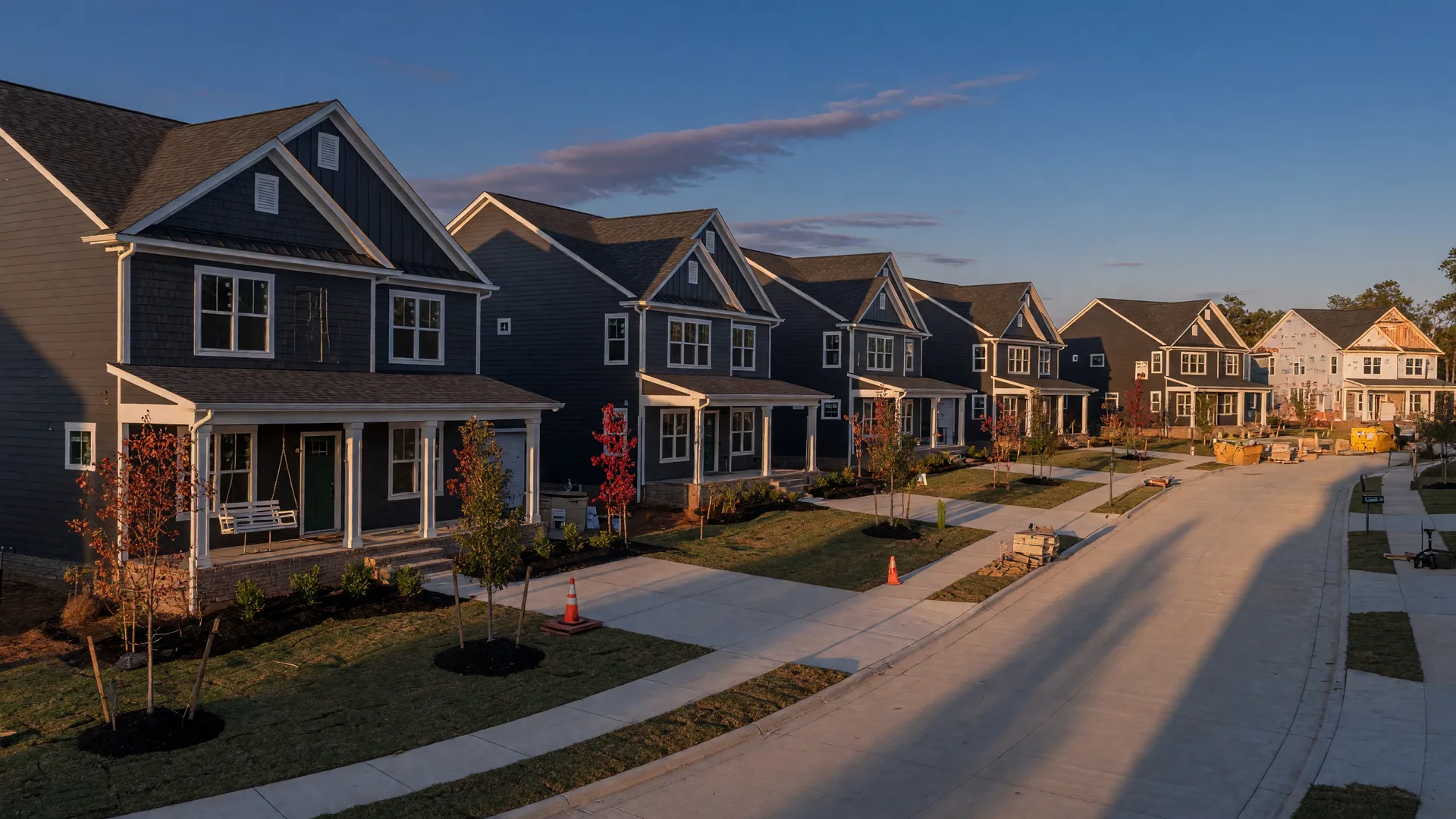
When clients tell me they are considering a new build, the first thing I do is reset expectations, because buying from a builder is not like buying a resale at all. The price is not really the price, the contract is written to protect the builder, and the timeline is a promise, not a guarantee. But here is the part the headlines miss: in 2026, that one-sidedness has flipped into real opportunity for the prepared buyer. Builders need to move inventory, and they are spending on incentives instead of cutting base prices, because a price cut resets the appraised value of every home in the community. If you understand how that trade works, you can negotiate things a resale seller would never offer: your interest rate for the first couple of years, your closing costs, and your upgrades. Let me walk you through the current market in all three metros, then the exact playbook I use with new-construction clients.
01 -- Why Builders Are Giving Away More Than Ever
You can measure the pressure builders are under with two numbers. The National Association of Home Builders and Wells Fargo Housing Market Index fell to 32 in September 2026, the lowest reading in a year, as the 30-year fixed rate climbed back toward 7 percent, and builders told the NAHB that 66 percent of them were using sales incentives that month, up from 63 percent in August. Across the country, Realtor.com's August scan of new-construction listings found nearly one in five, 18.8 percent, advertising a buyer incentive, with a reduced mortgage rate the most common offer, showing up on 13.8 percent of listings at an average of about 3.92 percent for the first year or more, usually structured as a temporary buydown.
The results are visible in the national numbers. New single-family home sales rose 6.4 percent in August to a 684,000 annual pace, even as months of new-home supply sat elevated at about 8.5, and builders leaned on FHA and VA financing, which made up roughly half of builder-affiliated mortgage volume. Builders prefer incentives over price cuts for a very logical reason: a discount on the base price drags down the appraised values of every lot in the neighborhood, while a rate buydown or a closing-cost credit costs the builder money without moving the public price sheet. For a buyer that is excellent news, because it means the negotiable part of a new contract is bigger than most people assume.
- Buyers: treat the incentive as part of the deal, not a gift. Ask for the incentive menu in writing before you talk about price, and compare offers the same way, since a dollar toward your rate is worth more than a dollar off the chandelier.
- Sellers: you are not just competing with the house next door anymore. You are competing with a builder who can buy a buyer's rate down three points. That changes how you price, what you repair, and what concessions you offer.
- Relocators: a builder's incentive can close the gap between a move-in-ready resale and a brand-new home, so run the monthly payment, not the sticker price, when you compare the two across metros.
02 -- Charlotte: The New-Construction Magnet on the East Coast
Realtor.com ranked Charlotte the number four metro in the country for new construction in 2026, and the builders are busy. The region's median new-construction price runs about $425,000, up from roughly $395,000 in 2024, with the most active range between $350,000 and $550,000, and incentives are common, especially on inventory homes that are already framed or finished. In practice that means 2-1 and 3-2-1 interest-rate buydowns, closing-cost credits of roughly $5,000 to $20,000, and upgrade packages worth $10,000 to $30,000 across a wide swath of communities.
Where is the building happening? The River District on Charlotte's west side is the big one to watch, with new homes from the $300,000s and the first retail permits expected this fall. Steele Creek and The Palisades are delivering single-family homes and townhomes in the $400,000 to $700,000 range, Huntersville keeps filling in with communities like Bryton and The Retreat at Westbranch, and the South Carolina state-line towns of Fort Mill and Indian Land, plus Waxhaw, Marvin, and Ballantyne, carry the move-up and custom side of the market. If you need a lower entry point, Indian Trail, Mount Holly, and Gastonia all have active neighborhoods in the $275,000 to $375,000 band. My honest advice for Charlotte buyers: decide on the school district and commute first, because the exact same floor plan changes meaning entirely depending on which side of the county line it sits on.
- Buyers: get pre-approved before you walk a model home, and ask whether the builder's preferred lender will match a rate or credit you can get elsewhere. The preferred-lender incentive is real, but so is shopping it.
- Sellers: if a new community is opening within a couple of miles of you, expect longer days on market and more negotiation. Condition and a realistic price are how resales win against new construction.
- Relocators: new neighborhoods near the new employers (Ballantyne, Uptown, the west side, and the state line) are where the jobs and the houses are landing together. Match your commute before you match the floor plan.
03 -- Greater St. Louis: The Value Story With a Fast Suburban Pulse
St. Louis is still the value play of my three markets, and new construction there follows the same logic. The metro median sat around $312,000 in July, up 3.6 percent year over year, and homes were going under contract in about 11 days, which tells you the suburbs have not lost their appetite. Single-family inventory was up about 8.7 percent from a year earlier, and building permits in the city rose 14.1 percent year over year even as builders nationally pulled back, a reminder that St. Louis builders are facing the same rate pressure but a stronger local market.
The new-home action is concentrated where the land and the schools are: St. Charles County is the hot corridor, and builders there are offering mortgage-rate buydowns and seller concessions to keep sales flowing. Inside the metro you will find Fischer Homes' Deer Hollow and The Ridge in South County, the designer collection at The Preserve, and townhome product like Gaslight Townhomes in the Central West End. Two trends matter for buyers here: energy efficiency and smart-home technology are now standard, not upgrades, and builder-grade construction runs roughly $180 to $300 per square foot, so the finished cost lands well below Charlotte or Naples for the same square footage. If you are relocating to St. Louis on a corporate transfer, the 11-day absorption rate means the move-in-ready resale is often the faster play, while a build gives you the higher end and better energy bills in exchange for waiting 6 to 12 months.
- Buyers: in a market this tight, buydowns matter more than price per square foot. A builder who buys your rate down in St. Charles County may deliver a lower payment than a resale in the county at a lower list price.
- Sellers: lead with what resale gives you that new construction cannot: an exact move-in date, mature trees, a finished yard, and usually a finished basement. Make those visible in your marketing.
- Relocators: if your transfer is time-boxed, buy move-in-ready and skip the build cycle. If you have flexibility, St. Louis's build costs make new construction one of the best values in the Midwest.
04 -- Naples: Standing Inventory and the Most Aggressive Incentives
Naples is where the new-construction story flips to its most dramatic version. The market has shifted decisively toward buyers, and builders are competing hard to close standing inventory. Single-family supply sat at about 5.4 months and condos at 8.2 months in September, the median closed price landed around $627,500 this summer, down about 4.1 percent from a year earlier, and homes were averaging roughly 100 to 124 days on market. In that environment, incentives have escalated well beyond the national norm: some communities have marketed everything from closing-cost credits and pool packages to promotions like a free car, and many builders are quietly offering unadvertised flex money toward rate buydowns and structural upgrades rather than cutting the base price.
New development is concentrated on the Collier Boulevard corridor and east of I-75 along Immokalee Road and Oil Well Road. The heavy hitters are GL Homes with Valencia and the 55-plus Valencia Sky, the 18-acre amenity campus at Caymas Naples with its clubhouse opening this fall, Bridgewater Bay with more than 500 residences, and the self-sustaining town of Ave Maria. Three costs trip up newcomers: CDD fees, which are Community Development District assessments baked into your tax bill, lot premiums that vary wildly by community, and golf membership structures, where bundled fees are very different from equity memberships. Understand all three before you fall in love with a floor plan, because they can add hundreds of dollars to your monthly cost in a market where the sale price already looks negotiable.
- Buyers: flex money is the lever. Ask for the unadvertised incentive list, then have your lender run the payment with a buydown versus a price reduction, because in Naples right now the buydown usually wins.
- Sellers: if you are reselling in a community with active new construction nearby, know exactly what the builder is offering, and be prepared to match it with a concession of your own.
- Relocators: season starts in November, and the buyers follow the weather. If you are weighing a Naples move for 2027, the strongest builder incentives of the year will probably land between now and the holidays.
05 -- What You Can Actually Negotiate With a Builder
The single most valuable thing I can tell you about new construction is this: the base price is the least negotiable number in the deal, and everything around it is the most negotiable. Builders protect the price sheet, but they will move on five levers. The rate buydown, which lowers your payment for the first year or two, is the most valuable because it is the purest form of payment relief. Closing-cost credits are second, and they are the easiest for the builder to grant because they come from the mortgage side of the transaction. Upgrades and options, from flooring to cabinetry to a backyard package, routinely carry 30 to 50 percent builder margin, so asking for them is where you recover real value. Lot premiums are frequently negotiable once a community has been open a while, and the move-in date itself, especially on a spec home the builder wants gone before a quarterly close-out, can unlock surprising concessions.
Here is the arithmetic on the most common tool, the 2-1 buydown. It lowers your rate by two points in year one and one point in year two, and the cost of that subsidy, roughly the difference between the bought-down payment and the market-rate payment over those two years, is paid up front, either by the builder or as a lender credit. On a $425,000 loan in Charlotte, a 2-1 buydown can save several hundred dollars a month in the first two years, which is exactly why a buyer who compares only purchase prices will misjudge the deal. That same logic is why I tell buyers to keep sellers, agents, and lenders talking in monthly payment terms, not price terms.
- Buyers: remember that the person in the model home works for the builder, not for you. Have your own buyer's agent, because in North Carolina, Missouri, and Florida the representation rules differ, and builder sales reps represent the seller side of the table.
- Sellers: a concession toward the buyer's rate competes with a builder's buydown dollar for dollar. When a new community opens near you, that is the tool that keeps your home in the running.
- Relocators: ask every builder you tour for a written incentive sheet, and bring it to the next one. Prices and packages vary sharply, and the written quote is the only honest comparison.
06 -- The Contract and Timeline Details People Forget
New-construction contracts are written by the builder's attorney, and they are deliberately one-sided. Contingencies that protect you in a resale, financing, inspection, appraisal, are either limited or trimmed entirely, and the deposit schedules in states like NC and FL can be steep. That does not mean the contract is bad news; it means the education work happens before you sign, not after. Three details matter most.
First, the timeline. A build typically runs three to nine months from contract to close, and builders quote optimistic dates because they are selling you. Ask for the completion date in writing, then build in a buffer, especially if your lease ends or your transfer date is fixed. Second, inspections are allowed but you have to ask. A third-party inspector during construction, especially at the pre-drywall stage and again before closing, is the single best money you will spend on a new home, and builders accept it as routine. Third, the appraisal. When a contract carries heavy incentives, appraisers sometimes value the home conservatively, and an appraisal gap on a new build can kill the financing. Ask about an appraisal contingency or a rebate clause before you sign, not after the gap appears.
The state-specific layers matter too. In North Carolina, new builders frequently use their own purchase agreement rather than the standard resale form, so the due diligence concept applies differently and closings can be delayed by the certificate of occupancy. In Missouri, earnest money sits in trust and contingency timelines are negotiable, so use the room. In Florida, the deposit schedule is steep, the contract is heavily weighted to the builder, and the CDD and HOA documents have to be read before you sign, not after. If you are buying across state lines, this is where a broker licensed in NC, MO, and FL earns her keep, and it is also where my three-states, three-systems comparison becomes your reading list.
- Get the incentive list, the lot premium, the CDD or HOA documents, and the completion date all in writing.
- Know whether you are buying a spec home (move-in-ready, strongest deals) or a build-to-order home (your choices, longer wait).
- Have a real estate attorney or your agent read the contract in the state where the home sits, and never close without a final walkthrough confirming the punch list is done.
07 -- For Sellers: You Are Competing With the Builder's Balance Sheet
If a new community is opening within a few miles of your home, the single biggest change in your selling strategy is understanding what you are up against. A builder can buy down a buyer's rate, credit their closing costs, and throw in upgrades, all while holding the public price steady. Your resale competes on three things the builder cannot promise: certainty, character, and speed. You can close on a date certain, you have mature landscaping and a finished yard, and buyers can move in this month instead of next spring. Lead with those in your marketing, price against the builder's net cost rather than their list price, and consider a concession toward the buyer's rate in your own offer strategy.
I have also watched sellers win simply by not ignoring the problem. A home near a new subdivision that sits on the market for 60 days is not a market failure, it is usually a pricing and presentation failure against a very visible competitor. Staging, repairs, and a sharp price are the whole game, and my full seller's playbook walks through exactly how to run that race.
08 -- Relocation News: What Just Changed in All Three Metros
For relocators, new construction and new jobs travel together, and all three metros had fresh headlines in the first week of October.
Charlotte: the city landed the Women's Tennis Association as its fifth corporate headquarters relocation of 2026, Capital Group raised its Uptown jobs target to about 1,000 workers, up 400 from its original pledge, and Shemar Electric USA moved its U.S. headquarters from Memphis to north Charlotte with an 80-job, $15 million first U.S. factory. Meanwhile the master-planned River District is expected to receive permits for its first retail site this fall. When headquarters and retail land together, new-home communities are not far behind, which is why the building boom is concentrated right where the jobs are landing.
Greater St. Louis: Boeing's Defense, Space & Security headquarters is back in St. Louis, and the region celebrated a new direct route to Iceland announced on October 7, with service starting next year, a connectivity win that matters for business travel and newcomers alike. The Move2STL program keeps matching out-of-state workers with jobs before they relocate, the downtown data-center buildout law took effect over the summer, and PNC notes the region's unemployment has run below the national rate for 31 straight months. All of that filters into the housing market the same way: through buyers arriving with paychecks and a reason.
Naples: Collier County voters decide on November 3 whether to raise the tourist development tax from 5 to 6 percent to fund the Paradise Coast Sports Complex and beach renourishment, Suffolk broke ground this summer on the hurricane-resilient Collier County Veterans' Nursing Home, and a $23 million condo closed at the Four Seasons Naples Beach Club, a reminder that the luxury end still moves. Collier property values posted their first decline in a decade this September, which is precisely the backdrop for the aggressive builder incentives I described earlier. If you are relocating to Naples, the seasonal market and the election results are both worth watching before you commit to a new build.
- A new-build neighborhood near a new employer is the single strongest relocation play in any of my three metros, because the jobs and the housing are arriving on the same schedule.
- Charlotte builds fast and balanced, St. Louis builds value with the tightest supply, and Naples builds standing inventory with the best incentives of the year right now. Match the strategy to the metro.
- Work with one agent licensed in NC, MO, and FL so the contract, CDD, tax, and timing questions of a multi-state move get one answer instead of three.
09 -- The Bottom Line, in Plain English
New construction in 2026 is a buyer's marketplace hiding inside a familiar story. Two-thirds of builders are offering incentives, new-home supply is elevated in all three of my metros, and the negotiable levers, rate buydowns, closing-cost credits, and upgrades, are more generous than at any point in years. The catch is that the process rewards preparation: the contract is one-sided, the timeline is optimistic, and the CDD, HOA, and inspection details only matter if you know to look. Buyers who walk in with a pre-approval, an agent of their own, and a written incentive comparison are the ones who will close on more house for the same payment. Sellers near new communities win by selling certainty and speed, and relocators win by following the jobs to the new-home corridors.
I have represented buyers and sellers through twenty years of new construction, resale, and everything in between, across the three states I am licensed in, and I treat every client like family, because that is how this business should feel. If you are trying to decide between a new build and a resale, or between Charlotte, St. Louis, and Naples, bring me the decision and I will bring the comparison. We will put the incentives side by side, work the payment math, and walk through the contracts in plain English, free, with no pressure and no obligation. That is what the next hour is for.
Ready to Compare Your Options?
Whether you are buying new construction, selling against it, or relocating across state lines, sit down with me and we will put the numbers side by side for Charlotte, St. Louis, or Naples. You will leave with a clear plan and honest answers from a 20-year broker licensed in NC, MO, and FL.
Book Your Free ConsultationSources
Market data and forecasts compiled from publicly available reports as of early October 2026. Figures vary by source, neighborhood, community, and price band. This article is for general information only and is not legal, tax, or financial advice.
- 30-year fixed-rate mortgage average: Freddie Mac Primary Mortgage Market Survey
- Builder sentiment and incentive share (September 2026): NAHB/Wells Fargo Housing Market Index
- New-construction incentive scan (August 2026): Realtor.com via New Home Source
- How builder rate buydowns and credits work: Movement Mortgage and Zillow
- New single-family sales and new-home supply (August 2026): NAHB and Eye on Housing
- New-home mortgage demand and FHA/VA share: National Mortgage Professional
- Charlotte new-construction guide and pricing: View Charlotte and New Home Source
- Charlotte ranked among top metros for new construction: Realtor.com via ActiveRain
- St. Louis market update and inventory (2026): RE/MAX Best Choice
- Missouri homebuilders and permit trends: DDD News and Cost to Build a House
- Naples new-construction buyer's guide (2026): Team239 and Realty of Naples FL
- Southwest Florida new-housing market report: Naples Daily News
- Charlotte lands WTA as fifth corporate HQ of 2026: The Center Square
- Capital Group raises Charlotte job target to 1,000: Business North Carolina
- Shemar Electric USA picks Charlotte: Hoodline
- Boeing returns its defense headquarters to St. Louis: Greater St. Louis, Inc.
- Direct flights from St. Louis to Iceland announced: FOX 2 Now
- Collier County tourist development tax referendum: Marco Eagle / Naples Daily News
- Naples business and real estate roundup: Naples Press