
Navigating the Late 2026 Market: Smart Strategies for Buyers, Sellers, and Relocators in Charlotte, St. Louis, and Naples.
The late 2026 market looks different than it did a year ago. Mortgage rates are settling in the mid-6% range. Inventory is up across the board. Days on market have stretched. And the strategies that worked in 2024 and early 2025 need updating. Here is what I am seeing on the ground in Charlotte, St. Louis, and Naples, and the specific moves I am recommending to my clients right now.
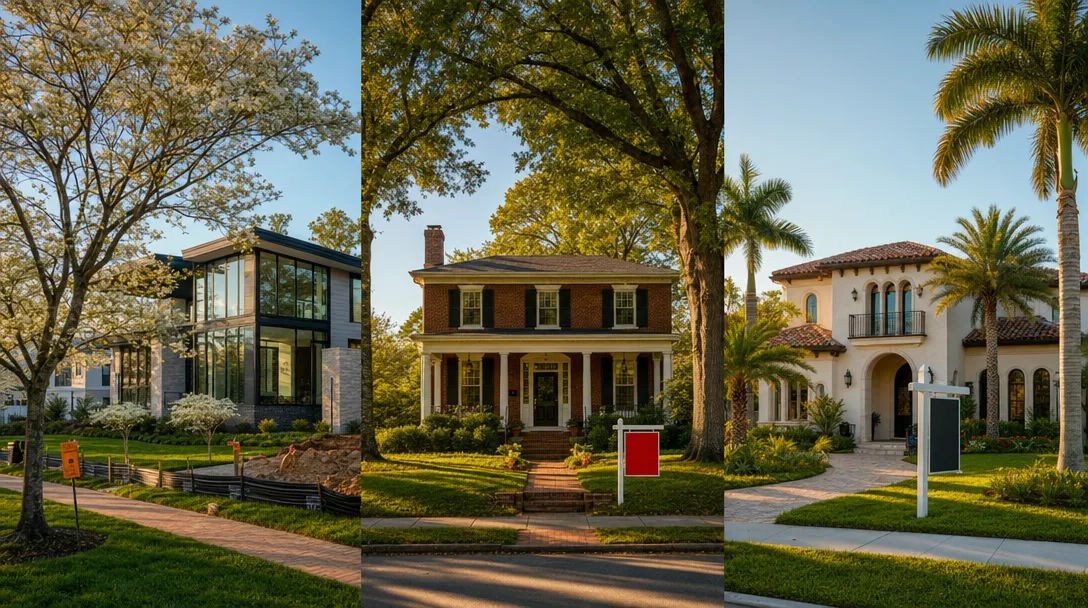
I want to start with something I have been saying to every client who sits down with me this year: the market is not bad. It is just different. And different means opportunity if you know where to look and how to play it.
After 20 years in this business, I have learned that the real winners are not the ones who try to time the market perfectly. They are the ones who understand the conditions they are working with and adjust their approach accordingly. So let me break down exactly what I am seeing in each of my three markets, and the strategies that are working for buyers, sellers, and relocators right now.
01 -- The Late 2026 Market at a Glance
Before we dive into market-specific strategies, let me lay out what the data is telling us nationally and locally.
Mortgage rates have settled into a steady range. The 30-year fixed is hovering around 6.4% to 6.7% depending on the week, with most forecasters expecting rates to stay in this zone through the end of the year. A dramatic drop to 5% is unlikely in the near term. But a gradual drift downward toward 6% is a realistic possibility if the Federal Reserve begins cutting rates later this year.
What that means for buyers is simple: waiting for rates to come down is a gamble that may not pay off, and the price of waiting could be higher home prices and less inventory. What it means for sellers is equally important: buyers are rate-sensitive and monthly-payment-conscious, so terms matter as much as price.
Across all three of my markets, one theme is consistent: inventory is up, days on market have stretched, and buyers have more leverage than they have had in several years. That is not a cause for alarm. It is a cause for strategic thinking.
Late 2026 Market Snapshot
Median Price: $415K-$435K
Inventory: Up ~19% YoY
Days on Market: 24-88 days
Market Type: Balanced (2.4 mo supply)
Best Strategy: Negotiate concessions
Median Price: ~$304K metro
Inventory: Up ~10.5% YoY
Days on Market: 37-44 days
Market Type: Seller-favorable (2.3 mo supply)
Best Strategy: Be ready to move fast
Median Price: $590K-$600K
Inventory: Down ~21% from peak
Days on Market: 95-108 days
Market Type: Balanced (5.6-6.3 mo supply)
Best Strategy: Act before snowbird season
02 -- Smart Moves for Buyers in Late 2026
If you are a buyer right now, here is the honest truth: you are in a better position than you have been in since 2022. Inventory is up. Seller concessions are back. And while mortgage rates are higher than anyone would like, the combination of slower price growth and negotiable terms is creating real value for prepared buyers.
Get Your Financing in Order Before You Shop
This is not a suggestion. It is a requirement. In a market where sellers are more selective about who they accept offers from, a fully underwritten pre-approval from a reputable local lender sets you apart. I tell every buyer the same thing: do not look at a single home until you have a pre-approval letter in hand. I know it is not the exciting part of the process. But it is the part that determines whether your offer gets taken seriously.
In Charlotte, that means working with a lender who knows the specific appraisal landscape of neighborhoods like Ballantyne, Dilworth, and Steele Creek. In St. Louis, it means finding a lender familiar with Missouri's first-time buyer programs. In Naples, it means a lender who understands how seasonal income can affect qualification for relocating buyers.
Look at Homes That Have Been on the Market 30+ Days
This is the single most underused buyer strategy in any market, and it is especially powerful right now. When a home has been listed for 30 to 60 days without an accepted offer, the seller is beginning to feel the pressure. They have had a few showings, maybe a few lowball offers, and they are starting to realize their pricing or presentation needs to change.
Those are the sellers who are ready to negotiate on price, terms, and concessions. I have seen clients secure 2% to 3% in seller concessions toward closing costs or rate buydowns this way, plus meaningful price adjustments on homes that were initially priced 5% above market.
In Charlotte, look at homes in the $400K to $550K range that have been sitting since mid-summer. In St. Louis, watch the inventory in west county suburbs like Chesterfield and Wildwood where price adjustments are becoming more common. In Naples, the pre-season buying window (right now through October) is when sellers are most motivated to negotiate before the snowbirds arrive.
Ask for a Rate Buydown, Not a Price Reduction
Here is something many buyers do not realize: a 2-1 rate buydown (where the seller pays to lower your rate for the first two years) can save you more money than a $10,000 price reduction, and it costs the seller roughly the same amount. Why? Because the monthly payment is what drives affordability for most buyers, not the purchase price alone.
A 2-1 buydown drops your rate by 2% in year one and 1% in year two. On a $400,000 loan at current rates, that can save you over $500 per month in the first year and roughly $250 per month in the second year. By the time your rate adjusts to the full note rate in year three, you have built equity, refinanced conditions may have improved, and you have given yourself breathing room.
Seller-paid rate buydowns are becoming much more common across all three markets. In Charlotte, I am seeing them offered on roughly one in four listings in the $400K to $700K range. In St. Louis, builders and individual sellers are using them to compete with new construction incentives. In Naples, they are less common but increasingly available on condo listings where sellers are eager to move.
Do Not Forget Down Payment Assistance Programs
Each state where I hold a license has programs that can make homeownership more accessible. In Missouri, the MCC (Mortgage Credit Certificate) tax credit can save you up to $2,000 per year on your federal taxes, and MHDC offers down payment assistance of 3% to 4%. In North Carolina, the NC Home Advantage program offers down payment assistance of up to 5% for qualifying first-time buyers. In Florida, the Florida HFA offers deferred-payment second mortgages for down payment and closing costs.
These programs are real, and they are available now. I have helped clients use them in all three states. The key is working with a lender who is experienced with these programs and can pre-qualify you before you start shopping. Not every lender knows how to structure these deals. Ask the question before you commit.
- Start with pre-approval. Fully underwritten, from a local lender. Do not shop without it.
- Target homes listed 30-60 days. Motivated sellers are ready to negotiate on price and terms.
- Ask for a 2-1 rate buydown. More valuable than a price cut in most situations.
- Explore down payment assistance. Every state has programs. Ask your lender about them.
- Keep your timeline flexible. The right deal takes time. Do not rush into a home that does not fit.
03 -- Winning Strategies for Sellers Right Now
For sellers, the late 2026 market requires a different playbook than the one that worked in 2024 or 2025. The days of listing a home at any price and waiting for multiple offers are behind us in most price ranges and neighborhoods. But homes that are priced right, presented well, and marketed strategically are still selling.
Price It Right on Day One, Not After Three Reductions
This is the single biggest mistake I see sellers make, and it costs more than almost any other factor. A home that is priced 5% above market on day one will sit for 45 to 60 days, accumulate price reductions, and eventually sell below market. A home priced within 2% of recent closed comparable sales on day one will typically sell within 30 days, often at or above asking price.
Why does this happen? Because the buyers who tour a home in the first two weeks are the most serious and motivated pool of prospects you will ever have. They have been waiting for a home like yours to come on the market. If you turn them off with an unrealistic price, they move on. And when your price comes down later, those buyers have already found something else or are skeptical that a once-overpriced listing is now a good value.
I do a detailed comparable market analysis for every seller I work with, looking at recent closed sales, active competition, and pending listings. And I give my clients the honest number, not the number they want to hear. It is better to lose a listing than to misprice a home and cost my client thousands of dollars.
Offer a Buyer Incentive from the Start
In today's market, a seller who proactively offers a buyer incentive stands out. The most effective incentives right now are a 2-1 rate buydown contribution (typically 2% to 3% of the purchase price), closing cost assistance (1% to 2% of purchase price), or a home warranty (minimal cost, big psychological value).
I am seeing this strategy work consistently across all three markets. In Charlotte, homes that advertise a seller-paid rate buydown get 30% more showings in the first two weeks than comparable homes that do not. In St. Louis County, sellers who offer closing cost credits are selling faster than their competition in the same subdivisions. In Naples, offering to cover the first year of HOA dues or condo fees can tip the scales in a market where those costs are a growing concern.
Stage and Photograph Like You Mean It
I have had this conversation more times than I can count. A seller tells me they do not want to stage because it costs money. They do not want professional photography because their phone takes good pictures. And then their home sits on the market for six weeks while the staged and professionally photographed home three streets over sells in 12 days.
The data is clear. Professionally staged homes sell 73% faster on average and for 1% to 5% more than unstaged homes. Professional photography is non-negotiable. Virtual staging works for vacant homes, but I prefer physical staging for occupied properties because it gives buyers a tangible feel for the space.
In Charlotte, where inventory has climbed 19% year over year, presentation is what separates a sold home from a stale listing. In St. Louis, where the market is still seller-favorable but softening seasonally, staging gives you a meaningful edge over the competition. In Naples, where the pre-season window is open now through October, a home that is move-in ready and beautifully presented will attract the most serious year-round buyers before the holiday season.
- Price within 2% of closed comps. The right price from day one is the single most important decision.
- Offer a buyer incentive. Rate buydown contribution or closing cost credit. It works.
- Stage and photograph professionally. Homes that look better sell faster and for more.
- Make repairs before listing. A pre-listing inspection and strategic fixes prevent deal-killing surprises.
- Be willing to negotiate. Today's buyers have options. A flexible seller wins the deal.
04 -- Strategies for Relocators Moving Between Markets
If you are reading this and planning a move between Charlotte, St. Louis, or Naples, you are my people. I relocated my own practice from St. Louis to Charlotte just a few months ago, so I know the process from both sides. And I have worked with enough relocating families to know that the ones who succeed are the ones who plan ahead and work with experienced professionals.
Understand the Contract Differences Before You Write an Offer
I cannot emphasize this enough. North Carolina, Missouri, and Florida each have fundamentally different real estate contracts. If you are moving from St. Louis (where earnest money deposits are standard and refundable during inspection) to Charlotte (where non-refundable due diligence fees are the norm), you need to understand the difference before you make an offer. The same applies in reverse: a Charlotte buyer moving to Naples needs to understand Florida's contract structure, which has its own unique timelines and contingencies.
This is not something you can learn from a blog post or a quick Google search. You need an agent who is licensed and experienced in both your departure and destination markets. I hold active licenses in North Carolina, Missouri, and Florida, which means I structure cross-market transactions with the same broker handling both sides. That continuity eliminates miscommunication and protects your timeline.
Plan for the Tax Implications of Your Move
If you are selling a home in one state and buying in another within the same calendar year, your tax situation can get complicated. Home sale proceeds, capital gains, and state income tax filings all need to be coordinated. North Carolina has a flat state income tax. Missouri has a progressive income tax. Florida has no state income tax at all. That difference alone can affect your net proceeds by thousands of dollars.
I recommend every relocating client have a conversation with a CPA who understands multi-state filings before they close on their sale. The cost of that conversation is a few hundred dollars. The cost of getting it wrong can be thousands in unexpected taxes or penalties.
Give Yourself More Time Than You Think You Need
This is the lesson I learned most vividly from my own move. I thought six weeks would be enough to wrap up my St. Louis operation and land in Charlotte. It took three months. Between coordinating moving companies, transferring utilities across state lines, updating my professional licenses, registering my vehicles, changing my voter registration, and finding the right home, every system had its own timeline and its own paperwork.
If you are relocating your family, I recommend starting the process at least 90 days before your target move date. If you can start 120 days out, even better. The peace of mind is worth every extra week. And if your timeline is tighter than that, do not panic. It just means you need to be more organized and more intentional about every decision.
Whether You Are Moving to One of These Cities or Within Them, I Can Help
One of the greatest advantages I offer my relocating clients is that I am not guessing about their destination market. I live it. I just moved from St. Louis to Charlotte. I hold active licenses in North Carolina, Missouri, and Florida. I know the neighborhoods, the school districts, the commute patterns, and the local quirks of all three markets because I have boots on the ground in each one.
Whether you are moving from St. Louis to Charlotte for a corporate transfer, relocating from the Midwest to Naples for retirement, or moving between Charlotte suburbs as your family grows, I have the experience to guide you through every step of the process.
- Start 90 to 120 days before your target move date. Every system takes longer than expected.
- Work with a broker licensed in both states. Contract differences between NC, MO, and FL require local expertise.
- Talk to a CPA about multi-state tax implications. State income tax differences can affect your net proceeds significantly.
- Research neighborhoods before you arrive. Each city is a collection of villages. Choose your village first.
- Keep a detailed moving checklist. Vehicle registration, driver's license updates, utility transfers, school enrollment. Do not let these deadlines slide.
05 -- Where I See the Best Opportunities Right Now
I want to close with the specific opportunities I am most excited about in each market right now.
In Charlotte: The Balanced Market Sweet Spot
Charlotte is the most balanced market of the three right now, and that creates genuine opportunity for both buyers and sellers. For buyers in the $350K to $550K range, the inventory selection is better than it has been in years. Homes in Steele Creek, Mint Hill, and Mount Holly offer good value with solid appreciation potential. For sellers in the under-$500K segment, demand is still strong. The key is pricing competitively and presenting the home well. I am also watching the townhome segment closely. Charlotte's townhome inventory has grown significantly, and while that means more competition among sellers, it also means buyers can find excellent value in areas like South End and Ballantyne where single-family homes are priced at a premium.
In St. Louis: Steady Growth in a Supply-Constrained Market
St. Louis County remains one of the most compelling value stories in the Midwest. With a median price around $287K to $312K, home values are up 4% to 10% year over year depending on the sub-market. Supply is still tight at roughly 2.3 months of inventory, which means sellers remain in a favorable position. For buyers, the best opportunities are in the western suburbs of Chesterfield, Wildwood, and Ballwin, where inventory has increased modestly and sellers are becoming more flexible on price. In St. Louis City, I am watching neighborhoods like Tower Grove South and The Grove, where the combination of affordable pricing and urban energy is attracting young professionals and investors.
In Naples: The Pre-Season Window Is Open
This is the most time-sensitive opportunity of the three. Naples is entering its pre-season buying window, which runs from September through October. During this period, prices are typically 10% to 15% below the winter peak, and motivated sellers are ready to negotiate. For single-family buyers, communities like Pelican Bay, Grey Oaks, and North Naples offer strong long-term value. For condo buyers, the market has corrected meaningfully, with some segments down 8% year over year. But the key to a smart condo purchase in Naples right now is vetting the HOA financials and reserve study carefully. A well-managed building with adequate reserves is a genuine value opportunity. A building with special assessments and rising insurance costs is a risk, regardless of the purchase price.
If you are interested in Naples and ready to buy, September and October are your months. Once November arrives and the snowbirds begin their seasonal return, buyer competition intensifies and pricing power shifts back toward sellers.
Ready to Make Your Move?
Whether you are buying, selling, or relocating across markets, let us map out your strategy over a free 30-minute consultation. No pressure, just honest answers and a clear plan.
Book Your Free Consultation20 years of expertise. Dual Metro. Same unstoppable results.