
Should You Sell Your Home Yourself? The Honest FSBO Answer in Charlotte, St. Louis & Naples.
Selling For Sale By Owner sounds like it saves you the commission, and sometimes it genuinely is the right move. But the industry's own data says this: only 5 percent of sellers sold without an agent last year, the lowest share ever recorded, and the typical FSBO home sold for roughly $65,000 less than an agent-assisted sale. In an October 2026 market where Charlotte and St. Louis have more inventory than they have had in years and Naples is correcting, that gap is a risk you can no longer hand-wave away. Here is the honest, no-pressure look at what FSBO really means in all three of my markets, and when I would tell you to do it anyway.
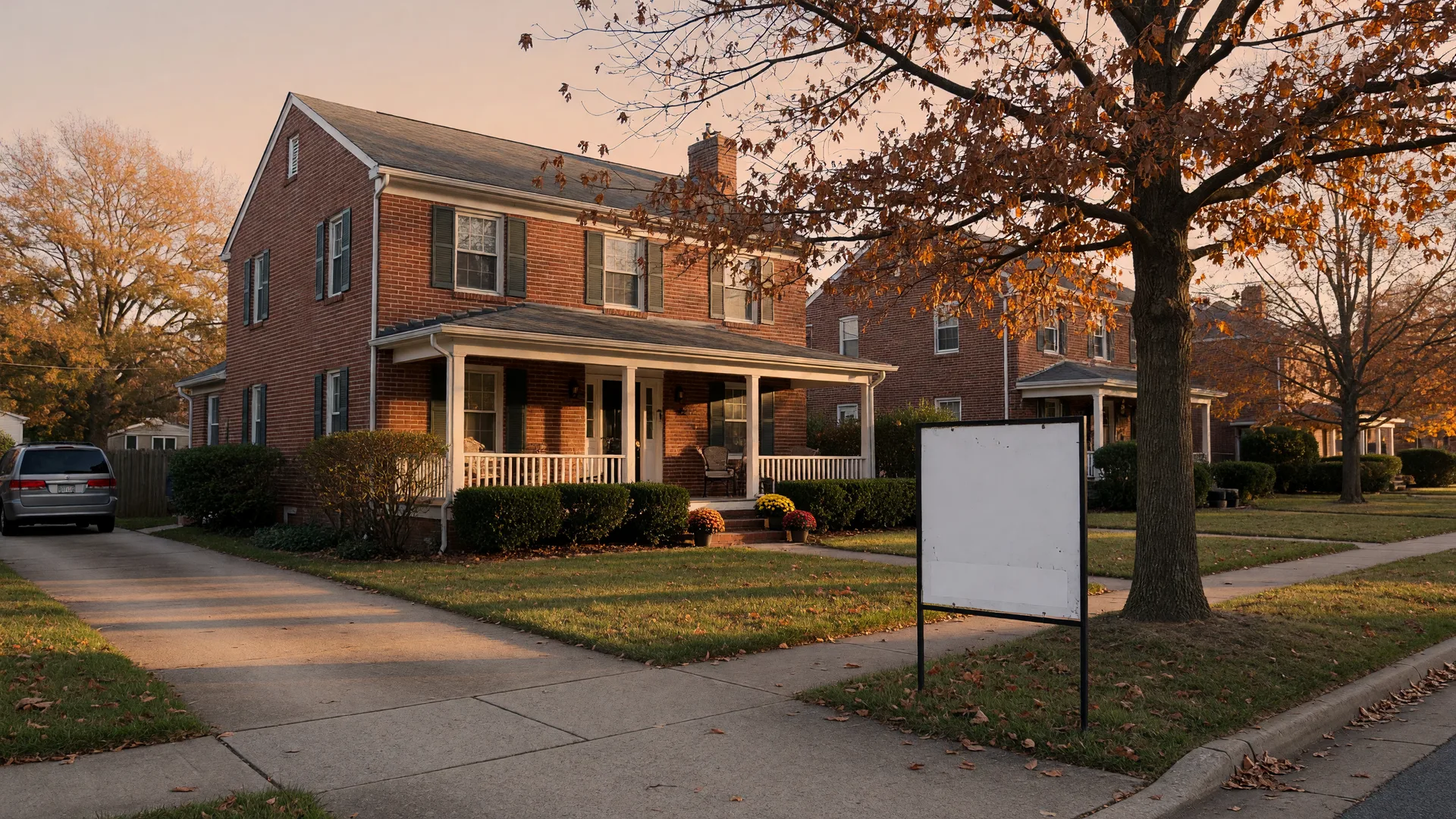
I have been selling homes for twenty years, and I get it. When a seller looks at what a commission costs on a $400,000 home, the first thought is always the same: what if I just sold it myself and kept that money? I have never once been offended by that question. It is a fair one. It deserves an honest answer, not a sales pitch, and that is exactly what this article is.
So here is the truth up front. Selling For Sale By Owner is not a scam and it is not impossible. People do it successfully every year. What the data tells us is that it fails far more often than it succeeds, and when it fails, it fails quietly: not with a crash, but with a home that sits, an offer that never comes, a price that gets negotiated down anyway, or a contract mistake that was never supposed to be a DIY project. In a balanced market like the one we have right now, the margin for those mistakes is thinner than it has been in years.
01 -- The Number That Should Stop You
Every October, the National Association of Realtors publishes its Profile of Home Buyers and Sellers, the largest survey of what actually happened in American home transactions. The 2025 edition, the most recent full-year picture, is the one I want you to see, because it is the clearest FSBO data we have ever had.
Only 5 percent of sellers sold their home For Sale By Owner last year. That is the lowest share ever recorded, down from 7 percent the year before and from 21 percent back in 1985. Meanwhile, a record 91 percent of sellers worked with an agent. The direction of that trend matters: the number of people who try to sell their own home is shrinking every single year, at the same time the number who choose professional help is hitting records.
Then there is the price. The typical FSBO home sold for $360,000 over the past year. The typical agent-assisted home sold for $425,000. That is a $65,000 difference, roughly 15 percent, and it is the single most important number in this entire article.
The FSBO Math, From the Industry's Own Survey
Here is the part I want you to sit with for a second. Even after paying a typical listing-side commission, an agent-assisted seller usually walks away with more net money than a FSBO seller, because the price difference dwarfs the fee. I am not going to pretend commissions are free; they are a real cost, and 2026 buyers and sellers are negotiating them more carefully than ever, which is a whole article on its own. But the survey keeps producing the same answer year after year: the commission is not the biggest cost in a home sale. The price you leave on the table is.
02 -- Why FSBO Homes Sell for Less
The gap is not a conspiracy. It is four very mechanical reasons, and once you see them you cannot unsee them in your own sale.
First, pricing. The hardest number to get right on your own home is the price of your own home. You have memories, receipts, and pride of ownership in that number; the market has none of those. FSBO sellers systematically price from emotion. Some price high because they believe the place is worth more than it is, and then the home sits through the most valuable weeks of its own listing window. Others price low because they are scared, and they give away equity the market would have paid. Professionals price from closed comparable sales within the last 90 days, adjusted for condition, square footage, lot, and school district, and then they let a strategy, not a feeling, set the number.
Second, exposure. The overwhelming majority of buyers in 2026 start their search on the national portals, which feed off the Multiple Listing Service. When you sell FSBO, your home is not on the MLS unless you pay someone for a flat-fee listing, and even then it is missing the layer that matters most: the buyer agents who bring the actual offers. Many buyer agents steer their clients away from unrepresented listings entirely, because the paperwork risk is not worth it for them. Every buyer your sign in the yard happens to draw is a fraction of the buyer pool.
Third, negotiation. The person who lists the home is usually the person who has to hear that the buyer wants $20,000 off after the inspection. That conversation is brutal, and it is where FSBO deals fall apart or concede. A professional is emotionally detached in exactly the way you cannot be, which is precisely why they hold price and terms better.
Fourth, paperwork. This is the one nobody worries about until it is too late. North Carolina, Missouri, and Florida each run their contracts differently: NC's due diligence system with its specific deadlines and non-refundable fees, Missouri's attorney-driven closings, and Florida's as-is language and disclosure decisions. Every state has its own disclosure forms and timelines. One missed deadline or a checkbox filled out wrong can kill a contract, delay a closing, or expose you to liability after the keys are handed over. That paperwork is not a weekend project, and it never should be treated like one.
Now let me translate all four of those reasons into what they actually look like in October 2026, because this market punishes each of those mistakes harder than the last few years did.
03 -- Charlotte, NC: A Balanced Market That Punishes Pricing Mistakes
Charlotte's market has been drifting toward balance all year, and the latest published data from Canopy MLS, the region's listing service, shows it clearly. The median sales price in the Charlotte region is about $410,000, up roughly 2.5 percent year over year. Active inventory has climbed to more than 13,500 homes, up about 7 percent from a year ago, and the region now holds about 3.7 months of supply. Homes in the city itself are selling in about 58 to 66 days, and the days when anything listed got three offers in a weekend are concentrated in specific price bands, not everywhere.
What does that mean for a FSBO seller? In a balanced market like this, the buyer has patience, and patience is your enemy. When inventory was tight in 2021 and 2022, an overpriced FSBO home could still catch a desperate buyer. That safety net is gone. A Charlotte home priced 5 percent above market now sits for sixty days, accumulates price reductions, and eventually sells below where it would have sold if it had been priced right on day one. Buyers are walking into showings with pre-approvals, comparables on their phones, and expectations of seller concessions in the 2 to 3 percent range toward closing costs or rate buydowns. None of that negotiation is easier to do alone.
The homes that still sell fast in Charlotte are the ones that are priced within about 2 percent of recent closed comps, presented beautifully, and marketed to the full buyer pool. That is a professional equation, not a DIY one. I have watched it from both sides for twenty years: the same exact home, listed by a prepared owner with a professional marketing plan versus a stretch-priced owner waiting for a miracle, produces two entirely different results in this market.
- Median sales price: about $410,000, up 2.5% year over year.
- Active inventory: more than 13,500 homes, up about 7% year over year.
- Months of supply: about 3.7, the definition of a balanced market.
- Days on market: roughly 58 to 66 in the city.
- The FSBO risk: pricing mistakes now sit for months instead of finding a rescue buyer.
04 -- St. Louis, MO: The Tight Market That Fools FSBO Sellers
St. Louis is the market where the FSBO temptation is easiest to fall for, because the market has been so strong for so long. The metro median sits around $312,000, the city is up roughly 8 percent year over year, and supply is still tight, around 2.3 months in the county. There is real demand here, boosted by a defense-heavy economy that keeps landing headlines: Boeing moved its Defense, Space & Security headquarters back to St. Louis and won the F-47 next-generation fighter program, and Greater St. Louis, Inc. just formalized a partnership to grow the region's ag-innovation cluster. A home in a good school district priced right can still draw multiple offers.
And that is exactly the trap. A hot market tells a FSBO seller two dangerous lies at the same time. The first is that they can price high because homes are selling anyway; overpricing in a tight market just means the home sells for less than it should, or sits long enough to look stale. The second is that they can price low and someone will overpay because demand is strong; that is leaving your equity on the table for a stranger.
There is another St. Louis wrinkle worth knowing before you go it alone: inventory has been climbing back. Metro active listings were up about 15 percent year over year by late summer, the sharpest late-season supply gain since 2022. That means buyers in St. Louis finally have choices again, and choice destroys the leverage of a poorly priced listing. A FSBO home in St. Louis in October 2026 has a narrower window to get it right, and less of a cushion if it does not.
- Metro median: about $312,000; the city is up about 8% year over year.
- County supply: about 2.3 months, still seller-leaning but loosening.
- Active listings: up about 15% year over year, the most buyer choice since 2022.
- Economy: Boeing's defense HQ return and the F-47 win keep demand solid.
- The FSBO trap: a hot market hides both overpricing and underpricing until closing.
05 -- Naples, FL: The Market That Has Completely Changed
Naples is where I would be the most worried about a FSBO listing right now, because this is a market that has genuinely turned. Depending on the source, the overall median sits somewhere in the $490,000 to $600,000 range, but the direction is what matters: prices are down roughly 7 to 14 percent year over year in the city's pricier segments, and homes are taking 100 to 124 days to sell, with a fraction of the offers they drew two years ago. The single-family market holding up better than condos, which is true across Southwest Florida in 2026, makes the story even more segmented.
For a seller, a correcting market is the worst possible environment to price on a guess. When buyers know prices are falling, they wait, they lowball, and they ask for inspection concessions. The homes that sell are the ones priced off real, current closed comps from the last ninety days, with a marketing strategy that reaches the winter buyer pool before the season peaks. And here is the peculiar Naples timing problem: the best buying window is September and October, before the snowbirds return, while sellers who want to catch the seasonal surge need to be positioned before November. A sign in the yard discovered by a snowbird in January is not a plan; it is a prayer.
There is also the Florida-specific risk that no one wants to talk about until it is too late: insurance and HOA paperwork. In a condo-heavy market like Naples, buyers now vet the HOA financials, the reserve study, and the insurance history before they make an offer. A FSBO seller who cannot answer those questions loses the deal to a more documented listing. None of that is negotiable psychology; it is the new Florida math.
- Direction: prices down roughly 7 to 14% year over year in pricier segments.
- Days on market: about 100 to 124, with fewer offers per home.
- Split market: single-family holding up better than condos.
- Season: the buying window is now; the seller surge arrives with the snowbirds.
- The FSBO risk: buyers demand documented HOA, insurance, and comp answers a lone seller often cannot give.
06 -- The Cross-State Wrinkle: Selling From a Distance
There is one scenario where FSBO stops being a money-saving idea and becomes a genuine liability: selling from another state. That is a situation I know from the inside. I am licensed in North Carolina, Missouri, and Florida because so many of my clients move between these three metros, and the single most common relocation mistake I see is a family trying to manage a home sale from a thousand miles away with no boots on the ground.
Remote sales fail on logistics long before they fail on price. You cannot stage a home you are not in. You cannot fix the inspection findings you have not seen. You cannot hand keys and walk a closing you are not allowed to attend on a Wednesday afternoon. And every state here runs its contracts differently: North Carolina's due diligence process runs on tight, non-refundable deadlines; Missouri typically funnels the closing through a real estate attorney; Florida's as-is contracts and disclosure decisions have their own traps. Doing any of that alone, from out of state, during a job transition, is where the dollars really leak.
And right now, a lot of people are facing exactly that. All three of my metros are generating relocation headlines. In Charlotte, the Women's Tennis Association made it the city's fifth corporate headquarters landing of 2026, with the WTA Finals headed to the Spectrum Center for three years starting in 2027, on top of SMBC's 2,000-job U.S. expansion and PSA Airlines moving its headquarters from Ohio. Not every announcement sticks; Six Flags said in late summer it would move its headquarters back to Texas, which is a reminder that corporate momentum runs both ways. In St. Louis, the Boeing defense return and the F-47 win are anchoring an aerospace corridor. And in Naples, American Airlines resumes scheduled commercial service at Naples Municipal Airport on December 2, the first commercial flights there since 2017, with two daily nonstops to Charlotte, plus visible confidence bets like RH breaking ground at Waterside Shops and the Naples Pier rebuild passing the halfway point.
I am telling you all of this for one reason: when a company transfers a family, or a new job pulls a buyer across state lines, the highest-stakes real estate decision of their year usually involves selling a home they are no longer living near. That is exactly the moment an unrepresented seller is most exposed, and exactly the moment I would never want any client of mine to go it alone.
07 -- If You Do It Anyway, Do It Like This
I have been honest about the risks, so let me be honest about the exceptions. FSBO is a defensible choice for a narrow set of situations: selling to a family member, to a neighbor who has already made an offer, or in a niche where you have a specialty buyer already lined up and the transaction is simple, cash, and local. If you are in one of those situations, good for you, and here is the playbook that keeps you out of the statistics.
Price off closed comps, not estimates. Online estimates are not pricing tools; they are average guesses built from public records. Pull the actual closed sales from your neighborhood within the last 90 days, adjust for square footage, condition, lot, and upgrades, and price within about 2 percent of that number. If a professional would have told you something different, you are probably about to find out the hard way.
Spend money to look like you did not. Professional photography, a proper listing description, and light staging are not optional in a balanced market. Buyers scroll past dim phone photos in half a second, and in Charlotte, St. Louis, and Naples alike, a home that photographs well sells faster and for more. This is the one expense FSBO sellers should never skip.
Cooperate with buyer agents. Commit in writing to pay a buyer agent's commission. The homes that get shown by buyer agents are the homes that pay them, full stop. If you refuse, you quietly remove yourself from the largest share of the buyer pool, which is how a $65,000 gap becomes a $90,000 one.
Order a pre-listing inspection. Knowing what a buyer's inspector will find before you price the home lets you fix the cheap problems, disclose the rest, and keep the offer alive past the inspection contingency. Surprises after contract are how FSBO deals die.
Know your state's forms cold. Get the correct disclosure statement and purchase agreement for your state, fill them out completely, and follow the deadlines to the day. In Missouri, ask whether your closing will need an attorney. A single missed deadline can void the whole contract, and in North Carolina, the due diligence timeline moves fast and does not pause for anyone.
Take every offer seriously, including the honest ones. The biggest FSBO negotiation mistake is not hearing the offer behind the offer. A buyer who asks for $15,000 off after the inspection is often telling you the roof is the real issue. A professional knows how to respond with a repair credit instead of a price cut, and how to keep the deal glued together while doing it.
And the moment something goes beyond your depth, call for reinforcements. The moment a contract arrives, an inspection list comes back, an appraisal comes in low, or a closing gets complicated is exactly when a few hundred dollars of professional counsel saves ten times that. You do not have to hire anybody for the whole journey to hire somebody for the hard parts.
The FSBO Self-Check: Answer Honestly Before You Put the Sign Out
- Can you price within 2% of recent closed comps without letting pride or fear move the number?
- Do you have professional photos, staging, and a written marketing plan, not just a sign?
- Are you prepared to pay a buyer agent's commission so agents actually show your home?
- Have you ordered a pre-listing inspection and budgeted for what it finds?
- Do you know your state's disclosure form and contract deadlines cold, or will this be remote?
- Can you negotiate a repair list, a low appraisal, or a contingent offer without taking it personally?
If you answered no to any of those, the honest math usually favors getting help somewhere in the process.
08 -- The Bottom Line, in Plain English
Here is the whole thing in a few sentences. The data says FSBO sellers typically net less than agent-assisted sellers, and the reason is not a mystery: it is pricing, exposure, negotiation, and paperwork, all four of which are harder to do alone in October 2026 than they were when homes sold themselves. Charlotte is balanced enough to let a mispriced home sit for months, St. Louis is hot enough to hide both overpricing and underpricing, and Naples is correcting fast enough that a gut-priced listing is a real gamble. If you have a simple, local, ready-made deal, sell your own home and keep the fee. If you are pricing into a real market, selling from a distance, or preparing to move states, bring in a professional for the whole journey or at least the hard parts.
And if you are reading this trying to decide, here is the easiest first step of all: call me for an hour and get an honest read on your situation, including a straight answer about whether you even need me. My job is not to talk you into listing; it is to tell you the truth about what your home is worth and what it will take to get it sold, in Charlotte, St. Louis, or Naples. I have navigated these three markets for twenty years through booms, corrections, and everything between, and I treat every client like family, because that is how this should feel. You will leave that conversation knowing exactly what your options are, free, with no pressure and no obligation. That is what the next hour is for.
Wondering What Your Home Is Really Worth?
Get an honest, no-pressure read on your sale, purchase, or move in Charlotte, St. Louis, or Naples, including a straight answer on whether you need representation at all, from a 20-year broker licensed in NC, MO, and FL.
Book Your Free ConsultationSources
Market data and forecasts compiled from publicly available reports as of mid-October 2026. Figures vary by source, neighborhood, and price band. This article is for general information only and is not legal, tax, or financial advice.
- NAR 2025 Profile of Home Buyers and Sellers, FSBO data: National Association of Realtors
- Charlotte region housing market report (August 2026): Canopy REALTORS
- City of Charlotte price and days-on-market data: Redfin
- St. Louis metro and city price, inventory, and employment data (2026): St. Louis REALTORS and HousesoldEasy market summary
- St. Louis aerospace and ag-innovation news: Greater St. Louis, Inc. and CoStar
- Naples housing market data (fall 2026): NaplesEd / NABOR and Redfin
- American Airlines resumes Naples Municipal Airport service December 2: Business Observer Florida
- RH groundbreaking at Waterside Shops: Hoodline
- Naples Pier rebuild project: City of Naples
- WTA selects Charlotte as permanent global headquarters: The Center Square
- SMBC Group selects Charlotte for 2,000 jobs: Office of the Governor of North Carolina
- PSA Airlines opens Charlotte headquarters: The Charlotte Observer
- Six Flags announces headquarters move from Charlotte: The Charlotte Observer