
Down Payment Assistance 2026: How Buyers Are Getting In With Less Cash in North Carolina, Missouri & Florida
You do not need 20 percent down to buy a home this year, and in North Carolina, Missouri, and Florida the state programs that help with the gap are real, current, and more generous than most buyers realize. With the 30-year rate easing to 7.32 percent as of this week, down payment assistance can be the difference between renting through another winter and owning before the new year. Here is what is available in each of my three states, what it means for sellers, and the year-end money moves every buyer, seller, and relocator should make before December 31.
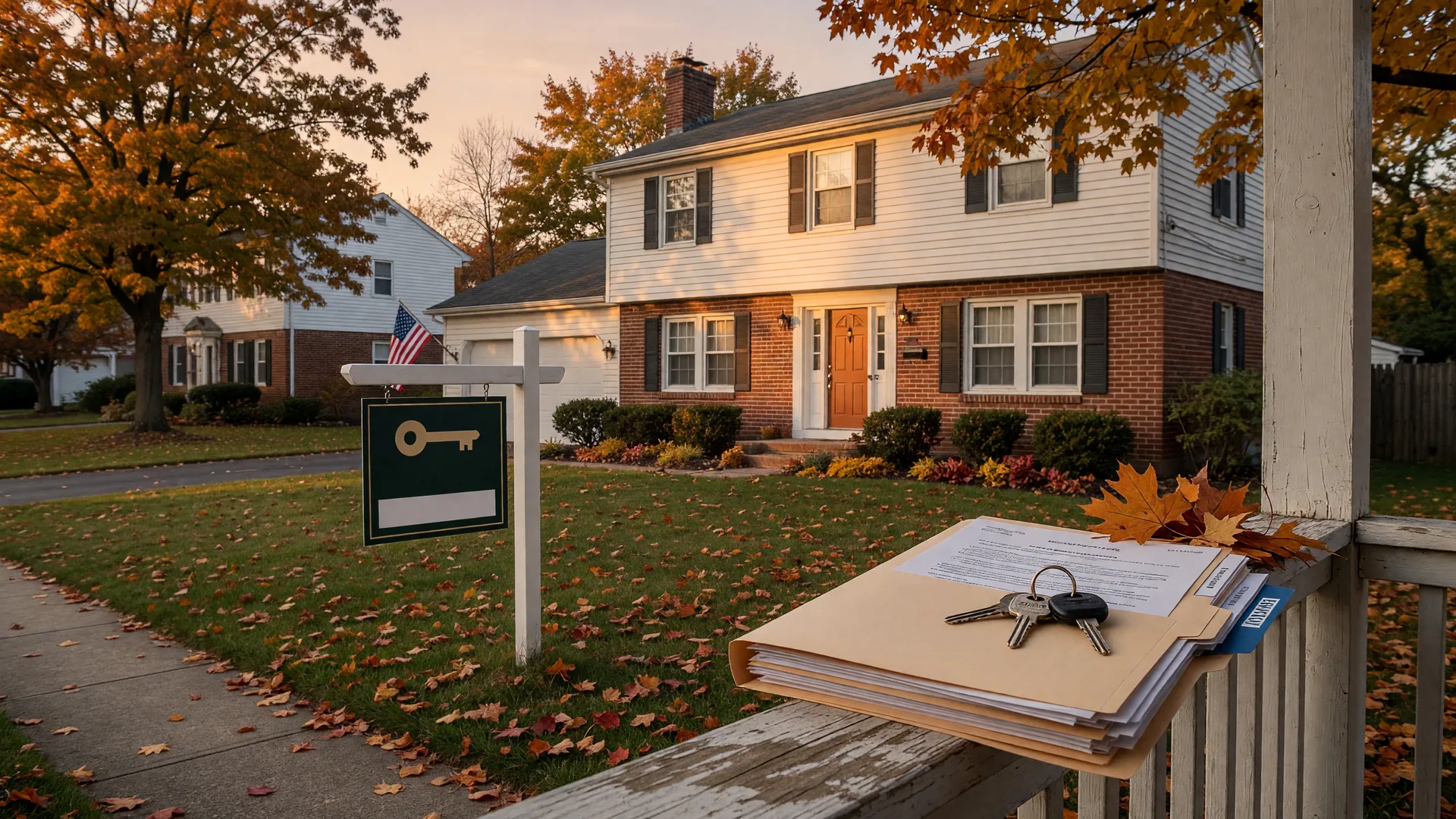
Every week this fall, a client has asked me some version of the same question: "Tracey, I have the income for a mortgage, but I do not have a big down payment saved. Am I just stuck renting?" And every week, I get to give them an answer that surprises them: no, you are not stuck, and in all three of the states where I hold an active broker license, there is a state-backed program designed for exactly their situation. Some of these programs quietly forgave my clients' down payment entirely after a set number of years in the home. Others cover the national average for down payment assistance, which runs roughly $17,000 across the country. The catch is that most of this money goes unused, because buyers never learn it exists in time. Let me fix that for you, market by market, and then walk you through the tax-smart moves that make a year-end close even better.
01 -- The Market Right Now: Rates at 7.32% and What That Means
Before we talk programs, let us set the table with where the numbers actually stand this week. The 30-year fixed-rate mortgage averaged 7.32 percent in Freddie Mac's survey for the week ending October 22, 2026, easing from the 7.40 percent reading that held for the two weeks before. Call it 7.30-ish: high, stable, and plan-able. Rates near seven and a half (or just under) are exactly why down payment assistance matters more now than it did at 3 percent. Every dollar you do not have to bring to closing is a dollar you can keep in reserve for the rate-driven closing costs, the inspection, the moving truck, and the first year of true homeownership.
- Median price: roughly $410K to $417K across the region in Canopy MLS reporting, with prices described as stable rather than soaring.
- Active inventory: about 13,574 homes for sale in the August report, up 7.1% year over year, the most selection buyers have had in years.
- Months of supply: about 3.7, still below the 6-month balanced benchmark but climbing.
- The takeaway: Charlotte buyers have negotiating room, stable prices, and the widest choice in a long time. That combination rewards the qualified, prepared buyer.
- Median price: $340,000 for residential in the City + County combined report, up 7.3% year over year; the County median ran near $325K.
- Active inventory: up about 15.4% year over year, a real improvement in selection after years of tight supply.
- Pace: well-priced homes in St. Louis County still go under contract in about three weeks.
- The takeaway: St. Louis remains the value story of my three markets, and the affordability math is exactly why state down payment help goes furthest here.
- Median closed price: $575,000 in the August NABOR report, down 1.7% year over year as the market finishes its correction.
- Active inventory: 4,093 homes, down 16.3% year over year, a firming market rather than a falling one.
- Months of supply: about 5.4, down from 8.1 a year ago and right at the balanced line.
- The takeaway: Naples is stabilizing just as its busiest season begins, and roughly half of closings are all cash, which makes a financed buyer with state help stand out more, not less.
02 -- Why Down Payment Help Matters More at 7.32 Percent
Let us do a little honest math. On a $400,000 home, 20 percent down is $80,000. Three percent down is $12,000. Five percent down is $20,000. That is a massive difference in how long it takes to get to closing, and for most first-time buyers, the months they spend saving that extra money are the months prices and rents keep moving. Down payment assistance exists to close exactly that gap, and when a state program provides it as a 0 percent second mortgage that is forgiven after you live in the home long enough, the money is about as close to free as home buying gets.
Three truths keep the picture honest. First, most programs carry income limits and price caps, and they vary by county, so the exact numbers matter and I will give you the current ones below. Second, almost every program requires you to work with a participating lender, which is why I recommend pairing the program search with a pre-approval conversation early. Third, not all assistance is forgiven: some programs expect repayment when you sell or refinance, so you want to know which kind you are getting before you fall in love with a house. That is the difference between help and a surprise, and nobody gets surprised on my watch.
03 -- North Carolina: NC Home Advantage and the $15,000 NC 1st Home Advantage
For Charlotte and the state-line corridor, the NC Housing Finance Agency runs the two programs that matter. The first, the NC Home Advantage Mortgage, pairs a 30-year fixed FHA, VA, USDA, or eligible conventional loan with down payment assistance of up to 3 percent of the loan amount, written as a 0 percent second mortgage with no monthly payment. It is forgiven in annual slices once you reach year 11, and it is open to first-time and move-up buyers alike. The current statewide income limit is $158,000, the general sales price ceiling sits around $495,000, and the minimum score is generally 640. That covers a meaningful share of Charlotte-area buyers.
The second program is the standout for true first-time buyers. NC 1st Home Advantage Down Payment adds a flat $15,000 toward your down payment and closing costs as a 0 percent, deferred second mortgage that is fully forgiven after 15 years of continuous occupancy. It must be combined with an NC Home Advantage Mortgage, and it is limited to first-time buyers (no primary ownership in the prior three years), veterans, or buyers purchasing in a targeted census tract. Income limits are higher in costly counties and reach about $152,000 in Mecklenburg, with the same roughly $495,000 price cap and a 640-plus credit minimum.
One change buyers keep asking about: North Carolina's old Mortgage Credit Certificate program, the tax credit that shaved up to $2,000 a year off federal tax, ended once its funds were exhausted and is no longer issuing new certificates in 2026. The two programs above, especially the $15,000 version, are the stronger tools now, so plan around them rather than the old credit.
04 -- Missouri: MHDC First Place, Next Step, and St. Louis City Help
Buyers across greater St. Louis should know the Missouri Housing Development Commission's First Place program by heart. It provides up to 4 percent of the first mortgage amount as a 0 percent second mortgage for down payment and closing costs, with no monthly payment, and it is forgiven after 10 years of occupancy. It works with FHA, VA, USDA, and conventional 30-year fixed loans at below-market rates, and it is available to first-time buyers or qualified veterans with a 640-plus credit score. The 2026 income limits for the St. Louis MSA are $113,500 for one or two people and $130,525 for households of three or more, with a purchase price cap of about $566,354.
If you have owned a home before and think you do not qualify, read this twice: MHDC's Next Step program gives repeat home buyers the same 4 percent assistance structure with higher income limits, so move-up buyers are not left out. MHDC also still issues Mortgage Credit Certificates, the federal tax credit worth up to $2,000 a year, and in the city itself, the HomeSTL program through the St. Louis Development Corporation has offered up to $40,000 in forgivable help for first-time buyers earning no more than 80 percent of area median income. Funding paused as of spring 2026, so check its current status the week you start; that is exactly the kind of "verify before you plan" step I push every client to take.
In St. Louis County, look to nonprofit partners as well: organizations like Beyond Housing have offered forgivable down payment help of several thousand dollars in recent funding cycles, and amounts shift, so I treat them as a bonus layer on top of the MHDC programs rather than a replacement.
05 -- Florida: FL Assist, HLP, Hometown Heroes, and the New Condo Rule Buyers Must Know
Florida Housing, the state agency, routes its help through approved lenders and three main products. FL Assist provides up to $10,000 as a 0 percent, deferred second mortgage with no monthly payment, due when you sell, refinance, or move out; it is not forgiven, so think of it as low-cost financing rather than free money. FL HLP goes a step higher with up to $12,500, but it is a 3 percent amortizing second mortgage, carrying a modest monthly payment. And the star of the state's lineup, Hometown Heroes, is built for the workforce that keeps Florida running: teachers, nurses, first responders, childcare and court staff, and military members working full time for a Florida employer can get 5 percent of the loan amount, from $10,000 up to $35,000, as a 0 percent deferred 30-year second mortgage, with income limits as high as 150 percent of area median income. The program reopened on July 13, 2026 with $50 million on a first-come basis, and it went through its prior allocation quickly, so the lesson is to act the moment you are eligible.
Naples condo buyers get one more homework assignment this season, and it is a big one. Florida's new structural integrity reserve study rule (Rule 61B-22.005) took effect on October 4, 2026, tightening the reserve requirements condo associations must meet, and there is a December 31 deadline tied to the transition. Before you offer on any condominium in Naples, ask for the association's SIRS status, review any special assessments, and understand the reserves. This is well-budgeted, well-documented, and increasingly a deal-breaker for lenders on buildings that have not caught up. Condo prices in Collier County have been the softest part of the market, around a $422,500 median in August, and the SIRS picture is a big part of why: buyers who do their homework are finding real leverage on well-run buildings.
06 -- What Sellers Should Know About Buyers With Down Payment Assistance
If you are selling, do not make the mistake of assuming a buyer using state down payment help is a risky buyer. The reverse is usually true. Program requirements are demanding: credit scores around 640 or higher, income verified against caps, debt-to-income ratios capped at roughly 45 percent, and in many cases a required homebuyer education course. That is a buyer who has been pre-vetted by the state, not a buyer who wandered in off the street. In my experience a DPA-backed offer can be one of the steadiest on the table, because the buyer's financing path is already mapped.
Sellers do, however, want to look at the shape of the offer, not just the size. Ask whether the buyer is pre-approved with a participating lender, whether the program eligibility letter is in hand, and how the program's price cap interacts with your list price. In Charlotte's balanced market, where buyers are already negotiating, a clean DPA offer with quick financing can beat a higher number with a serial-extension lender. And if you are selling a condo in Florida, get your association's SIRS paperwork ready before the offers arrive; buyers who know the rule will ask, and buildings that answer fast win the deal.
07 -- Year-End Money Moves: The Tax-Smart Side of a 2026 Close
Closing before December 31 is not just about the holidays, it carries real tax consequences, and I want you to walk in knowing them. For buyers: mortgage points paid at closing on a purchase are generally deductible in the year you pay them if the loan is secured by your main home and the other IRS tests are met, the private mortgage insurance deduction is back for 2026 for borrowers below the income phase-out (which runs from $100,000 to $110,000 of AGI), and your mortgage interest and pro-rated property taxes begin the day you take ownership. A December closing can mean a full month of deductible year-end ownership, not a footnote.
For sellers: the capital gains exclusion is intact, up to $250,000 of gain for single filers and $500,000 for married couples filing jointly, provided you owned and lived in the home as your primary residence for two of the five years before the sale. Property taxes follow the same logic in every state: the seller is treated as paying taxes up to but not including the day of sale, the buyer from that day on, and each side deducts only its share. The state and local tax deduction cap for 2026 is $40,400, so for the vast majority of homeowners the proration question is about fairness at the closing table, not federal deductions.
For relocators, the year-end calendar is your friend in a different way. A January closing in your destination state gives you a clean tax year in the new address, a full school semester for kids moving mid-year, and no proration headaches across two states in the same filing. Florida's lack of a state income tax is one of the biggest financial arguments for a Naples move, while North Carolina and Missouri bring state tax planning into the picture, which is exactly why relocating between these three states deserves its own conversation with a broker who is licensed in all of them and a CPA who knows your actual numbers.
One honest caveat: I am a real estate broker, not a tax professional. The rules above are the ones I watch with every one of my clients, and you should confirm every number with your own tax advisor before you act.
08 -- Relocation News: What Just Changed in All Three Metros
The housing numbers are only half the story for anyone planning a move. The other half is who is hiring and arriving, and all three metros had fresh news in the last ten days.
Charlotte: the AI data center boom just added another employer. US Conec, a fiber-optic components maker, announced a roughly $150 million expansion in the Charlotte region with 224 new jobs, announced on October 22 as part of the region's data center supply chain story. It joins Daimler Truck Financial Services, which cut the ribbon on its North American headquarters in Ballantyne on October 1 with about 350 jobs, and Capital Group, which raised its Uptown presence to as many as 1,000 workers. Every one of those jobs is a future roof, and Charlotte's stable prices plus NC's down payment help are exactly what those newcomers are looking for.
Greater St. Louis: the region keeps layering in durable employers. Republic Services broke ground on October 15 on a 105,000-square-foot recycling center serving the metro, expected to create up to 200 construction jobs and roughly 60 permanent positions when it opens in 2028. Two days later, Harris-Stowe State University unveiled its new $62 million STEM academic center, and the city of St. Louis was selected as one of only ten U.S. cities for a national talent accelerator aimed at modernizing public-sector hiring. These are not headline-grabbing headquarters, they are the quieter, steadier jobs that make St. Louis County's three-week selling pace and its 15 percent inventory growth so dependable for first-time buyers.
Naples: the season's supply story is taking shape. The Ritz-Carlton Residences, Naples, the 128-unit luxury project at Vanderbilt Beach, received its temporary certificate of occupancy in October and is tracking toward move-ins before year-end, adding urgency to the waterfront market just as season begins. On the policy side, the Naples Area Board of Realtors endorsed Florida Amendment 3, the November 3 ballot measure that would raise the homestead property tax exemption, which matters for anyone planning a primary residence in Collier County. And the SIRS condo rule described above is already changing how financed buyers and lenders look at associations. For relocators, the message from Naples is consistent: the market has finished correcting, season is arriving, and the well-prepared move first.
09 -- The Bottom Line, in Plain English
Here is the whole picture in a few sentences. Rates at 7.32 percent are high but finally stable, and in Charlotte, St. Louis, and Naples the balance of power has shifted toward the prepared buyer. North Carolina offers up to a $15,000 forgivable assist on top of a 3 percent program, Missouri's First Place forgives 4 percent after ten years, and Florida pairs $10,000 to $35,000 in assistance with a workforce program that covers so many of you reading this. Sellers should welcome DPA buyers, not discount them, and the year-end calendar gives buyers, sellers, and relocators real, tax-smart reasons to move before December 31.
This is the part of my job I love most: a first-time buyer who is sure they have to wait three more years, learning that the state has been quietly holding the door open for them the whole time. I have helped buyers, sellers, and relocators in these three states through twenty years of markets, and I treat every client like family, because that is how this should feel. If you are ready to find out exactly which program fits your income, your credit, and the neighborhood you love, bring me the question. We will map your eligibility, check the current limits, and make a plan together, free, with no pressure and no obligation. That is what the next hour is for.
Not Sure Which Program Fits You?
Let us find out together. Whether you are buying, selling, or relocating in Charlotte, St. Louis, or Naples, you will leave a free consultation with a clear, honest plan and no pressure, from a 20-year broker licensed in NC, MO, and FL.
Book Your Free ConsultationOr call or text me directly at (314) 603-8628
Sources
Program details, income limits, and market figures compiled from publicly available sources as of October 22, 2026. Programs and limits change by funding cycle and county; verify current figures with the agency or your lender before applying. This article is for general information only and is not legal, tax, or financial advice.
- 30-year fixed-rate mortgage average, week ending October 22, 2026: Freddie Mac Primary Mortgage Market Survey
- Charlotte region market data (August 2026 report): Canopy REALTORS
- St. Louis market data: St. Louis REALTORS Monthly Housing Report
- Naples market data (August 2026 NABOR release): NaplesED / NABOR
- NC Home Advantage Mortgage and NC 1st Home Advantage Down Payment: NC Housing Finance Agency
- Missouri MHDC First Place, Next Step, and limits: MHDC and MHDC 2026 Limits
- City of St. Louis HomeSTL guidelines: SLDC
- Florida Housing FL Assist, FL HLP, and Hometown Heroes: Florida Housing
- Florida SIRS condo rule 61B-22.005: FPAT
- Home sale and ownership tax rules: IRS Publication 523, IRS Publication 530, and IRS Topic 504
- 2026 SALT deduction cap: CNBC
- US Conec expansion in the Charlotte region (October 22, 2026): The Charlotte Observer
- Republic Services breaks ground on Greater St. Louis recycling center (October 15, 2026): StockTitan
- Harris-Stowe STEM center and St. Louis region news: Greater St. Louis, Inc.
- Ritz-Carlton Residences, Naples (October 2026): Bradenton Herald
- Florida Amendment 3 and the Naples market: Your Naples Expert