
Condo, Townhouse, or Single-Family: Choosing the Right Home Type Across Three Markets.
Each home type comes with a different price tag, a different monthly carrying cost, and a different lifestyle. Here is how the math and the market dynamics play out in Charlotte, St. Louis, and Naples right now.
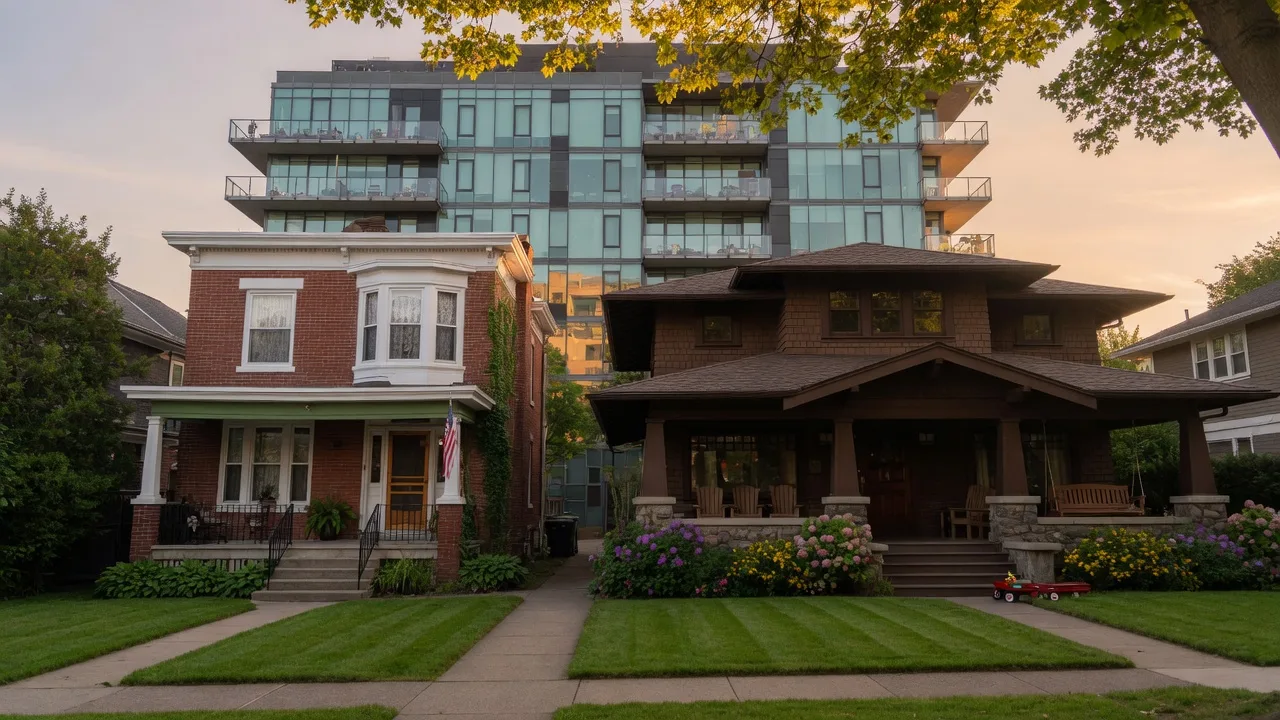
I have had the same conversation three times this week alone. A buyer calls me excited about a price range they have been pre-approved for. Then we start talking about what kind of home they actually want. And that is when things get interesting.
"I want a single-family home with a yard" but the price point only works for a condo. Or "I want low-maintenance living" but the HOA fees on that townhouse push the monthly payment past what the budget allows. Or the hardest one: "I want to live in this specific neighborhood" and that neighborhood only has one of the three options available.
After 20 years in this business, I can tell you that the choice between a condo, a townhouse, and a single-family home is rarely about the building itself. It is about how you want to live, how much time and money you want to spend on maintenance, and what the market in your city actually has available. In 2026, the gap between these three categories is wider than I have seen in years, and it varies dramatically from one market to the next.
I am Tracey De Simon. I hold active broker and sales licenses in North Carolina, Missouri, and Florida, and I work with buyers, sellers, and relocators across all three states every day. Let me walk you through how each market stacks up, so you can make the decision that fits your life.
The Big Picture: What Each Home Type Offers
Before we get into city-specific data, let me level-set on the basic trade-offs, because they hold true no matter where you are buying.
Home Type Quick-Reference
- Condominium: You own your unit and a share of common areas. HOA fees cover exterior maintenance, insurance, amenities, and reserves. Least hands-on maintenance. Typically the lowest entry price point in a given area, but HOA fees can significantly boost your monthly payment.
- Townhouse: You own the structure and the land beneath it, typically sharing one or two walls with neighbors. HOA fees are lower than condos but still cover exterior maintenance, landscaping, and common areas. More privacy than a condo, less land than a single-family home.
- Single-Family Home: You own the structure and the land it sits on. Full control over maintenance, renovations, and landscaping. Highest price point. No HOA unless the neighborhood has one. Maximum privacy and flexibility, but maximum responsibility.
Now let us look at how these categories shake out in each of the three markets I serve. The data tells a story that is different in every city, and if you are relocating from one market to another, the assumptions you carry with you may not apply.
Charlotte, NC: A Market of Choices and Trade-Offs
Charlotte is the most balanced of the three markets in terms of inventory across home types — and it is also the market where the townhouse segment is telling the most dramatic story.
Single-Family Homes in Charlotte
Single-family detached homes remain the backbone of the Charlotte market. The median price sits at approximately $445,000 in mid-2026, with inventory hovering around 2.3 to 3.1 months of supply depending on the specific submarket (Homes.com, April 2026). That is firmly in balanced-to-buyer territory — a far cry from the frenzied seller's market of 2021 and 2022.
Neighborhoods like Ballantyne, South Charlotte, and the Union County suburbs (Waxhaw, Marvin, Weddington) are where most single-family buyers are looking. These areas offer strong schools, larger lots, and family-oriented communities. In Ballantyne, expect to pay $550,000 to $900,000 for a well-maintained single-family home. In the more affordable Steele Creek and University City areas, you can find single-family options starting in the $350,000 to $420,000 range.
The average days on market for single-family homes in Charlotte has stretched to around 43 days, giving buyers more time to make thoughtful decisions. Sellers who price aggressively from day one are still seeing quick offers. Sellers who overprice are sitting.
Townhouses in Charlotte: The Segment to Watch
This is where Charlotte's market gets interesting. Townhomes are the one segment where buyer leverage is strongest. Inventory has surged to record levels — in some submarkets, townhome supply hit 5 months or more in the spring of 2026 (Axios Charlotte, April 2026). Prices in certain corridors have dropped as builders who overproduced townhomes during the land-cost spike are now discounting to move inventory.
For buyers, this is an opportunity. If you are open to a townhouse lifestyle — shared walls, less land, lower entry price — you can find meaningful deals in areas like Steele Creek, Indian Trail, and the Lake Norman corridor. Builder incentives on new townhomes are particularly aggressive, with rate buydowns and closing cost credits that can improve your monthly payment.
The caution? Townhouse resale could take longer when it is your turn to sell. Be realistic about holding periods and do not over-improve a townhouse expecting full ROI.
Condos in Charlotte
Charlotte's condo market is smaller and more concentrated than the other two categories. Most condos are in the urban core — Uptown, South End, Dilworth, and Plaza Midwood — where land is expensive and buyers prioritize walkability and proximity to work. Prices range from $300,000 to $700,000 depending on location, square footage, and building amenities.
Condo inventory is climbing but not as dramatically as townhomes, and prices are holding relatively steady. The typical condo buyer in Charlotte is either a young professional who wants to be in the action, a downsizer moving out of a larger home, or an investor looking for a lock-and-leave rental property.
St. Louis, MO: The Single-Family Stronghold
The St. Louis market is the most single-family dominant of the three. Attached homes make up a smaller share of the overall market, and the price premium for a detached home is narrower than what you see in Charlotte or Naples.
Single-Family Homes in St. Louis
St. Louis single-family homes have posted some of the strongest appreciation of any market I track. The median price is approximately $300,000 to $350,000, with year-over-year gains of 4.5% to 9.9% depending on the specific county and municipality (St. Louis REALTORS, July 2026; Homes.com, March 2026). Inventory sits at critically low levels — roughly 2.0 months of supply — which means well-priced single-family homes still attract multiple offers.
In desirable suburbs like Kirkwood, Webster Groves, and Clayton, a move-in-ready single-family home typically runs $425,000 to $700,000. In more affordable areas of St. Louis County, you can still find solid single-family homes in the $250,000 to $350,000 range. The city of St. Louis itself offers even more affordable options, particularly in emerging neighborhoods like Tower Grove South, The Grove, and Benton Park.
What makes St. Louis unique is the value proposition. For what a townhouse costs in Charlotte or a condo costs in Naples, you can buy a single-family home in a top St. Louis County school district. That math matters if you are a relocating family watching your budget.
Condos and Townhouses in St. Louis
The attached-home segment in St. Louis is a mixed story. The median condo/townhouse price sits around $235,000, up approximately 4.4% year over year (St. Louis REALTORS, July 2026). But pending sales in this category have declined, and inventory has grown significantly — condo listings hit 747 units (up 16% year over year), and townhouse listings jumped from 235 to 326.
The price gap between attached and detached homes in St. Louis is narrowing, which is pulling some buyers toward single-family. If you are considering a condo or townhouse in St. Louis, the best values are in the suburbs where inventory is highest. In the Central West End and Clayton, luxury condos still command premium prices but offer the kind of walkable, urban lifestyle that is hard to find in a single-family home.
Naples, FL: The Tale of Two Markets
Naples is the most dramatic story of the three. In no other market do the categories behave as differently as they do here. The single-family market and the condo market are essentially telling two completely different stories in 2026.
Single-Family Homes in Naples
Single-family homes in Naples remain resilient. The median price sits at approximately $750,000 to $800,000, depending on the specific submarket, with year-over-year appreciation of 3% to 6.7% (Homes and Docks, 2026; Team 239, 2026). What makes Naples' single-family market stand out is that active inventory actually dropped 22% in the first half of 2026. In a market known for seasonal inventory swings, that contraction is notable.
The luxury single-family segment (above $1 million) is moving toward a more balanced position with roughly 6 to 8 months of supply. For buyers at that price point, there is more negotiating room than there was a year ago, but well-priced homes in desirable neighborhoods like Old Naples, Port Royal, and Pelican Bay are still attracting solid interest.
Condos in Naples: The Correction Story
This is where the Naples market diverges sharply. Condo prices have declined approximately 2.7% year over year, with the median list price dropping from $460,000 to $375,000. Older condos, particularly those with special assessments or deferred maintenance, are under the most pressure. Buyers in this segment have genuine leverage.
Several factors are driving this correction. New state regulations passed in the wake of the 2021 Surfside collapse require condo associations to complete structural integrity inspections and fund adequate reserves. These requirements are translating into assessments for unit owners — in some cases, significant ones. Buyers are factoring these costs into their offers, and sellers who need to exit are adjusting their expectations.
For the right buyer, this creates an opportunity. If you have cash reserves and a long-term outlook, the Naples condo market in 2026 offers prices that were not available even two years ago. But you need to go in with eyes wide open: review the association's reserve study, understand any pending special assessments, and be realistic about the timeline for a condo to appreciate in this environment.
Townhomes in Naples
Townhomes occupy a middle ground in Naples. They typically offer more space and privacy than a condo at a lower price than a single-family home. In areas like North Naples and East Naples, townhomes range from $400,000 to $650,000, offering a practical entry point for buyers who want more than a condo but cannot stretch to single-family pricing.
How to Choose: A Practical Framework
After two decades of helping clients navigate this decision, I have developed a simple set of questions I walk through with every buyer. These work no matter which city you are in:
- How much time do you want to spend on maintenance? If the answer is "as little as possible," you are looking at a condo or a well-managed townhouse with a strong HOA. If you enjoy gardening and weekend projects, single-family is the natural fit.
- How important is privacy? Single-family homes offer the most separation from neighbors. Townhouses share one or two walls. Condos often share floors, ceilings, and multiple walls. Honesty about your tolerance for neighbor noise is critical.
- What is your exit plan? In 2026, single-family homes are appreciating fastest in all three markets. Condos and townhouses offer lower entry prices but may take longer to sell. If you are planning to move again in 3 to 5 years, consider resale dynamics in your choice.
- Can you handle the full monthly cost? A condo with a $1,800 mortgage but a $500 HOA fee costs more per month than a townhouse with a $2,000 mortgage and a $200 HOA fee. Always compare total monthly housing cost, not just the loan payment.
- Does the location dictate the home type? If your dream is to live in South End Charlotte, Old Naples, or the St. Louis Central West End, the available home types are largely condos and townhouses. If you want a yard in a top school district, you are likely looking at single-family in the suburbs.
Market Quick-Comparison
- Single-family — Appreciating in all three markets. Fastest appreciation in St. Louis (up to 9.9% YoY). Most resilient segment overall.
- Townhouse — Buyer's market in Charlotte with record inventory and price softening. Stable in St. Louis. Limited inventory in Naples.
- Condo — Price correction underway in Naples (-2.7% YoY) due to new structural regulations. Stable in Charlotte. Moderate appreciation in St. Louis.
The Relocator's Perspective
If you are moving to one of these markets from another state, the home type decision gets even more nuanced. Here is what I see most often:
Relocating from the Northeast or West Coast to Charlotte: You are likely coming from a market where condos and townhouses are the norm in desirable locations. Charlotte offers you the chance to trade into a single-family home at a price that would buy a much smaller space in your origin city. Do not default to the home type you know. Consider going detached.
Moving from Florida to St. Louis or Charlotte: You may be used to the lock-and-leave lifestyle that condos provide. Both St. Louis and Charlotte have strong townhouse and single-family options with lower HOA fees. You can get more space and more land for your money, but be prepared for a different kind of maintenance responsibility.
Moving to Naples from the Midwest or Northeast: The Naples condo correction means there are genuine deals right now, but you need to do your homework on association finances. If you are buying a seasonal or retirement home, a well-managed condo with healthy reserves can still be an excellent value. If you want a primary residence with space for visiting family, a single-family home in North Naples offers better square footage for the dollar.
Charlotte continues to be the fourth most moved-to metro area in the country, with North Carolina ranking number one for domestic migration in 2026. The top feeder cities are Chicago, New York, Los Angeles, Miami, and Phoenix. If you are reading this from one of those cities and wondering whether Charlotte could be your next move, you are not alone. The city adds roughly 100 new residents every day, and the job market in banking, healthcare, fintech, and logistics continues to expand.
A Final Word on HOAs and Fees
Whether you choose a condo, townhouse, or single-family home in an HOA community, the association's financial health matters. I have seen buyers fall in love with a property only to discover the HOA has deferred maintenance on the roof, insufficient reserves, or a pending special assessment that adds thousands to their purchase cost.
Before you commit, ask for the HOA's financial statements, reserve study, and meeting minutes from the past year. Look for:
- Are reserves adequately funded (above 70% is the industry benchmark)?
- Are there any pending or recent special assessments?
- How much does the HOA increase fees year over year historically?
- Are there any major capital projects planned in the next 3 to 5 years?
This due diligence is not optional. It is the difference between predictable monthly costs and an unwelcome surprise.
Not sure which home type fits your lifestyle and budget? Let us sit down and run the numbers together. I serve buyers and relocators across Charlotte, St. Louis, and Naples with the same standard of care: honest advice, real data, and a plan that works for you.

Ready to find the right home type for your next move?
I have helped hundreds of buyers across North Carolina, Missouri, and Florida choose the home that fits their life. Let us talk about your goals — no pressure, just straight talk.
Book Your Free Consultation