
Community Spotlight: Kirkwood, Missouri, the Queen of the Suburbs.
St. Louis County's first planned suburb wraps a historic downtown, brick streets, and a working train station in some of the region's best schools and a genuinely competitive market. Here is everything you need to know about life in Kirkwood.
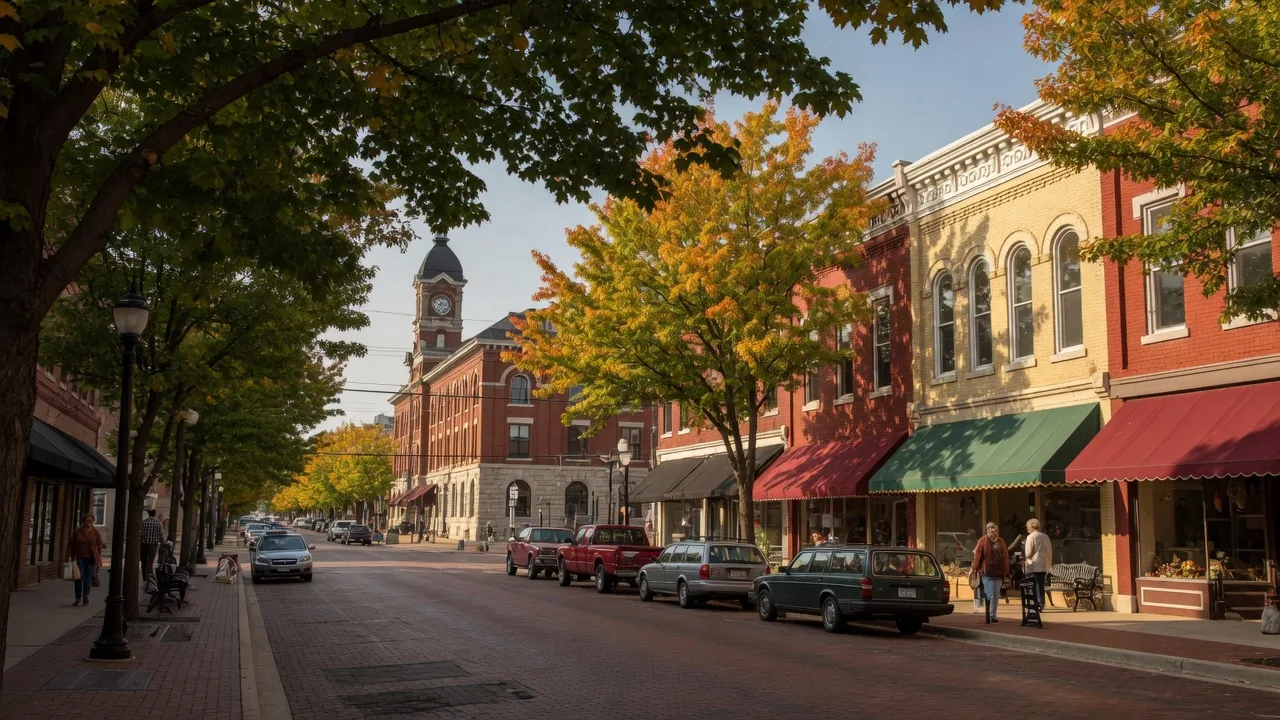
If you are looking for a St. Louis community where a walkable historic downtown, top-tier public schools, and real neighborhood character all come together, Kirkwood deserves to be near the top of your list. Roughly 14 miles southwest of downtown St. Louis in western St. Louis County, Kirkwood is the region's first planned suburb, and a century and a half later it still sets the standard for what an established, family-first community looks like. I know this market from the ground up: I got my start in St. Louis real estate in 2006, and helping buyers and sellers in Kirkwood has been a privilege of that career ever since.
I have walked Kirkwood's brick streets with relocating buyers who arrived skeptical about leaving the city, and by the end of the afternoon they were asking about school zones and weekend farmers market plans. Part of that is the downtown, which is genuinely walkable in a way most St. Louis suburbs are not. Part of it is the schools, which have anchored families here for generations. And part of it is the community itself: Kirkwood is the kind of place where people know their neighbors, the train still stops in the center of town, and the trees are old enough to make the streets feel like a park.
What Makes Kirkwood Unique
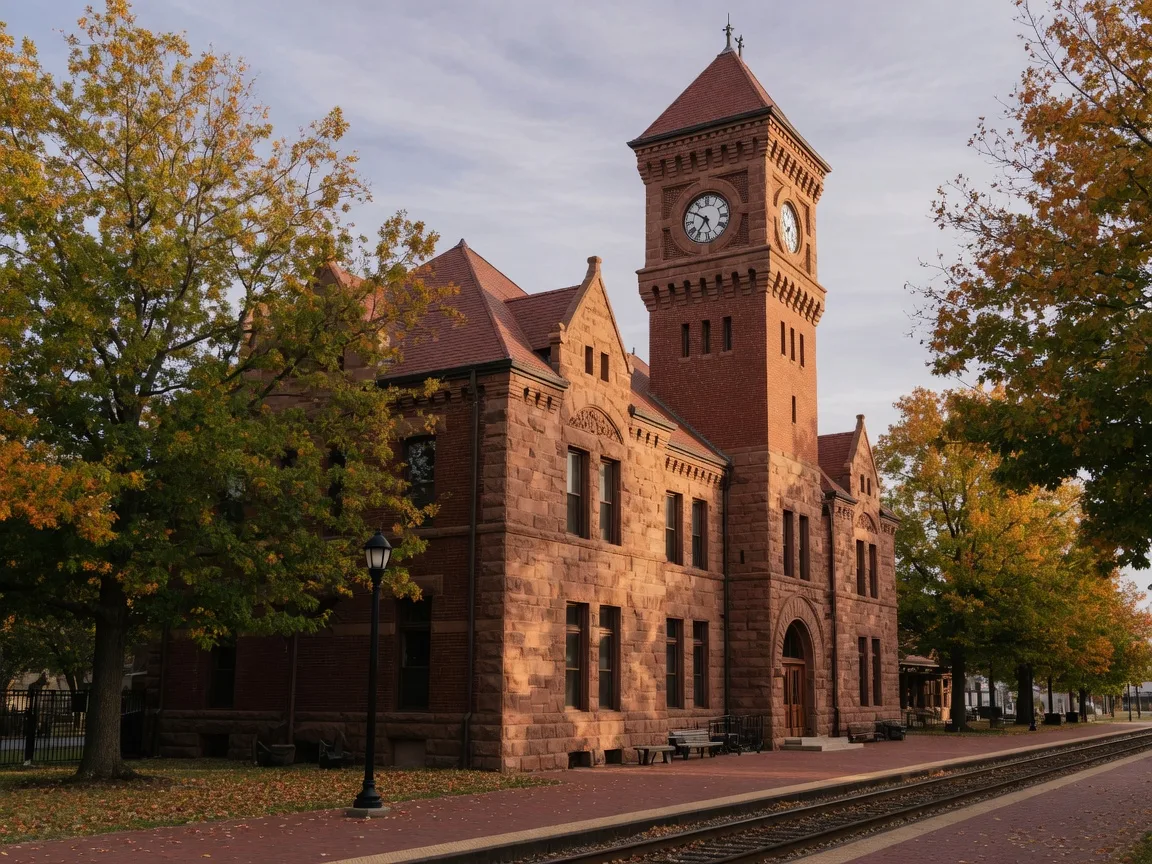
Kirkwood is historically significant in a way few suburbs anywhere can claim. Founded in 1853 as the first planned suburb west of the Mississippi River and named for James P. Kirkwood, the chief engineer of the Pacific Railroad, it was designed around the very train station that still anchors its downtown today. The nickname locals still use, the "Queen of the Suburbs," dates back more than a century, and it fits: no other St. Louis County community combines this level of history with this much day-to-day livability.
The 1893 Romanesque train station, built of red sandstone and brick, is the visual heart of the community. It is not a museum piece, either. Amtrak's Missouri River Runner still stops there daily, making Kirkwood one of the few St. Louis suburbs where you can walk to your front door from a passenger train. The surrounding downtown was built for strolling: brick streets, locally owned shops and restaurants, a seasonal farmers market in the plaza, and a civic calendar of concerts, parades, and festivals that runs nearly year-round.
Kirkwood also claims a long list of St. Louis County firsts that tell you something about how it has always operated: the county's first four-year public high school, its first tax-supported library, one of its first nursing homes, and the county's oldest police department. With a population of about 29,000 and a median household income around $121,000, this is a well-educated, established community that has been reinvesting in itself for generations.
The Housing Market in Kirkwood
Let me be direct with you, the way I always am with clients: Kirkwood is a competitive market, and it has been for a long time. According to Redfin's 2026 market data, Kirkwood scores 91 out of 100 on its competitive index, and the median sale price over the past three months sits at roughly $482,000, up about 4.8 percent from a year ago. The average sale price runs closer to $571,000, boosted by a handful of high-end sales, and the typical home sells at about $278 per square foot.
The appreciation story is real but steadying. Kirkwood home values rose roughly 43 percent over the past five years, and about 4.6 percent over the last twelve months. That is the profile of a market that had its frenzied moment and has settled into a strong, more normal pace. Homes typically find buyers in about 30 to 70 days, and well-priced properties in the best locations can still draw multiple offers, especially in the spring and summer.
The housing stock is wonderfully diverse. Because Kirkwood grew over nearly 170 years, you will find Victorian-era and Craftsman homes near the downtown, brick foursquares and Colonial Revivals on the tree-lined side streets, mid-century ranches in the post-war neighborhoods, and newer infill construction on the rare available lot. There are also townhomes and condos, many of them close to downtown, that give first-time buyers and downsizers an entry point without leaving the community behind. The adjacent villages of Glendale and Oakland share Kirkwood's school district and offer an even quieter, estate-style option for buyers who want more acreage.
Kirkwood Market Snapshot (2026)
- Median sale price: ~$482,000 (past 3 months, Redfin 2026)
- Average sale price: ~$571,000, with a few high-end sales skewing upward
- Price per square foot: ~$278
- Typical days on market: ~30 to 70 days, longer in winter
- Market feel: Competitive (91/100); strong but steadier than the post-pandemic frenzy
- Commute: ~25 minutes to downtown St. Louis by car; Amtrak service at the historic station
Top-Rated Schools
If you have school-age children, or plan to, Kirkwood's schools are likely a big reason you are reading this. The Kirkwood School District R-7 was chartered in 1865, making it one of the oldest districts in St. Louis County, and it serves Kirkwood, Glendale, Oakland, and part of Des Peres with about 5,700 students across nine schools at a roughly 13:1 student-to-teacher ratio.
The feeder pattern is simple and strong: five elementary schools (Keysor, North Glendale, Robinson, Tillman, and Westchester), two middle schools (Nipher and North Kirkwood), and one four-year high school, Kirkwood High, which was the first of its kind in the county back in the 1800s and remains one of the St. Louis area's most respected public high schools. District families consistently describe the schools as the community's backbone, and it is common to meet parents who grew up in Kirkwood, moved away, and came back specifically so their own kids could attend the same schools.
The educational environment extends well beyond the classroom walls. The Kirkwood Public Library was the county's first tax-supported library and anchors downtown, and the community invests heavily in youth sports, arts programs, and enrichment through the parks department. For families weighing Kirkwood against other St. Louis suburbs, I will help you compare districts, commutes, and tax bills side by side, because the right answer depends on your family's priorities and numbers.
Family-Friendliness and Community Life
Kirkwood was family-friendly long before the phrase existed. The downtown is safe enough to let older kids walk to the library on their own, the side streets are lined with sidewalks and old trees, and the neighborhood blocks fill with strollers on warm evenings. Kirkwood Park anchors the community with tennis courts, ball fields, playgrounds, and green space, and Greentree Park adds more room to run in the northern part of town.
The community calendar is a genuine lifestyle asset. The downtown plaza hosts the seasonal farmers market, summer concerts, and holiday celebrations, and the Fourth of July and holiday season events draw residents from across the county. Local families grow up on the rhythm of Kirkwood's festivals, and for empty nesters who moved here years ago, those same events are often the reason they stay.
A huge part of the family appeal is the Magic House, a nationally recognized children's museum located right in Kirkwood that has delighted St. Louis kids for decades. Add the Museum of Transportation, also in Kirkwood, and the free Powder Valley Conservation Nature Center with its hiking trails just a few minutes away, and you have an embarrassment of family day-trip riches without ever leaving the community or its immediate doorstep.
Nearby Amenities and Convenience
Kirkwood pairs its downtown charm with the full resources of the St. Louis region within an easy drive. The walkable downtown handles the everyday: coffee, groceries, restaurants, boutiques, the library, and the train station all within a few blocks of each other. When you want more, Forest Park, one of the largest urban parks in the country with its free zoo, art museum, history museum, and science center, is about 20 to 25 minutes away.
- Shopping and dining: Downtown Kirkwood's locally owned shops and restaurants, plus Des Peres and the West County retail corridor a short drive away for big-box and mall shopping.
- Recreation: Kirkwood Park, Greentree Park, the Magic House children's museum, the Museum of Transportation, and Powder Valley Conservation Nature Center, with Grant's Farm and Forest Park close by.
- Healthcare: St. Luke's Hospital in nearby Chesterfield and Mercy Hospital in Creve Coeur are roughly 20 minutes away, with a strong network of local clinics and pediatricians in Kirkwood itself.
- Transit: Amtrak's Missouri River Runner stops daily at the historic Kirkwood station, and I-44 and I-270 put downtown St. Louis, Clayton, and the airport within an easy drive.
- Air travel: St. Louis Lambert International Airport (STL) is about 25 minutes up I-270, an easy drive for frequent travelers.
Who Should Consider Kirkwood?
In my experience, Kirkwood is a particularly strong fit for several types of buyers:
- Families who put schools and community at the top of the list. The Kirkwood R-7 district, walkable downtown, deep park system, and safe, tree-lined streets make this an easy yes for parents across the metro.
- Commuters to downtown St. Louis who want a real neighborhood at the end of the day. The drive is roughly 25 minutes, and the Amtrak station offers a rail alternative few suburbs can match.
- Downsizers and empty nesters who want to trade the big yard for a walkable life. Townhomes and condos near downtown, plus the library, farmers market, and events, make Kirkwood one of the most livable downsizing choices in the county.
- Buyers who value history and character. You will not find a cookie-cutter street in Kirkwood. Every block has its own architectural story, and the community protects that character deliberately.
A Few Things to Know Before You Buy
I want to be upfront with you about Kirkwood's trade-offs, the same way I am with every client. Forewarned is forearmed.
- It is competitive. Kirkwood scores as one of the most competitive markets in the region, so the best homes can draw multiple offers quickly. Come in pre-approved and ready to act, and I will help you write a strong but sensible offer.
- Older homes mean older systems. Much of the housing stock is 70 to 120 years old. Condition, foundation, roof, and electrical upgrades vary widely, so a thorough inspection by someone who knows historic homes is non-negotiable, and I will help you find the right one.
- Lots are smaller than the outer suburbs. Kirkwood is an established, built-out community, so you trade the two-acre estate for proximity, sidewalks, and a walkable downtown. If you want new construction on large acreage, communities farther out will serve you better, and I can point you to both.
- Taxes and price point. St. Louis County reassesses property at market value, and Kirkwood's values are healthy, so budget for the property tax reality. The overall cost of living in the St. Louis region remains a genuine advantage over many coastal metros, but Kirkwood sits at the upper end of the local range.
Downtown & Parks
Coming soon: lifestyle shots of Kirkwood's downtown and park life
The Bottom Line on Kirkwood
Kirkwood offers the rare combination that families and downsizers alike actually want: the region's first planned suburb still delivers on its original promise. A walkable, historic downtown with a working train station, one of St. Louis County's oldest and strongest school districts, parks and museums within reach, and a competitive market that rewards the prepared buyer. It is a place where the Fourth of July parade fills the brick streets, kids ride bikes to the library, and neighbors have known each other for decades.
Kirkwood is not the right fit for everyone, and neither is any other community. The right move is the one that fits your schools, your commute, your budget, and the life you actually want to live. My job is to help you figure that out with real data, honest negotiation, and zero pressure, the way I have for clients in St. Louis since 2006 and across three states since.
Want to Explore Kirkwood or a Similar Community?
Whether you are ready to tour Kirkwood homes or just starting to compare St. Louis communities, I will help you weigh schools, commutes, and market data side by side. No pressure, just real expertise from a 20-year broker who knows this market personally.
Book Your Free Community Consultation30-minute video call. No sales pressure, ever.
20 years of expertise. Dual Metro. Same unstoppable results.
Tracey De Simon