
Building Your Real Estate Team: The Six Professionals Every Buyer and Seller Needs
The most successful transactions I have been part of share one thing in common: a strong team. The buyer or seller who assembles the right professionals before they start their search almost always ends up with a better deal, fewer surprises, and a smoother closing. Here is exactly who you need, what each person does, and how to choose the right ones in Charlotte, St. Louis, and Naples.
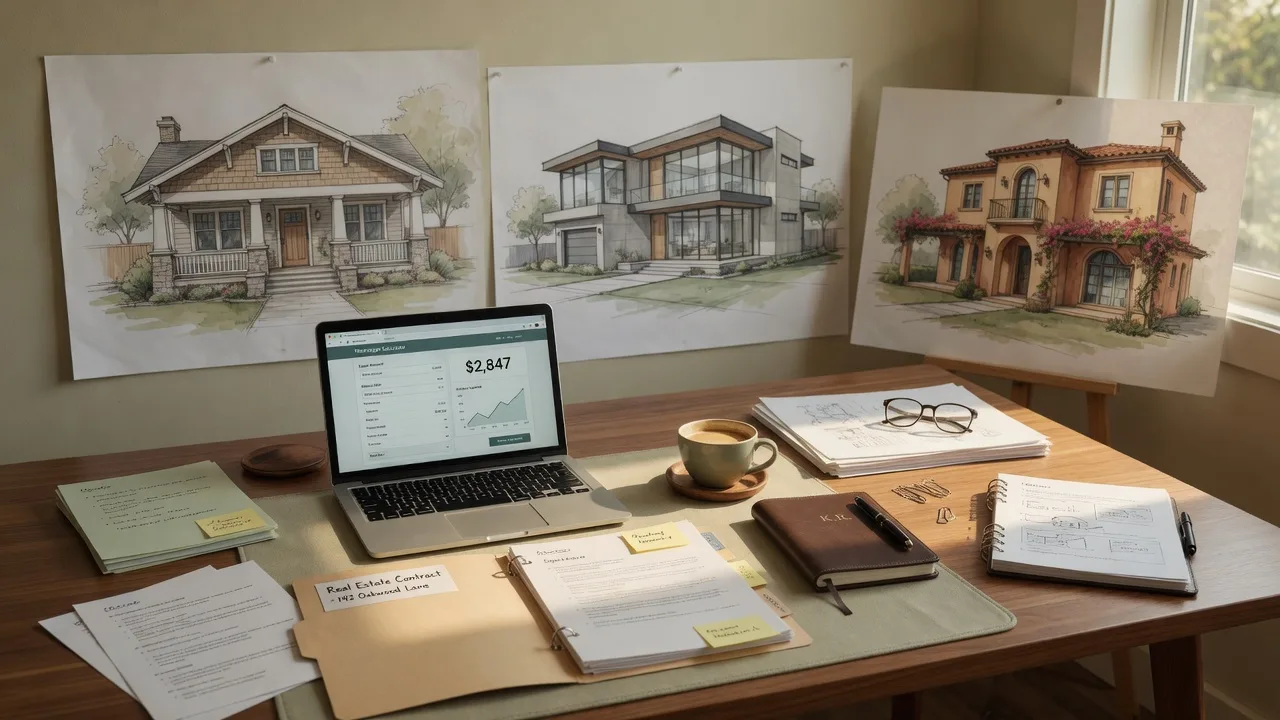
Over the past 20 years, I have closed hundreds of transactions across three states. I have been part of deals that sailed to closing in under two weeks and deals that nearly fell apart three times before everyone signed. And through all of it, I have learned one thing that holds true in every market and every price point: the quality of your team determines the quality of your outcome.
Buyers and sellers often ask me, "Who do I actually need? Can't I just find a home online and figure out the rest as I go?" You can, but I would not recommend it. Real estate transactions involve a lot of moving parts, and each state has its own rules, timelines, and contract forms. One misstep can cost you thousands of dollars or, worse, the home itself.
Here is a breakdown of the six professionals you want on your side before you write an offer or put a sign in the yard.
What We Are Covering
- Your Realtor: The quarterback of your transaction and your most critical hire.
- Your Lender: Why pre-approval matters and how to find the right loan officer.
- Your Home Inspector: How a great inspector saves you from costly surprises.
- Your Real Estate Attorney: When you need one and what they do in each state.
- Your Contractor: The person who tells you what repairs actually cost.
- Your Insurance Agent: Why shopping for coverage early matters in all three states.
01 -- Your Realtor: The Most Important Decision You Will Make
I could write an entire book on how to choose the right real estate agent, but let me give you the condensed version. Your Realtor is the quarterback of your entire transaction. They coordinate the lender, the inspector, the attorney, the title company, and every other professional involved. A great agent makes the process feel seamless. A mediocre one leaves you holding the pieces when something goes wrong.
So how do you pick the right one? Start with experience in your specific market. A Realtor who knows Charlotte well may know nothing about the due diligence process in North Carolina or how St. Louis County's tax assessment cycle works. If you are buying or selling in a specific state, work with someone who holds an active license in that state and has closed transactions there recently.
Look for someone who communicates the way you do. Do you want daily text updates? Weekly email summaries? A phone call when something important happens? A good agent will adapt to your preferences, but you need to be clear about what you expect from the start.
And please, interview more than one agent. I always tell prospective clients to talk to at least two or three Realtors before making a decision. Ask about their recent sales, their experience with your type of transaction, and what their typical timeline looks like. You should feel confident, not pressured, after the conversation.
"I treat my clients like family. That means I am honest with them even when the truth is hard to hear. If a home has foundation issues, I want them to know it before they make an offer, not after. If the market is shifting, I want them to know before they set their price. That is the level of advocacy you should expect from every agent you interview."
Tracey De Simon, 20-Year Broker
If you are buying or selling across state lines, consider working with an agent who holds licenses in multiple states. I hold active brokerage credentials in North Carolina, Missouri, and Florida, and I am also licensed in South Carolina. That multi-state perspective means I can help you navigate the differences between each state's contract laws, tax implications, and market conditions without you needing to start over with a new agent at each step.
02 -- Your Lender: Pre-Approval Is Non-Negotiable
I cannot emphasize this enough: get pre-approved before you start touring homes. Not pre-qualified. Pre-approved. The difference matters. A pre-qualification is based on information you tell the lender over the phone. A pre-approval means the lender has reviewed your credit, income, and assets and is willing to lend you a specific amount.
In Charlotte's current market, where homes are sitting an average of 66 days, a pre-approval letter gives you credibility with sellers. In St. Louis, where the market is moving faster at 44 days on market, a pre-approval can make the difference between having your offer accepted and being passed over for a buyer who is ready to close. In Naples, where many sales involve cash buyers or buyers with significant assets, a pre-approval from a respected local lender signals that you are serious and prepared.
When choosing a lender, I recommend working with someone local to the market where you are buying. A local lender knows the appraisal trends, the typical closing timelines, and the state-specific programs that can save you money. For example, North Carolina's Housing Finance Agency offers down payment assistance of up to $20,000 for eligible first-time buyers. Missouri has the MCC tax credit program. Florida offers the State Housing Initiatives Partnership program. A local lender will know about these programs automatically. An out-of-state online lender may not.
Ask potential lenders about their typical closing timeline, their experience with your loan type (conventional, FHA, VA, USDA), and their communication process. You want a lender who answers their phone and returns emails within a few hours, not a few days.
03 -- Your Home Inspector: The Person Who Keeps You Out of Trouble
A great home inspector is worth their weight in gold. They will tell you things about the property that the seller, the listing agent, and even the appraisal will not reveal. A bad inspector will miss a leaking roof, failing HVAC, or termite damage that costs you tens of thousands of dollars after closing.
How do you find a good one? Ask your Realtor for three recommendations, then research each one. Read their recent reviews. Ask about their credentials: are they a member of ASHI (American Society of Home Inspectors) or InterNACHI (International Association of Certified Home Inspectors)? How many inspections have they performed? Do they carry errors and omissions insurance?
I also strongly recommend attending the inspection in person. You will learn more about the home in three hours walking through it with a good inspector than you will from three months of online research. Bring a notebook, ask questions, and pay attention to what the inspector points out about the roof, foundation, plumbing, electrical, and HVAC systems. Those are the big ticket items that can make or break your budget.
Each of my three markets has its own inspection quirks. In Charlotte, foundation issues related to red clay soil are a common concern. In St. Louis, older homes often need updates to electrical systems and have aging sewer lines that run through the yard. In Naples, wind mitigation inspections, flood zone designations, and the condition of impact windows and doors are critical for insurance purposes. A local inspector who knows these patterns will catch issues that someone from out of town might miss.
04 -- Your Real Estate Attorney: State-Specific Expertise
The role of a real estate attorney varies significantly by state, and this is one area where I see out-of-state buyers get confused most often.
In North Carolina, attorneys are central to the transaction. The attorney handles the due diligence process, reviews the title, coordinates the closing, and manages the disbursement of funds. If you are buying in Charlotte, your attorney is one of the most important people on your team. North Carolina's due diligence system is unique: you pay a non-refundable due diligence fee directly to the seller in exchange for the exclusive right to terminate the contract for any reason during the due diligence period. An experienced NC real estate attorney will help you navigate this system and protect your interests.
In Missouri, attorneys play a more limited role in standard residential transactions. Most closings in St. Louis are handled by title companies rather than attorneys. However, if you are dealing with a complex transaction, a short sale, a foreclosure, or a property with title issues, having a real estate attorney review the contract is wise.
In Florida, attorneys are commonly involved in closings, though title companies also handle many transactions. Florida's contract law is specific about inspection periods, deposit timelines, and the as-is clause that appears in many contracts. Having an attorney who knows Florida real estate law can prevent costly mistakes.
When choosing an attorney, look for someone who specializes in real estate law and works in the county where you are buying or selling. Local attorneys know the specific title search practices, recording procedures, and any local ordinances that could affect your transaction.
05 -- Your Contractor: The Reality Check You Need
You do not need a contractor on retainer, but having one in your phone is one of the smartest moves you can make before you buy a home. After your inspection reveals a list of issues, you will need someone to tell you what they actually cost to fix.
I have seen too many buyers walk away from a great home because an inspector's report listed a long list of issues, and the buyers had no idea which ones were minor, which ones were moderate, and which ones were truly deal-breaking. A quick call to a trusted contractor can clarify that the cracked foundation wall needs $3,000 in epoxy injection (minor) while the outdated electrical panel needs $8,000 to replace (moderate but worth negotiating over). Context matters, and a contractor provides it.
If you are planning renovations after closing, having a contractor on your team before you buy is even more important. They can walk through the property with you and give you a realistic budget for the kitchen remodel, bathroom update, or room addition you are planning. That way, you know exactly how much the total investment will be before you commit to the purchase.
Ask your Realtor for contractor recommendations. I keep a short list of vetted contractors in each market who do quality work at fair prices and show up when they say they will. A contractor who communicates well and finishes projects on time is worth their weight in gold.
06 -- Your Insurance Agent: Shop Before You Buy
Homeowner's insurance is not something to figure out at the last minute. In all three of my markets, insurance costs and availability vary significantly by location, and the differences can be substantial enough to affect your budget.
In Charlotte, a standard homeowner's policy for a $400,000 home typically runs between $1,200 and $1,800 per year, depending on the age of the home, the roof condition, and the specific location. Homes in flood zones near the Catawba River or Lake Wylie may require additional flood insurance.
In St. Louis, policies for a $325,000 home generally range from $1,000 to $1,500 per year. The biggest factors affecting your premium are the age of the roof, the condition of the electrical and plumbing systems, and whether the home is in an area prone to flooding from the Mississippi or Missouri Rivers. Many older homes in St. Louis neighborhoods have roofs and mechanical systems that are past their expected life, which can increase premiums significantly.
In Naples, this is where things get expensive. A standard homeowner's policy for a $650,000 home can range from $3,000 to $6,000 per year or more, largely due to windstorm and hurricane exposure. Homes with impact windows, reinforced roofs, and newer construction qualify for significant discounts. Flood insurance is separate and adds another $700 to $2,000 per year depending on the flood zone. If you are buying in Naples, I recommend getting insurance quotes before you make an offer, because the premium can change your monthly payment by hundreds of dollars.
A good local insurance agent can shop multiple carriers, find the best coverage for your specific situation, and advise you on which wind mitigation features will lower your premium. They can also bundle your auto and umbrella policies for additional savings. Do not wait until the week before closing to start this process. Start it the same week you start looking at homes.
07 -- Bonus Team Members You May Need
Depending on your specific situation, you may also need any of the following:
A Tax Professional or CPA
If you are selling a home, a CPA can help you understand the capital gains exclusion (up to $250,000 for single filers and $500,000 for married couples filing jointly under Section 121 of the tax code). If you are buying, a CPA can advise you on the tax implications of mortgage interest deductions, property tax deductions, and points paid at closing. This is especially important if you are moving between states with different state income tax structures, like no-income-tax Florida versus North Carolina and Missouri, both of which have state income tax.
A Moving Company
This sounds simple, but I have seen clients scramble for movers at the last minute and end up paying double the quoted rate. If you are relocating across state lines, book your moving company at least four to six weeks in advance. Get in-home estimates from at least three movers. Read reviews on the FMCSA (Federal Motor Carrier Safety Administration) website to verify the company's licensing and complaint history. If a quote sounds too good to be true, it probably is.
A Home Warranty Company
Many sellers offer a one-year home warranty as part of the sale, and I generally recommend accepting it. A home warranty covers the repair or replacement of major systems and appliances that break down during the first year of ownership. It is not a substitute for a good home inspection, but it provides peace of mind for the first twelve months while you get to know the home's quirks. Read the fine print carefully, because coverage limits and exclusions vary widely between companies.
08 -- How to Build Your Team, Step by Step
Here is the order I recommend for assembling your team, whether you are buying or selling.
Step 1: Choose your Realtor. This is your first and most important hire. Interview two or three candidates and pick the one who knows your target market, communicates clearly, and makes you feel confident. Your Realtor will help you find and vet the rest of the team.
Step 2: Get pre-approved by a local lender. Your Realtor can recommend two or three lenders. Interview them and choose the one who offers competitive rates, clear communication, and experience with your loan type. Get your pre-approval letter in hand before you start touring homes.
Step 3: Line up your insurance agent. Request quotes early so you know what the monthly cost of ownership will look like. This is especially important in Naples, where insurance can add hundreds of dollars to your monthly payment.
Step 4: Identify an inspector and a contractor. You do not need to hire them yet, but have their contact information ready. When you find a home you love, you want to be able to schedule an inspection quickly and get a contractor's opinion on any repairs the inspection reveals.
Step 5: Connect with a real estate attorney. In North Carolina, your Realtor will help you choose an attorney early in the process. In Missouri and Florida, have an attorney identified in case you need one for a complex transaction or a title issue.
Step 6: Book your moving company. Once your offer is accepted and the inspection is clear, book your movers. Do not wait until the week before closing. Good movers book up fast, especially during the peak summer and fall seasons.
09 -- Why This Matters More Than Ever in 2026
The 2026 market is what I call a "preparation market." It is not the frenzy of 2021 and 2022, where you could make mistakes and still come out ahead because appreciation covered everything. And it is not a crash market where only the most aggressive discounting works. We are in a balanced market that rewards the prepared and punishes the casual.
In Charlotte, the buyers who are winning are the ones who come in pre-approved with a clear understanding of their budget and a Realtor who knows which neighborhoods are overpriced and which offer genuine value. In St. Louis, the sellers who are getting top dollar are the ones who have staged their homes, completed pre-listing inspections, and priced based on recent comps rather than hoped-for numbers. In Naples, the buyers who are finding the best deals are the ones who have their financing ready and a team that understands the specific challenges of the Florida market, from wind mitigation to condo reserve studies.
Having the right team does not guarantee a perfect transaction. But it gives you the best possible chance of a smooth one. And when something does go wrong, and something always goes wrong in at least one part of every transaction, you have the right people in place to fix it quickly.
Your Team at a Glance
10 -- My Commitment to You
When you work with me, you are not just getting one person. You are getting access to the network of professionals I have spent 20 years building across all three of my markets. I have lenders I trust, inspectors I have vetted, attorneys I have worked with on hundreds of closings, and contractors who show up and do quality work.
I will help you build your team, introduce you to the right people, and stay involved in every step of the process from the first conversation to the final signature. That is what it means to have a Realtor who treats clients like family. I do not hand you off to an assistant after you sign the buyer agency agreement. I am there for the offers, the inspections, the negotiations, and the closing table. Every time.
Whether you are buying your first home in Charlotte, selling a family property in St. Louis, relocating from the Midwest to Naples, or anything in between, I would be honored to help you build the team that gets the job done.
Ready to Build Your Team?
Let us talk about your specific situation. I hold active brokerage licenses in North Carolina, Missouri, Florida, and South Carolina. Whether you are buying, selling, or relocating, I can connect you with the professionals you need to make your transaction a success.
Book Your Free ConsultationOr call or text me directly at (314) 603-8628